About this place
Moulin de Pierre, the stone windmill in Hauville, on the edge of the Brotonne forest in Normandy's Eure department, is one of the oldest surviving windmills in France, with records tracing it back to 1258. Today it operates as a working mill museum, its mechanism and sails reconstructed, standing alongside a rebuilt miller's house in traditional Norman style.
What makes this windmill unusual?
Most French windmills of that era were built in timber. Moulin de Pierre stands out for its round tower built in stone — limestone and dark local flint bound with lime mortar — topped with a thatched roof, now covered in reed. This stone construction, unusual for a windmill of the period, is a major reason the structure survived in a state that allowed full restoration centuries later.
How old is the mill, really?
Tradition credits the monks of the Abbey of Jumièges with building the mill, with its existence attested as far back as 1258. A surviving 1396 document from the Jumièges abbey archives describes the mill together with "other appurtenances, customs and rights of timber, pannage and pasture" in the Brotonne forest — evidence that the mill was tied into the forest economy of the region, not just grain milling, for centuries.
What happened to it after the Middle Ages?
The mill remained in productive use until the 1860s. After that it fell into disuse and gradually decayed — a common fate for rural windmills once industrial and steam-powered mills took over flour production in the 19th century. For over a century, the structure stood abandoned, losing its roof, mechanism, and sails.
How was the mill saved?
Between 1984 and 1985, the Brotonne Regional Nature Park carried out a full restoration. The roof, floors, and the entire milling mechanism, including the sails, were reconstructed. The work returned the building to a state where its operation could be demonstrated to visitors. The mill is listed as a monument historique under reference PA00099445.
What can visitors see today?
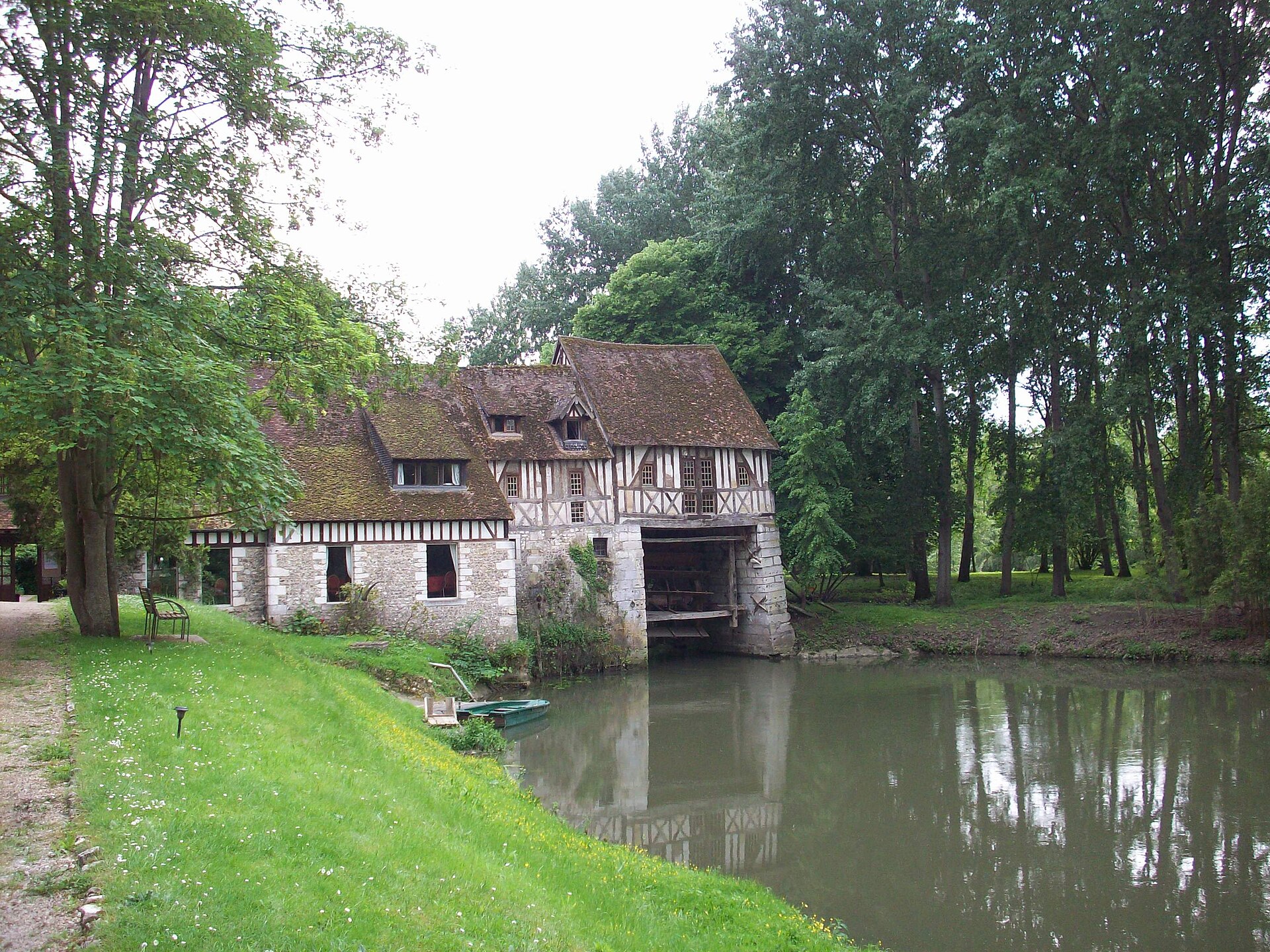
Moulin de Pierre now functions as an active mill museum and workshop. Visitors can see the reconstructed milling mechanism, and next to the windmill stands a rebuilt Miller's House (Maison du Meunier) in traditional Norman half-timbered style with a thatched roof, characteristic of the Eure region.
What's the surrounding area like?
The windmill sits at the edge of the state-owned Brotonne forest, within the Boucles de la Seine Normande Regional Nature Park (formerly the Brotonne Regional Nature Park). It serves as a popular starting point for walking trails through the forest, drawing visitors looking to combine a quiet woodland walk with a historic stop.
When can you visit?
The mill opens to visitors seasonally, from spring to mid-September, on Sundays from 2:30pm to 6pm. In July and August, access is broader, with the mill open daily from 2:30pm to 6:30pm.
Frequently asked questions
Is Moulin de Pierre the oldest windmill in France? It is among the oldest surviving windmills in the country, with records dating its existence to 1258 — placing it among a small number of structures of its kind to have survived from that era.
Who built the mill? Tradition attributes its construction to the monks of the Abbey of Jumièges.
Why is the mill built of stone instead of wood? This is unusual for French windmills of the period, which were mostly timber-built. The round stone tower, made of limestone and flint, is one of the features that sets this mill apart.
Is the mill still operational? It was in productive use until the 1860s, after which it fell into ruin. Following restoration in 1984–1985, it now operates as a museum with a working reconstructed mechanism shown to visitors.
When is the best time to visit? Access is widest in July and August, when the mill is open daily. Outside the summer season, visits are limited to Sunday afternoons from spring to mid-September.
What else is there to see nearby? The mill is a good starting point for walks through the Brotonne forest and the Boucles de la Seine Normande Regional Nature Park.
Nearby places

Earn badges for the places you visit
Download NextOnTrip, discover new places and check off your trails.