About this place
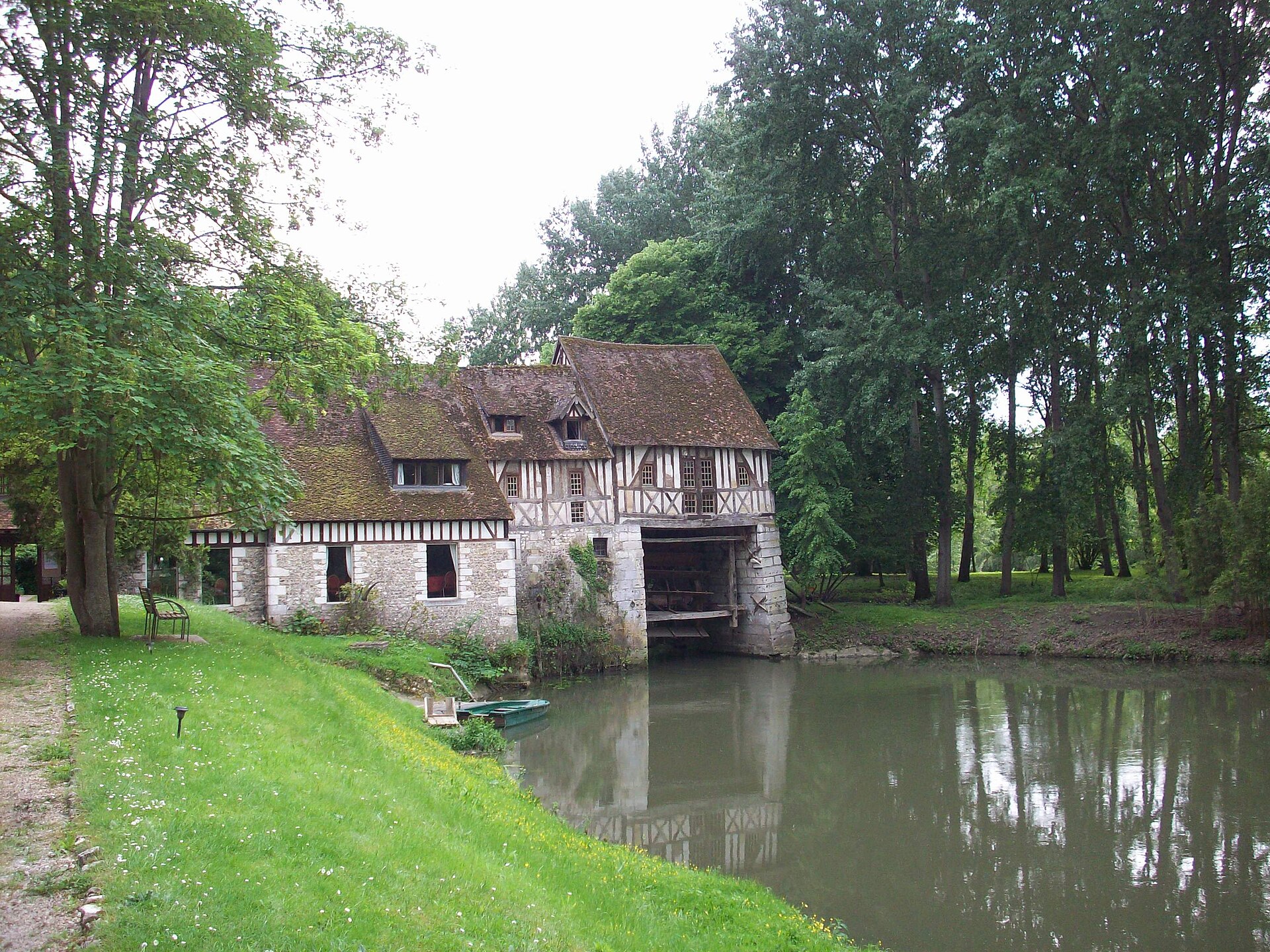
Moulin de la Pannevert is a historic water mill in Rouen, tucked into the valley of the Robec, a small tributary that flows into the Seine within the city. It stands along the Petites Eaux du Robec footpath, which links Place Saint-Hilaire in Rouen to the neighboring town of Darnétal, and ranks among the oldest surviving mills on this stretch of the river.
How old is the mill?
Records place a mill on this exact spot as far back as 1199, when it appears in the Coutume des Moulins de Rouen, a charter setting out the rights and duties of millers working the rivers around the city. Over the centuries the site changed names along with its owners: it was known as moulin de Morcin, then moulin du Val, and by 1525 as moulin de Monseigneur Du Réel. The name it carries today, "la Pannevert," was adopted in 1587, taken from the Rouen suburb where the mill sits.
What was the mill used for?
Fitted with two pairs of millstones, the Moulin de la Pannevert served several different trades as the local economy shifted over time. At various points it ground oak bark to produce tannin for leather processing, and wheat for flour. It also crushed madder root, the source of alizarin, a red dye used in textile production. Flour milling proved the most enduring use, continuing right up until the 1930s, when the mill finally stopped operating as a working industrial site.
What does the mill look like today?
The wheel currently in place dates from 1877–1881. After decades of use and a period of neglect, it underwent its first major restoration in the mid-1980s. A further round of work took place in spring 2016, when the wheel's paddles were rebuilt, restoring both its appearance and its mechanical integrity. A local heritage association, founded in 2004, now looks after the site, working to preserve the mill and share its history with residents and visitors exploring the Robec valley.
Where is it, and how do you get there?
The mill sits in Rouen, in the Normandy region, along a walking path that follows the Robec — a modest but picturesque stream that once powered dozens of mills and craft workshops in this part of the city. The Petites Eaux du Robec walk runs from Place Saint-Hilaire to the town of Darnétal, taking in several such pieces of industrial heritage along the way. It's a rewarding stop for anyone curious about Normandy's industrial past and looking for something beyond Rouen's better-known city-center sights.
Can visitors go inside?
The Moulin de la Pannevert opens to the public on an occasional basis, notably during the Journées du Patrimoine (Heritage Days), when the local preservation association welcomes visitors and guides them through the building's centuries-long history. Outside those dates, the mill can still be admired from the footpath along the Robec — the setting itself, with its waterwheel and stone walls, is worth the detour even without stepping inside.
Frequently asked questions
How far back does the Moulin de la Pannevert date? A mill on this site is documented as early as 1199, though it has carried its current name only since 1587.
What did the mill produce? Over the years it ground oak bark for leather-tanning tannin, wheat for flour, and madder root for red alizarin dye.
When did the mill stop operating industrially? Flour production continued until the 1930s, after which the mill ceased commercial activity.
Is the waterwheel still visible? Yes — the current wheel dates from 1877–1881, its paddles were rebuilt in 2016, and it can be seen from the footpath running along the Robec.
Nearby places

Earn badges for the places you visit
Download NextOnTrip, discover new places and check off your trails.