About this place
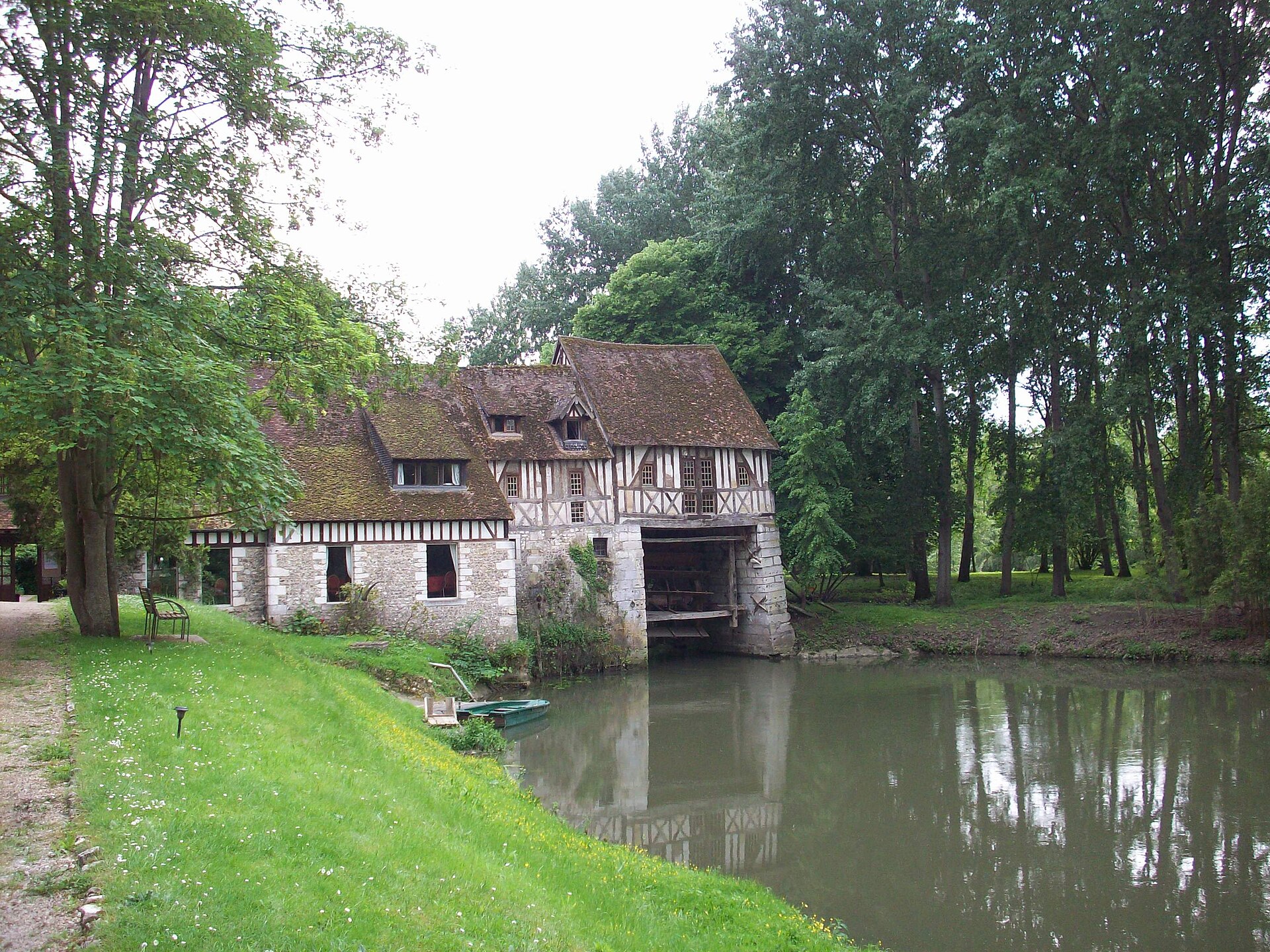
Manoir du Hom sits just outside Beaumont-le-Roger, a small town in the Eure department of Normandy, tucked into the quiet Ouche countryside along the Risle valley.
Why does the name mean "islet"?
The word "Hom" traces back to the Old Norse term "holmr," meaning an islet in a marsh or a meadow ringed by water — a fitting name, since the manor's moats mirror the building so closely it appears to float on its own island. The Scandinavian root is a small linguistic echo of the Norse settlers who once shaped this part of Normandy.
What survives from the original manor?
The structure visitors see today dates from the late 16th to early 17th century and is credited to the Avoise family. It replaced an older residence on the same spot, built back in the 11th century alongside a feudal castle — none of that earlier building has survived.
A triple ring of moats once encircled the property, and two striking pavilions of white brick and stone, topped with flat-tile roofs, rose above the water, their reflections doubling the view. Of that ensemble, only the two pavilions and part of the south wing's walls remain standing; the rest was lost or altered over the centuries.
Who owned the manor over the centuries?
Ownership records go back to 1420, when the estate belonged to Isabelle de Pommereuil. She resisted the English occupation during the Hundred Years' War and was stripped of her property as a result — one of the few documented moments linking the manor to that turbulent chapter of regional history.
The next major turn came in the 19th century, when the Duchess of Magenta acquired the estate. Her descendants still hold it today, making Manoir du Hom a rare case of a Normandy manor staying in one family's hands for more than a century and a half.
Is the manor a protected monument?
Yes. The manor itself, along with its outbuildings, courtyards, and moats, was listed as a monument historique in 1989. The protection covers the surrounding grounds as well, since they're inseparable from the site's picturesque character.
Frequently asked questions
Can visitors go inside Manoir du Hom? The manor is privately owned by the Duchess of Magenta's descendants, so interior access isn't generally open to the public. Check with tourist information in Beaumont-le-Roger for any occasional open days before planning a visit.
Where does the name "Hom" come from? It comes from the Old Norse "holmr," meaning an islet or a water-meadow — a direct nod to the moats surrounding the building, which make it look like it's floating.
How far is the manor from the center of Beaumont-le-Roger? It lies outside the town center, in the Risle valley within the rural Ouche region — a short drive away, or a pleasant walk or bike ride for anyone exploring the surrounding countryside.
How much of the original 16th-century manor is still standing? Not a great deal — mainly the two white brick-and-stone pavilions and fragments of the south wing's walls. The even older 11th-century residence that once stood on the site is entirely gone.
Nearby places

Earn badges for the places you visit
Download NextOnTrip, discover new places and check off your trails.