About this place
Manoir de Courson is a 15th-century half-timbered manor house standing in the commune of Livarot-Pays-d'Auge, in the heart of Normandy's Calvados department. The building sits on a ridge between two small valleys that drain toward the river Touques, roughly 1.2 km east of the former village of Notre-Dame-de-Courson, along what was once the old road linking Orbec and Livarot.
How do you get to Manoir de Courson?
The estate is located on Chemin de la Salette, within the commune of Livarot-Pays-d'Auge (postcode 14140), close to the departmental road RD4. Like much of the Pays d'Auge countryside, it sits well away from major tourist routes, surrounded by orchards and pasture, so a car is really the only practical way in. Visits are by appointment only, so it's worth arranging a date ahead of time rather than showing up unannounced.
What will you see there?
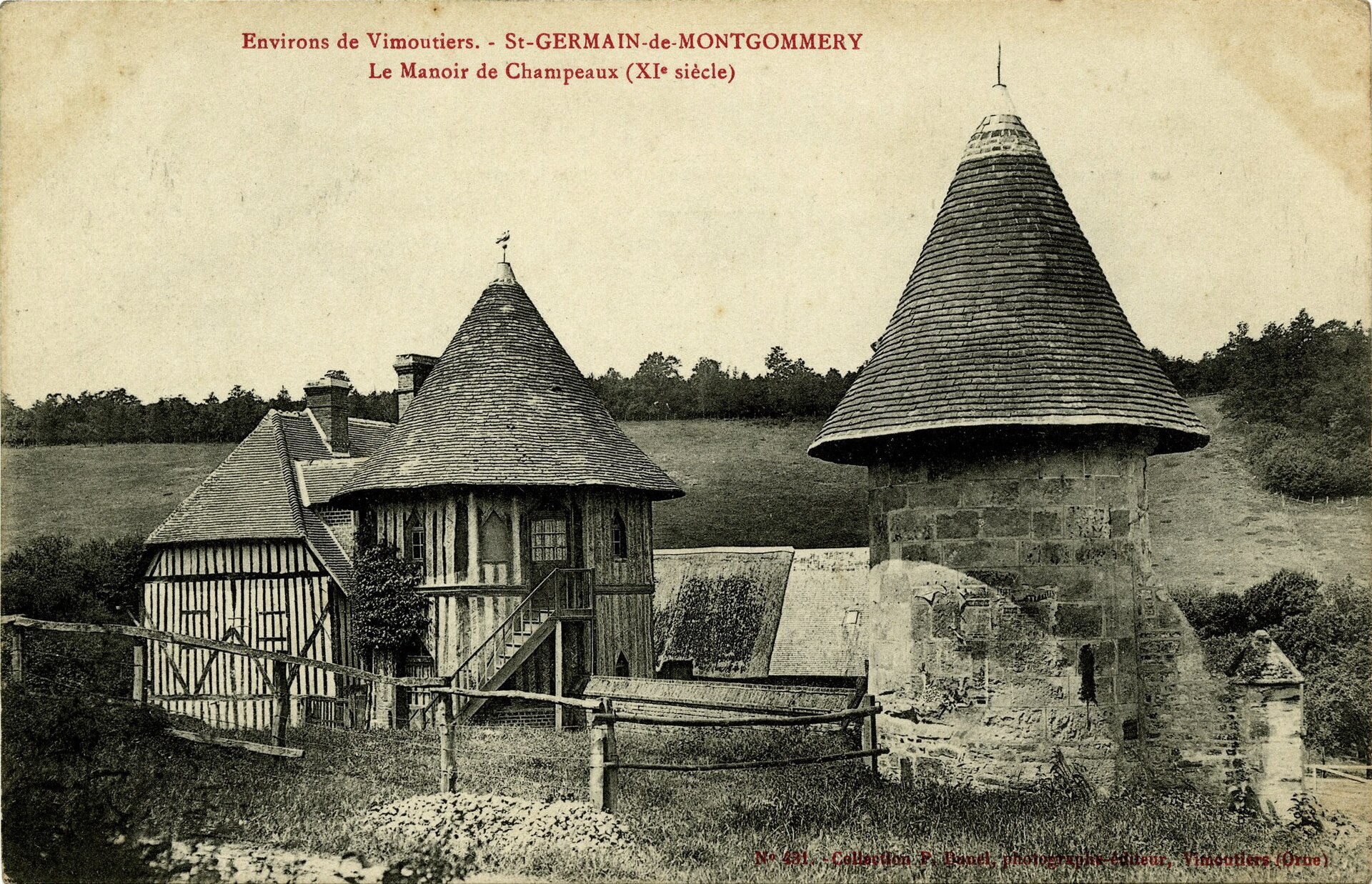
The manor is built in an L-shaped plan, combining timber-framed construction with a stone gable wall. One wing is flanked, on the courtyard side, by a polygonal turret that houses a staircase — a distinctive feature that immediately catches the eye and gives the building the picturesque silhouette typical of Pays d'Auge manor architecture.
The façades and roofs are listed as a historical monument under a decree dated 1 December 1955, recognizing their architectural and historical value. The wider estate covers around 21 hectares and, besides the manor itself, includes a caretaker's house, an outbuilding, a dovecote, a swimming pool, a farm shed, a park, an orchard, meadows, and a feudal motte — an earthen mound left over from an earlier defensive structure.
Walking the grounds, it's worth heading up to the motte: from there, the view stretches as far as the bell tower of the Notre-Dame-de-Courson church, rising above gently rolling meadows and the orchard below. The manicured lawns near the house are bordered by beech hedges, giving that part of the grounds a tidy, garden-like feel that contrasts with the wilder, pastoral character further out on the estate.
A bit of history
Construction began under Ancelot de Neufville, son of Jean, in the last third of the 15th century — shortly after the long conflicts with the English that had ravaged Normandy for decades finally came to an end. The estate was later extended in the mid-16th century by Ancelot's son, Thomas de Neufville. That two-stage building history explains the mix of styles visible in the structure today, from the sturdier, more defensive look of the late medieval sections to the more decorative Renaissance-era additions.
When should you visit?
Spring and summer are the best times to come, when the orchard is in bloom and the meadows turn a deep green — the landscape around the manor is at its most striking then. Because visits only happen by appointment, it's worth contacting the estate ahead of your trip regardless of the season you choose.
Frequently asked questions
Can you visit Manoir de Courson without booking ahead? No — access to the estate is only possible by prior appointment.
How large is the estate? The property covers about 21 hectares, including the manor, farm buildings, a park, an orchard, meadows, and a feudal motte.
When was the manor built? The main building campaign dates to the last third of the 15th century, with an extension added in the first half of the 16th century.
Is the manor a protected historical monument? Yes, its façades and roofs were listed as a historical monument by decree on 1 December 1955.
Nearby places

Earn badges for the places you visit
Download NextOnTrip, discover new places and check off your trails.