About this place
Vila Boa do Bispo Monastery (Mosteiro de Santa Maria de Vila Boa do Bispo)
Mosteiro de Vila Boa do Bispo, also called the Monastery of Santa Maria de Vila Boa do Bispo, is a historic complex in the municipality of Marco de Canaveses, Porto District, in northern Portugal. It stands in the village of Vila Boa do Bispo, at roughly 41.129 N, 8.220 W. It belongs to the Romanesque heritage of the region and makes a rewarding stop for anyone interested in medieval architecture and the history of the Iberian Peninsula.
What is the history of the monastery?
The monastery appears in documents from the 11th and 12th centuries under the name Mosteiro de Santa Maria de Vila Boa. According to tradition, it was founded between 990 and 1022 by Dom Monio Viegas, brother of Dom Sisnando, bishop of Porto from 1049 to 1085. The site is said to be where Christians and Muslims fought a battle in which Dom Sisnando died. This is local tradition, so treat it as a story attached to the place rather than a firmly proven fact.
By the middle of the 12th century the community was linked to the Canons Regular of Saint Augustine. In 1141 King Afonso Henriques granted the monastery a land charter. In 1144 Pope Lucius II issued a brief giving its priors the right to wear a mitre, a sign of how important the house was at the time.
Which noble family was involved?
From its origins the monastery was tied to the Gascos lineage of Ribadouro, an influential noble family of the period. They held numerous strategically placed monasteries along the tributaries of the Douro and controlled a wide area on both sides of the river. Vila Boa do Bispo is one example of that network of influence.
What is there to see?
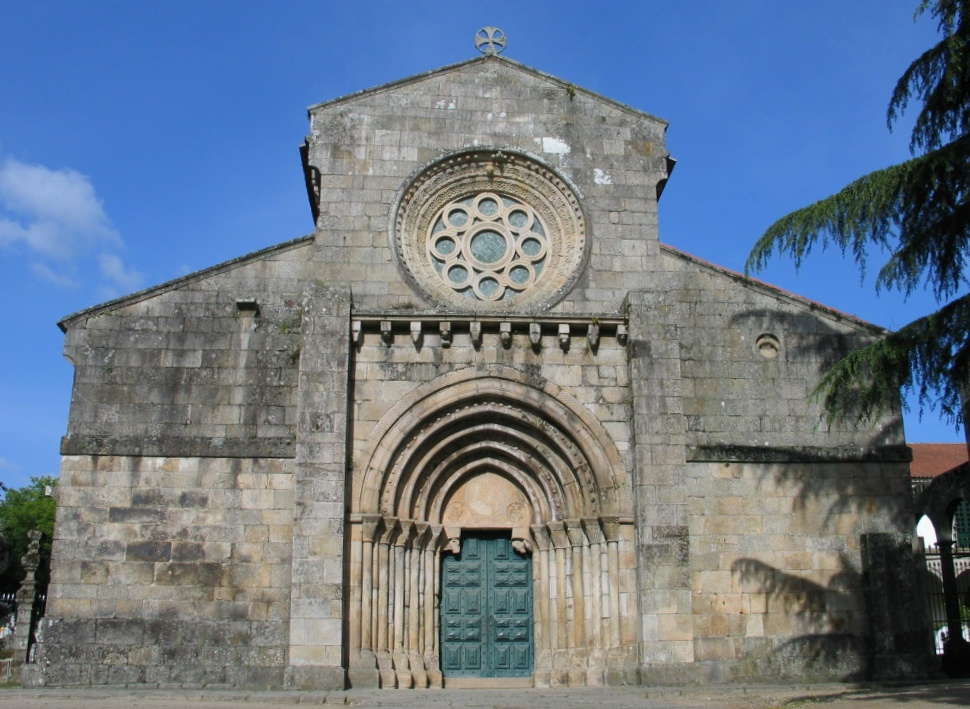
The church preserves Romanesque elements, including arcades on the west facade. It is especially notable for its large number of epigraphs and sepulchral chests dating from the 11th to the 14th centuries. For anyone who enjoys inscriptions and funerary art, this is a valuable collection showing who was buried here over several centuries.
Take time to look at the facade, the interior of the church and the stone details. Romanesque architecture in northern Portugal is austere, built on thick walls and simple forms, and this complex shows that character well.
How to plan a visit
The monastery is near Marco de Canaveses, so it is easy to combine with other Romanesque monuments of the region and with the Douro valley. Opening hours and access rules can change, so check current information with the local Romanesque route operators or official Portuguese tourism sites before you go. Allow one to two hours if you want to look closely at the stonework and inscriptions.
Frequently asked questions
Where is Mosteiro de Vila Boa do Bispo? In the village of Vila Boa do Bispo, in the municipality of Marco de Canaveses, Porto District, Portugal.
What period does it date from? Documents mention it in the 11th and 12th centuries, and tradition places its founding between 990 and 1022. Romanesque elements are still visible in the church.
Who was connected with the monastery? The Gascos lineage of Ribadouro and, from the mid-12th century, the Canons Regular of Saint Augustine.
What is most interesting about the church? The Romanesque arcades on the west facade and the many epigraphs and sepulchral chests from the 11th to 14th centuries.
Is it a good stop for history lovers? Yes. Medieval documents, royal privileges and surviving tombs together give a clear picture of the religious and political life of early Portugal.
Nearby places

Earn badges for the places you visit
Download NextOnTrip, discover new places and check off your trails.