About this place
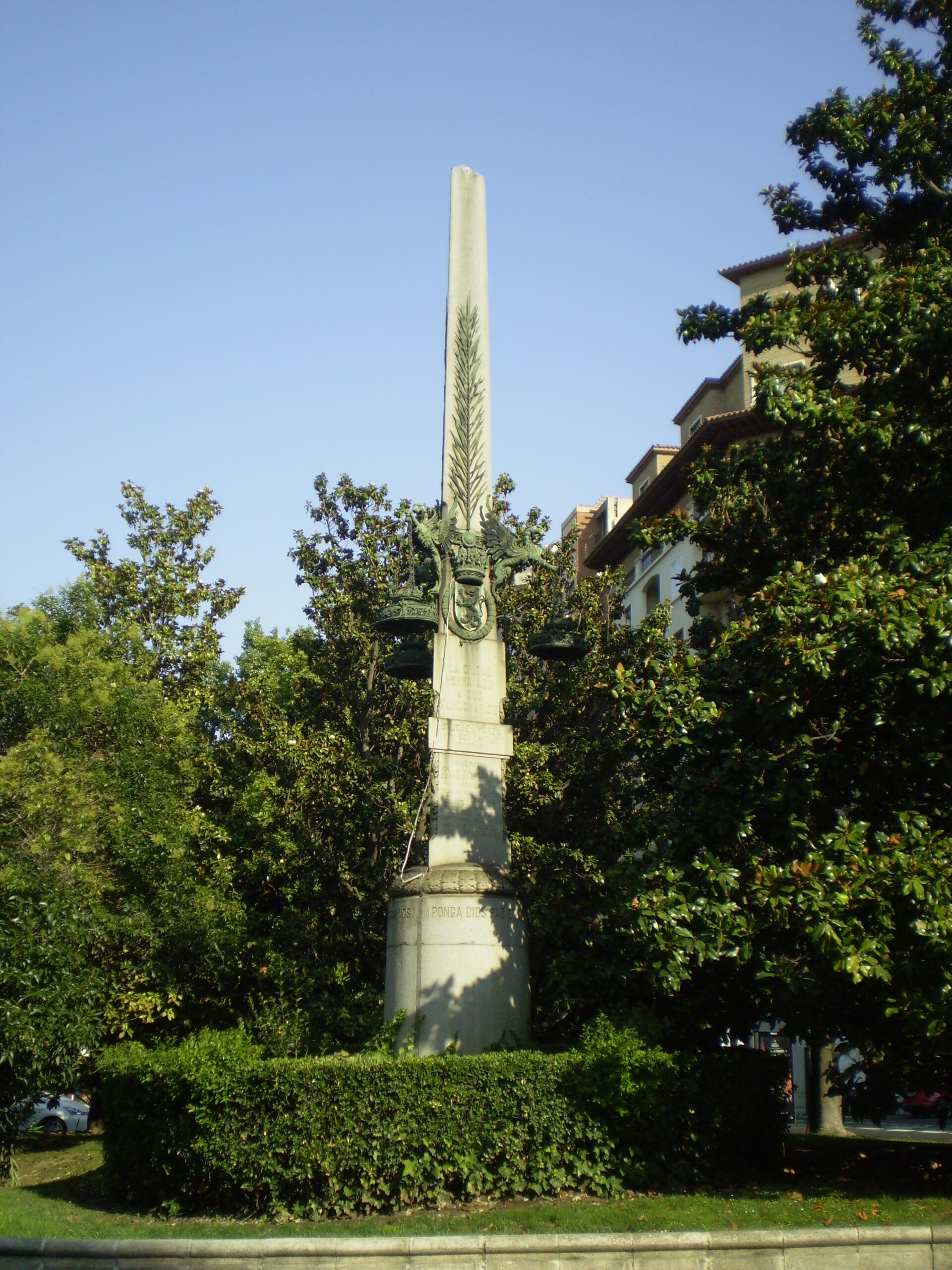
Monumento a los Defensores del Reducto del Pilar is a monument in Zaragoza honoring one of the most dramatic episodes of the city's resistance against Napoleon's army.
Where does the monument stand and what does it show?
The monument stands on Paseo de Sagasta, at the roundabout known as Glorieta de Sasera. It's a quiet spot within Zaragoza's urban fabric, passed daily by locals, though few visitors realize what story this modest-looking piece actually carries.
On a stone pedestal stands a bronze figural group — two anonymous fighters caught in a moment of combat, the whole piece measuring roughly 1.90 by 1.10 meters. The composition belongs to the late-19th-century tradition of sculptural realism drawing on classical models: tense bodies, dramatic gestures, nothing decorative getting in the way.
What historical event does it commemorate?
The monument refers to the defense of the Reducto del Pilar — a fortified position held by the residents and soldiers of Zaragoza during the second French siege of the city in 1808, part of the Peninsular War. The stand at the reduct is remembered as one of the most heroic moments of that siege: a small group of defenders held off vastly superior Napoleonic forces, protecting access to the city and, symbolically, to the Basilica of Nuestra Señora del Pilar.
Two inscriptions appear on the pedestal. The front reads "POR LA PATRIA 1808" (For the Homeland, 1808), while one side carries "POR LA VIRGEN DEL PILAR VENCER O MORIR MDCCCVIII" (For the Virgin of the Pilar — victory or death, 1808). Together they capture the defiant spirit that carried the city's residents through both Napoleonic sieges.
Who designed it, and what's its history?
The original monolith went up in 1908, marking the centennial of the sieges of Zaragoza, and was designed by architect Ricardo Magdalena, one of the leading figures of Aragonese architecture of that era. The figure visitors see today is a bronze cast made from an original plaster model by sculptor Federico Amutio, titled "Por la Patria, 1808."
The bronze version was acquired by Zaragoza's city council and installed in public space in 1963, complementing the earlier monolith from the start of the century. Today the monument forms part of a wider network of memorials scattered across the city, all dedicated to the heroes of the 1808–1809 sieges.
Is it worth visiting?
This isn't a headline tourist attraction in the classic sense — it's more of a stop for anyone interested in the Napoleonic Wars or in how the 1808 defense of the city became a cornerstone of Zaragoza's collective memory. It pairs well with a walk to the other "Sitios de Zaragoza" monuments scattered around the city; together they trace a route through the history that shaped the city's character.
Frequently Asked Questions
What does "Reducto del Pilar" mean? It's the name of a defensive fortification in Zaragoza whose garrison put up fierce resistance during the second French siege of the city in 1808.
Who created the figures on the monument? The bronze figural group was made after a model by sculptor Federico Amutio, while the original 1908 monolith was designed by architect Ricardo Magdalena.
Where exactly does the monument stand? On Paseo de Sagasta, at the Glorieta de Sasera roundabout in Zaragoza.
When was the current bronze monument installed? The bronze cast was placed at its site in 1963, though the original design dates back to 1908, the centennial year of the sieges of Zaragoza.
Nearby places

Earn badges for the places you visit
Download NextOnTrip, discover new places and check off your trails.