About this place
Monument to Joaquín Costa stands on Plaza de Santa Engracia in Zaragoza, right beside the church of Santa Engracia. It honors Joaquín Costa, an Aragonese jurist, historian and thinker who became one of the leading voices of Spanish Regenerationism at the turn of the twentieth century.
Who was Joaquín Costa?
Joaquín Costa y Martínez was born in 1846 in Monzón, in the province of Huesca, and died in 1911 in Graus, also in Huesca. He held doctorates in Law and in Letters, worked as a practicing lawyer, and was a prolific writer on history, law, economics, anthropology and geography. He was closely linked to the Institución Libre de Enseñanza, an independent, secular educational institution that promoted modern teaching methods in Spain. Costa was also an outspoken critic of the political system of the Restoration, which made him a central figure of Regenerationism, a movement demanding the modernization of Spain after the national crises of the late nineteenth century.
Why is the monument located on Plaza de Santa Engracia?
The site was chosen with care. The square is dominated by the church of Santa Engracia, whose richly worked sixteenth-century facade is already a strong architectural presence. The city wanted Costa's monument to hold its own without visually competing with the church, so the result is a plain, sober and solid stone pedestal supporting the bust — a modest composition that nonetheless anchors its own space on the square.
What does the monument look like, and who created it?
The monument was created by the Spanish sculptor José Gonzalvo. Costa is depicted without any historical costume or symbols of office: he appears almost bare-chested, in full vital strength, with his characteristic thick beard and a gaze fixed on the horizon, as though still weighing the country's future. Stripping the figure of period dress or markers of rank in favor of a universal, unclothed form echoes a device famously used by Auguste Rodin in his monument to Émile Zola. Through this choice, Gonzalvo presents Costa as one of Aragón's great figures, someone whose relevance reaches beyond his own era.
When was the monument unveiled?
The monument was inaugurated in June 1979. Its construction was initiated by the Peña Solera Aragonesa, an Aragonese cultural society devoted to preserving the memory of figures connected to the region. That date places the monument in the early years of Spain's democratic transition, a period when many cities began publicly honoring figures who had been critical of the old political order — Costa being exactly such a figure.
What else is worth seeing nearby?
It is worth spending time on the square itself: the church of Santa Engracia, with its monumental Renaissance portal, is one of Zaragoza's most significant religious landmarks, and beneath it lies a crypt holding relics. The square sits in the city center, within easy walking distance of the route connecting Plaza del Pilar to the rest of the old town, making it a natural stop on a walking tour of Zaragoza.
Frequently asked questions
Who is depicted in the monument? Joaquín Costa y Martínez (1846–1911), a jurist, historian and one of the leading figures of Spanish Regenerationism, born in Monzón and died in Graus.
Who designed the monument? The sculptor José Gonzalvo, who created the bust set on a stone pedestal.
When was the monument unveiled? In June 1979, at the initiative of the Peña Solera Aragonesa.
Where exactly is the monument located? On Plaza de Santa Engracia in Zaragoza, directly next to the church of Santa Engracia.
Nearby places
-

Monument to the victims of the Coronavirus, Zaragoza
Saragossa
-
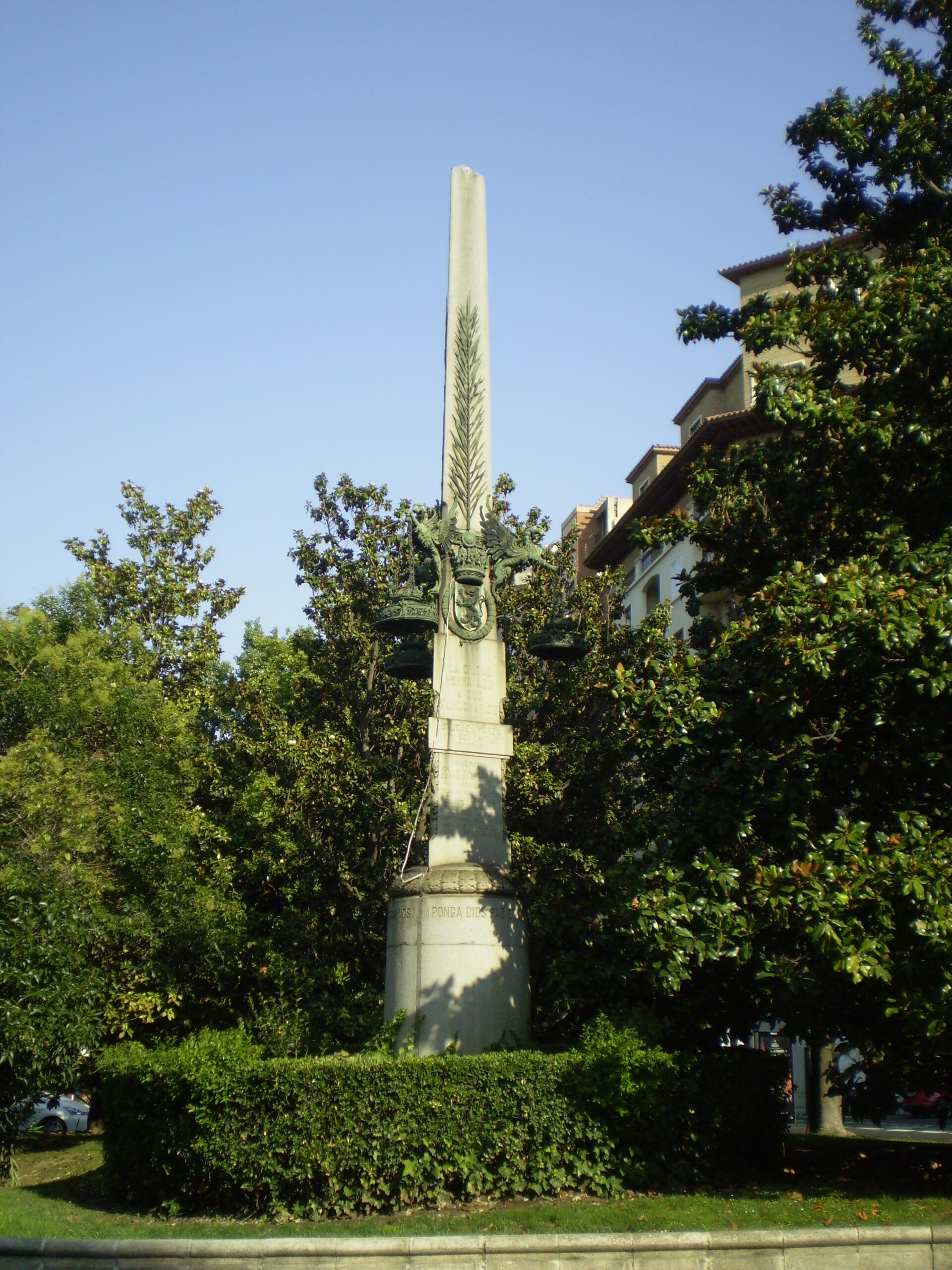
La ciudad honra a sus funcionarios
Zaragoza
-
Monument to the Sieges of Zaragoza
Saragossa
-
Plaza de los Sitios
Saragossa
-
Monument to the Spanish Constitution of 1978, Zaragoza
Saragossa
-
Monumento a las víctimas del Yak-42, Zaragoza
Saragossa
Earn badges for the places you visit
Download NextOnTrip, discover new places and check off your trails.