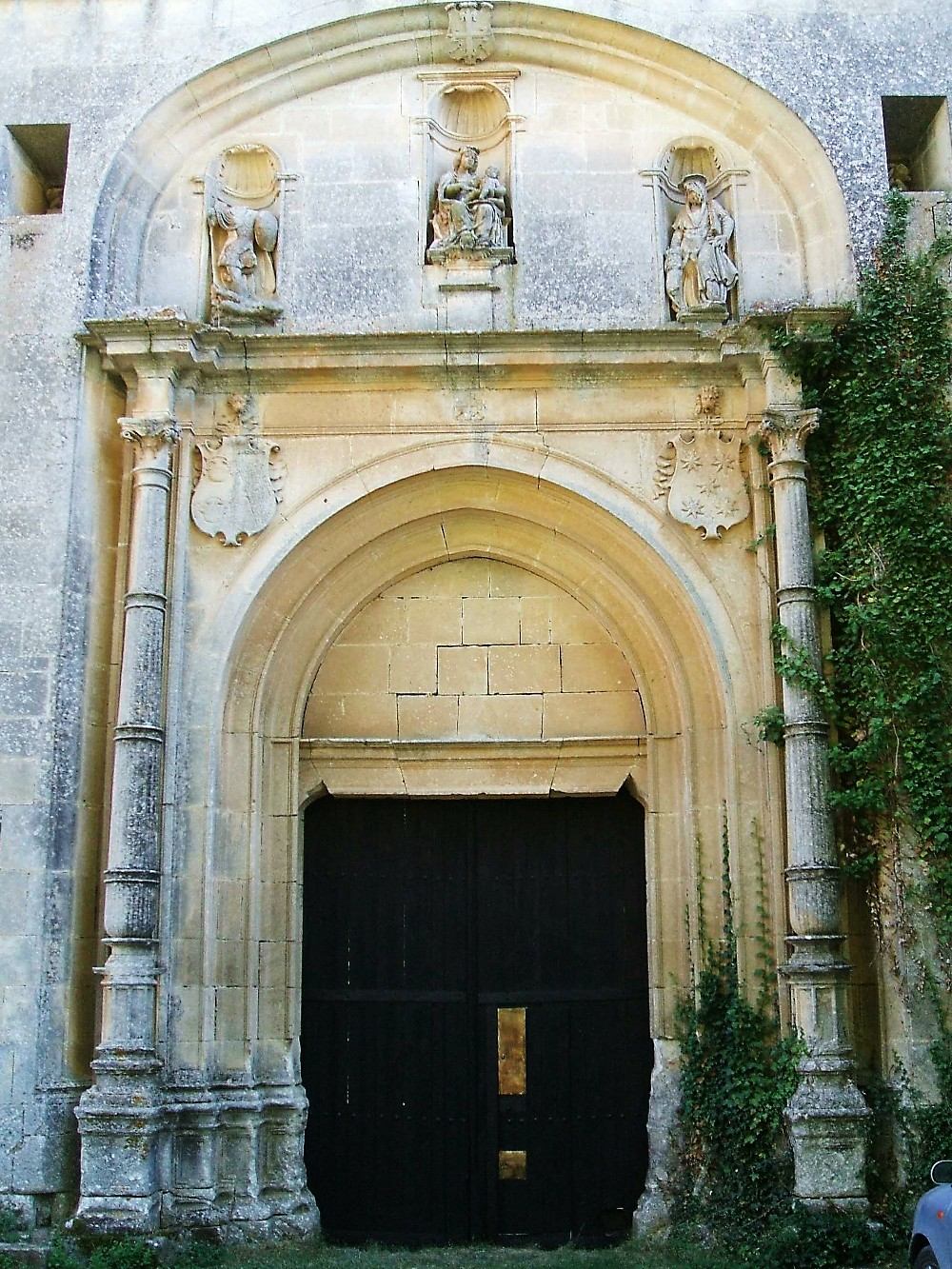
About this place
The Monastery of Nuestra Señora de Fresdelval is an abandoned Hieronymite sanctuary standing a short drive north of Burgos, tucked between the small settlements of Villatoro, Quintanilla Vivar and Villayerno Morquillas. Nearly two centuries after it was left to decay, its weathered walls still tell one of Castile's more unusual stories of devotion and patronage.
Who founded the monastery, and why?
The site's origins trace back to the early 15th century and to Gómez Manrique, who held the powerful office of Adelantado Mayor de Castilla — the king's chief representative in the region. Local tradition holds that a nearby hermitage housed a revered image of the Virgin Mary, credited with two miracles in Manrique's life: curing his daughter of illness and sparing him from an arrow during a military clash. Grateful for his survival, Manrique endowed a monastery on the spot and installed the Hieronymite order to look after it.
How did the complex evolve over time?
The earliest buildings grew up piecemeal, without a unified architectural plan, giving the monastery an irregular character for over a century. That changed between 1524 and 1542, when García de Padilla, Grand Commander of the Order of Calatrava, financed a major renovation that reshaped the complex into a more coherent whole. It was during this period that a second, Renaissance-style cloister was added alongside the original 15th-century Gothic one.
Everything changed in 1835, when Spain's sweeping confiscation of church property forced the monks out and stripped the monastery of its assets. Left without occupants, the buildings began a slow slide into ruin that continues to this day.
What survives on site today?
Despite roughly two hundred years of abandonment, the ruins still hold plenty to see: the Gothic cloister, the dismantled remains of the Renaissance cloister, the shell of the monastic church, and a scattering of carved coats of arms and sculptural fragments that once adorned the complex. These surviving details, rather than any intact structure, are what give the site its historical weight today.
That significance was formally recognized on 3 June 1931, when the monastery was declared a Bien de Interés Cultural — Spain's designation for a site of national cultural importance.
How do you get there?
Fresdelval sits close to the road linking Burgos with Santander and forms one of the stops along the Camino del Cid trail. Because the land is privately owned, vehicle access is deliberately restricted to protect the ruins from vandalism and theft. The site remains fully reachable on foot or by bicycle, making it a natural addition to a walking or cycling route through the countryside around Burgos.
Can you actually go inside the monastery?
Given its private ownership, entry to the ruins is limited to one open day per month and requires arranging a visit in advance. The Tourism Office of Castilla y León in Burgos handles inquiries and bookings, so it's worth contacting them ahead of time rather than showing up unannounced.
When is the best time to visit?
Spring and autumn offer the most comfortable conditions, with mild temperatures and a greener, more scenic backdrop of fields and low hills surrounding the ruins. Since the site has no visitor infrastructure — no on-site parking or information point — it works best as part of a longer walk or bike ride through the surrounding area rather than a standalone stop.
Frequently asked questions
Is the Fresdelval monastery open to visitors? Yes, but access is tightly limited. As private property, the ruins open to the public only one day each month, and visits must be arranged in advance.
Can you drive up to the monastery? Not entirely — vehicle traffic on the grounds is restricted to prevent vandalism and damage to the ruins. The site is, however, easily accessible on foot or by bicycle.
Who founded the monastery and why? Gómez Manrique, a senior Castilian noble, founded the Hieronymite monastery in the early 15th century in gratitude for miracles he attributed to the image of the Virgin of Fresdelval.
Is the monastery still intact? No — since 1835, when the monks were expelled during Spain's confiscation of church property, the buildings have gradually fallen into ruin. What remains today includes the Gothic cloister, the church ruins, and fragments of carved sculpture and heraldry.
Nearby places

Earn badges for the places you visit
Download NextOnTrip, discover new places and check off your trails.