About this place
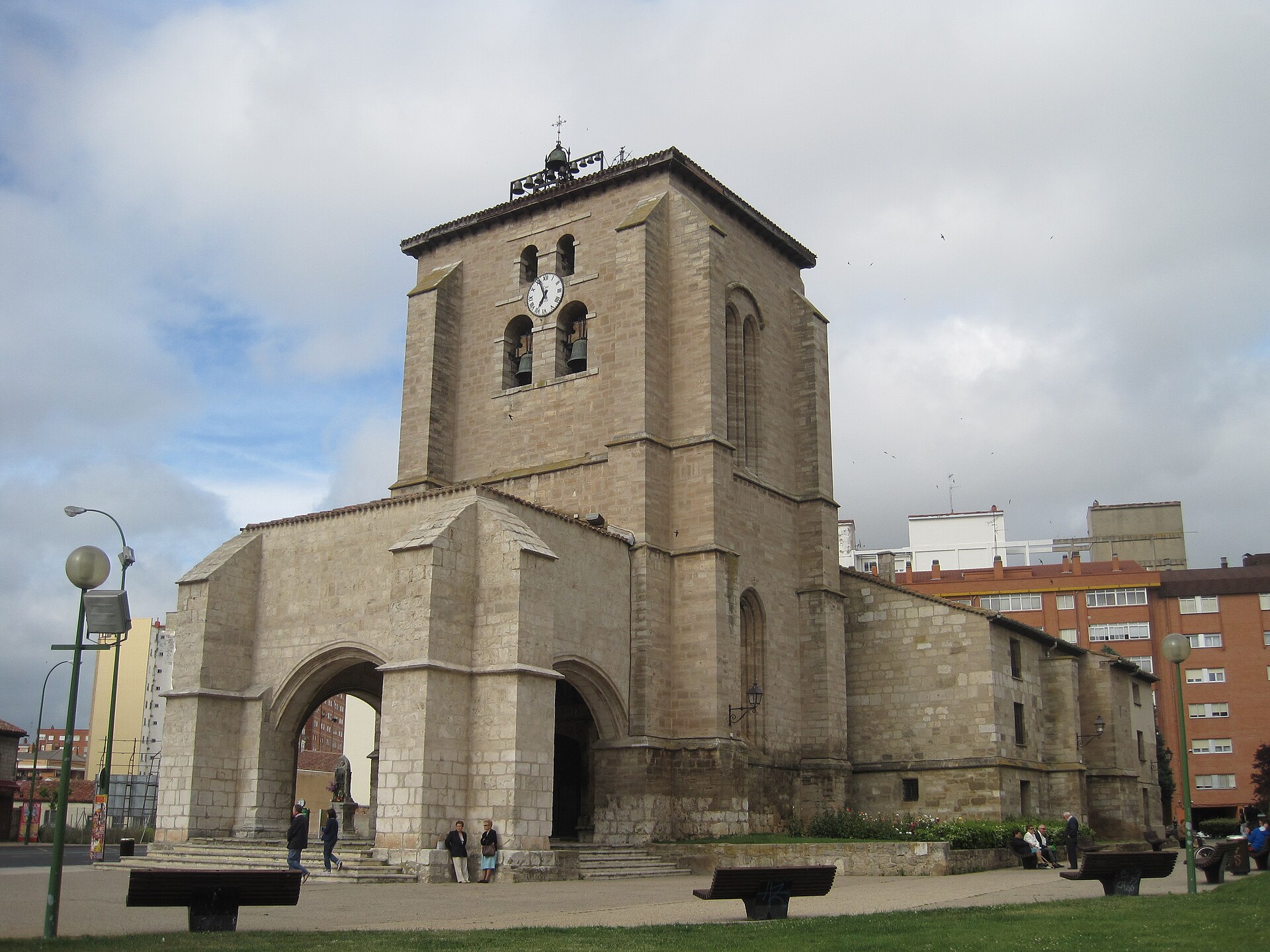
Iglesia de San Pablo Apóstol is a 20th-century parish church in Burgos, standing on Plaza de Roma in the Gamonal district, on the city's northeastern side. Unlike the Gothic landmarks of Burgos's old town, this parish belongs to a completely different, modern chapter of Spanish religious architecture.
What is the history behind this church?
Construction finished in 1975, during a period of rapid growth for Gamonal as a new residential district of Burgos. The parish falls under the Archdiocese of Burgos and is dedicated to Saint Paul the Apostle, with its patronal feast celebrated on January 25, marking the liturgical commemoration of Paul's conversion. A youth group, the Asociación Juvenil San Pablo, is active at the parish, running pastoral activities for younger members of the community.
What makes the architecture stand out?
What sets San Pablo apart from Burgos's classic churches is its bold circular floor plan. The interior is supported by twelve columns arranged around the perimeter, each one sending out a point of a large plaster star that decorates the ceiling — a motif that gives the space a distinctive, geometric rhythm. Modern stained-glass windows with symbolic designs flank both sides of the columns, filling the interior with colored light during the day. This kind of design was typical of Spanish churches built in the 1970s, when architects were searching for a new visual language for liturgical space in the wake of the Second Vatican Council.
What can you see inside?
Despite the building's contemporary shell, the interior holds several much older pieces. The most valuable is a 14th-century Gothic baptismal font, brought to Burgos from a church in the village of Portilla. It stands in sharp contrast with its modern surroundings, a reminder of the region's centuries-old baptismal traditions.
The main altar retable is the work of Burgos sculptor José Ignacio Ruiz Martínez — a large crucifix set against a green wooden background that forms the visual focal point of the sanctuary. The same artist also produced the wooden sculptures of Saint Paul and the Virgin Mary, along with a wooden tabernacle, together forming a cohesive set of liturgical furnishings designed specifically for this church.
How do you get there, and when should you visit?
The church sits in the Gamonal district, a few kilometers from the historic center of Burgos and its cathedral. The neighborhood is well served by city buses, and Plaza de Roma itself is a hub within this part of town, surrounded by shops and everyday services. This is a spot visited mostly by locals and by those with an interest in 20th-century religious architecture, rather than a typical stop on a tourist itinerary — it pairs well with a walk through Gamonal, one of the city's larger residential districts. As an active parish, the church is generally accessible during mass hours; it's worth checking service times locally or through parish notices before visiting.
Frequently asked questions
Is Iglesia de San Pablo a historic landmark? Not in the classic sense — the building dates from 1975, but it houses much older pieces, including a 14th-century Gothic baptismal font.
How does it differ from other Burgos churches? Through its circular, modern design with twelve columns and a plaster star ceiling — a rare example of postwar religious architecture in a city best known for its Gothic heritage.
Who created the altar sculptures? Burgos sculptor José Ignacio Ruiz Martínez, who made the crucifix, the figures of Saint Paul and the Virgin Mary, and the tabernacle.
Where exactly is it located? On Plaza de Roma, in the Gamonal district, on the northeastern edge of central Burgos.
Nearby places

Earn badges for the places you visit
Download NextOnTrip, discover new places and check off your trails.