About this place
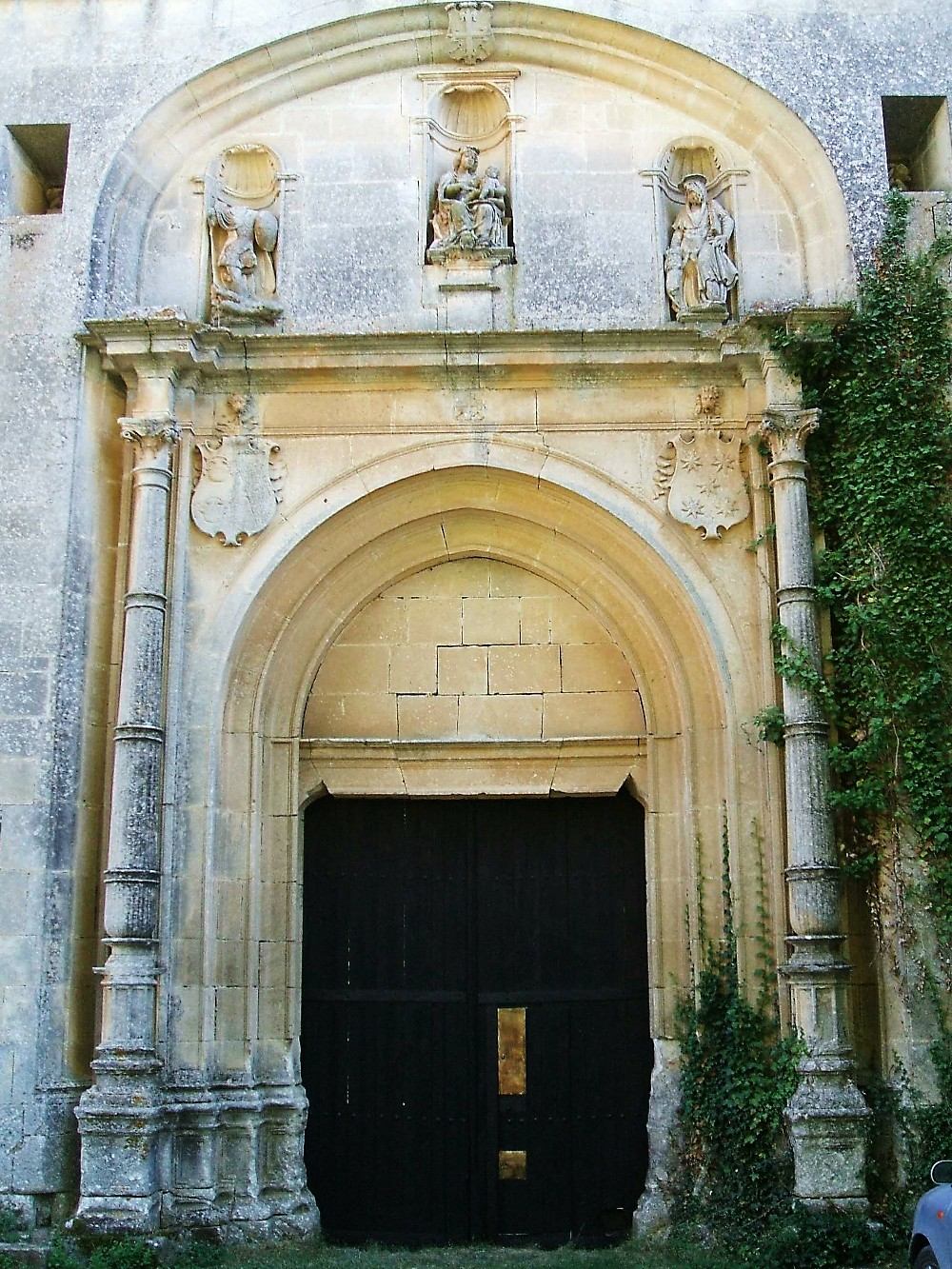
The Convent of Nuestra Señora del Espino sits at the edge of Vivar del Cid, a small village in the province of Burgos best known as the birthplace of El Cid Campeador. This Gothic convent of Poor Clare nuns has stood for more than five centuries on the site of a 13th-century hermitage dedicated to the Virgin of the Thorn (del Espino).
How did the convent come to be?
The site's story begins with a beaterio — a lay community of women who lived a religious life beside the hermitage without taking formal vows. In 1475, Pedro López de Padilla, the great adelantado of Castile, and his wife Isabel Pacheco petitioned Pope Sixtus IV for permission to turn this community into a formal convent. The pope granted the request, and the beatas professed as Poor Clares, beginning an unbroken presence of the order at the site that continues today.
What will you see there?
The convent church was built on a Latin-cross plan in Gothic style, with pointed ogival arches that give the interior a sober yet elegant character. The architecture reflects the humility typical of Poor Clare communities — restrained rather than lavish, with careful attention to proportion and to the light filtering through narrow windows.
The building survived a serious fire in 1620 that destroyed part of its original furnishings, and in the 19th century, during the Peninsular War against Napoleon's troops, the nuns were forced to abandon the convent temporarily. Despite these episodes, the complex has retained its medieval character to this day.
What is the convent's connection to El Cid?
The most fascinating chapter in the convent's history is the role its nuns played in safeguarding the manuscript of the Poem of the Cid (Cantar de Mio Cid), one of the most important works of medieval Spanish literature. For centuries, the sisters guarded this document, reinforcing the symbolic link between the convent and the legend of Rodrigo Díaz de Vivar, said by tradition to have been born in Vivar del Cid in 1041.
How do you get there?
Vivar del Cid lies just a dozen or so kilometers north of Burgos, making the convent an easy day-trip destination from the city. Driving is the most convenient option — the local road from Burgos takes about 15-20 minutes. The village has no direct rail connection, so travelers without their own transport should consider a taxi or a guided tour that combines Vivar del Cid with other stops on the region's El Cid trail.
When is the best time to visit?
Spring and early autumn are the best seasons to visit, when temperatures across Castile are mild and the surrounding grain fields — a defining feature of this part of Burgos province — are at their most scenic. Summers in the region can turn very hot, while winters are harsh and windy, worth keeping in mind when planning time outdoors around the complex.
Frequently asked questions
Can you visit the inside of the convent? Since this is an active enclosed convent of Poor Clare nuns, access to the interior can be limited — it's worth checking current visiting hours and conditions before arriving, as they may vary depending on the community's schedule.
Why is the convent named "del Espino"? The name comes from the original devotion to the Virgin of the Thorn (Nuestra Señora del Espino), practiced at the 13th-century hermitage that stood on the site before the convent was founded.
What links Vivar del Cid to the legend of El Cid? The village is traditionally regarded as the birthplace of Rodrigo Díaz de Vivar, known as El Cid Campeador, and the convent preserved the manuscript of the medieval poem dedicated to him for centuries.
How much time should you set aside for a visit? Given the village's small size and the limited part of the convent open to visitors, a visit typically takes 30 minutes to an hour, making it easy to combine with a trip to Burgos itself.
Nearby places

Earn badges for the places you visit
Download NextOnTrip, discover new places and check off your trails.