About this place
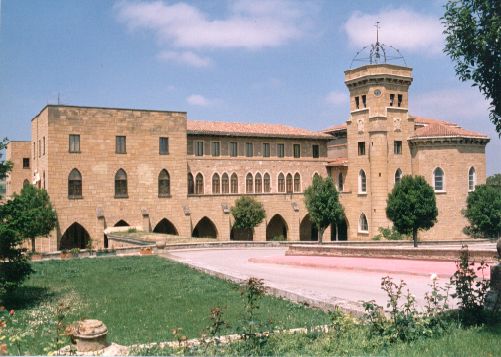
Monasterio de Santa María de Herrera is a secluded monastery tucked into a wooded valley on Mount Herrera, a few kilometers from Miranda de Ebro in the province of Burgos.
How did the monastery come to be?
The story begins in the 12th century with a community of monks from the old Benedictine priory of Valdefuentes, near Villafranca Montes de Oca. In 1171 the community relocated to Sajazarra in La Rioja and adopted the Cistercian rule. Five years later, in 1176, the monks — led by their first abbot, Guillermo de Saja — began building a new monastery on Mount Herrera, in an isolated, forested valley above the Ebro river, dedicated to Santa María la Real.
Who has lived here over the centuries?
Herrera's history is really the story of successive religious communities taking over the site. After centuries under Cistercian care, Discalced Carmelites moved in in 1897, only to leave by 1905 because the building could not be adapted to their order's requirements. French Trappist nuns took their place and remained until 1921, when shifting political conditions allowed them to return home. In 1923 the monastery passed to the Congregation of Camaldolese Hermits of Monte Corona, who still live there today. Herrera is the only monastery of this congregation in all of Spain, which alone makes it a singular stop on the map.
What can visitors expect to see?
The monastery has kept its character as a place of solitary prayer — the Camaldolese monks here practice Romualdian eremitism, a life that blends hermit solitude with communal worship. The setting itself is part of the experience: the dense forest cloaking Mount Herrera's slope, and the silence that comes with it, are exactly what drew one community after another to this spot since the 12th century. A hiking route known as the Sendero del Yermo y las Salinas passes near the monastery grounds, connecting them to the area's old salt works and making this a popular walking destination from Miranda de Ebro.
How do you get there?
The monastery sits a few kilometers from central Miranda de Ebro, a town well connected by road and rail to Burgos, Vitoria-Gasteiz, and Logroño. The most practical way in is by car or on foot — the forest track leading to the monastery forms part of the Yermo y las Salinas trail and makes for a pleasant few-hour walk for anyone based in Miranda de Ebro.
When is the best time to visit?
Given the wooded surroundings, spring and autumn are the best seasons: temperatures suit walking, and the valley's vegetation is at its most striking. Keep in mind this is a living monastery with an active religious community, so visits call for quiet and respect for the residents' rhythm of prayer.
Frequently asked questions
Who lives in the Herrera monastery today? Since 1923 it has belonged to the Congregation of Camaldolese Hermits of Monte Corona — the only monastery of this congregation in Spain.
When was the monastery built? Construction began in 1176 under the invocation of Santa María la Real, led by the first abbot, Guillermo de Saja.
What religious order founded the monastery? The founding community adopted the Cistercian rule after leaving the Benedictine priory of Valdefuentes.
Can you walk to the monastery from Miranda de Ebro? Yes, it lies along the Sendero del Yermo y las Salinas, a hiking route popular with visitors to the area.
Nearby places
-

San Juan church
Miranda de Ebro
-
Monastery of Santa María de Toloño
Peñacerrada-Urizaharra
-
Church of San Miguel
Cuzcurrita de Río Tirón
-
Monastery of Santa María de la Estrella, San Asensio
San Asensio
-
Church of Santa Cruz, Bañares
Bañares
-
Monasterio de San Juan de Acre
Salinas de Añana / Gesaltza Añana
Earn badges for the places you visit
Download NextOnTrip, discover new places and check off your trails.