About this place
Monasterio de Sahagún are the remains of one of the most powerful monasteries of medieval Spain, standing in the town of Sahagún in the province of León, right on the Camino de Santiago.
How do you get there?
Sahagún sits in the province of León, on the French Way of the Camino de Santiago, making it a natural stop for pilgrims walking or cycling between Burgos and León. The easiest way in is by car or by the regional train line connecting León with Palencia — the station sits close to the town centre. The monastery grounds themselves lie within the town, so once you arrive everything is within walking distance.
What's the history behind it?
The monastery's roots go back to the Visigothic period, when a community formed around the relics of the martyrs Facundus and Primitivus. The building was destroyed more than once, with its definitive refoundation dated to the year 880. Its true golden age came under King Alfonso VI, when the monastery grew into one of the most powerful centres of Christian Spain, holding authority over more than ninety other monasteries and churches across the region.
A generous charter (fuero) granted by Alfonso VI turned Sahagún into a strong religious, economic and cultural hub throughout the 12th and 13th centuries. That prosperity is what drew Muslim craftsmen who remained on Christian territory during the Reconquista — their work gave rise to the Mudéjar style. Sahagún is regarded as the cradle of Hispanic Mudéjar, since it was here, in the mid-12th century, that the style first took shape in this part of the Iberian Peninsula.
What will you see?
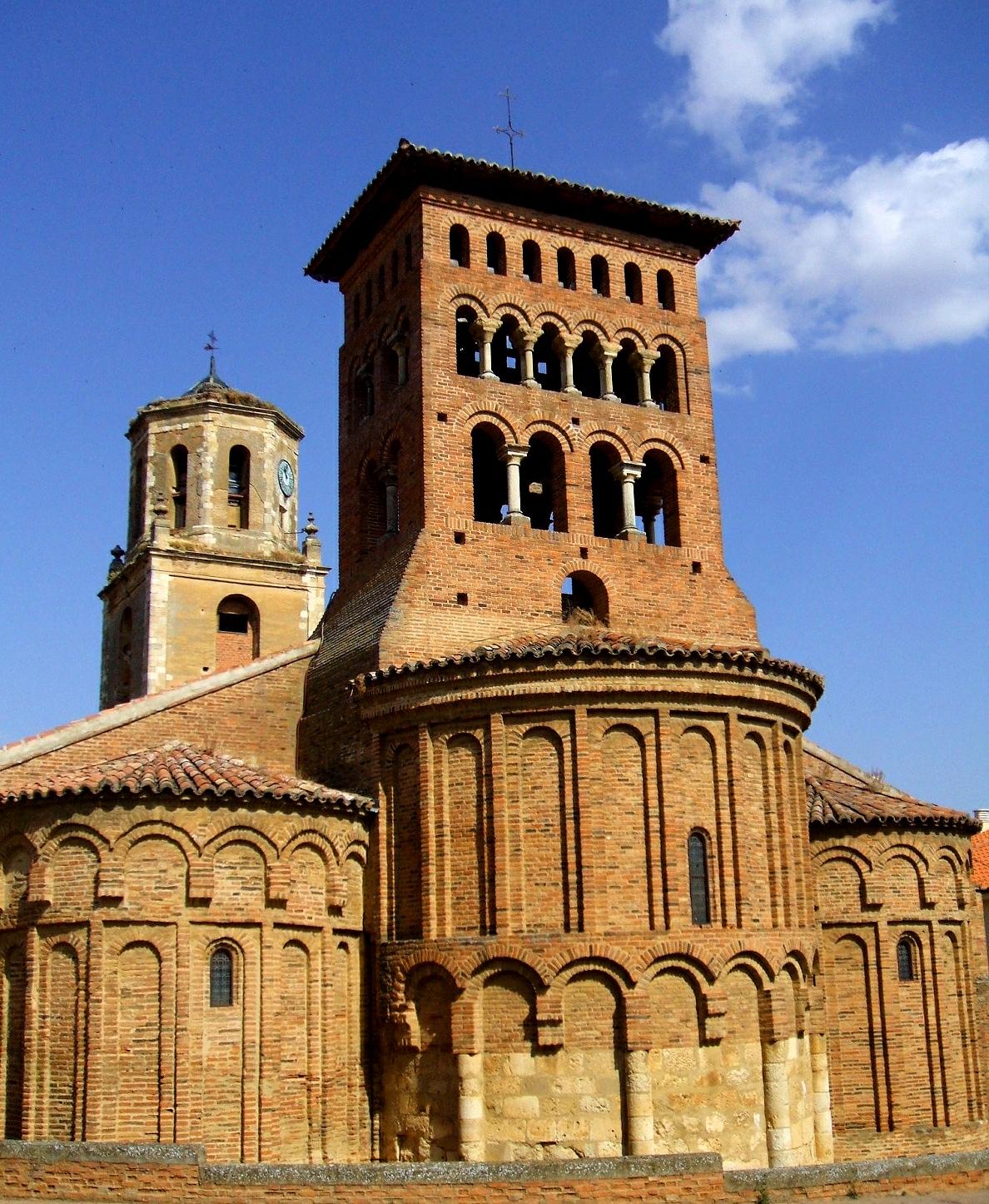
While only fragments of walls and arches survive from the original monastic complex, Sahagún's influence on regional architecture is best seen in the churches raised by the same craftsmen. The Church of San Tirso stands out for its slender tower and its blend of Romanesque and Mudéjar elements, later serving as a model for other buildings in the area. The Church of San Lorenzo is another gem of the Romanesque-Mudéjar style, built entirely in brick and known for its distinctive four-tiered tower that narrows toward the top. Walking through Sahagún, keep an eye on the brickwork itself — the arches, blind niches and decorative friezes are the true signature of local Mudéjar, not stone.
When should you visit?
Spring and early autumn are the best times, when temperatures on the Meseta plateau are gentler than in high summer, and pilgrim traffic on the Camino de Santiago still lets you feel the town's genuine atmosphere without the crowds typical of August. Winters in Sahagún can be harsh and windy, worth factoring in if you plan to walk around the exposed monastery grounds.
Frequently asked questions
Is there anything left of the monastery to visit? Yes, though only in fragments — remnants of walls and architectural elements, and above all a stylistic legacy visible in the nearby churches of San Tirso and San Lorenzo.
Why is Sahagún called the cradle of Mudéjar? Because it was here, in the mid-12th century, that Muslim building techniques were first combined with Christian Romanesque architecture, creating a style that later spread across Castile and León.
Does Sahagún lie on the Camino de Santiago? Yes, the town is one of the key stops on the Camino Francés, between Burgos and León.
How much time do you need to see it? Half a day is enough to take in the monastery remains and the nearby Mudéjar churches at an unhurried pace.
Nearby places

Earn badges for the places you visit
Download NextOnTrip, discover new places and check off your trails.