About this place
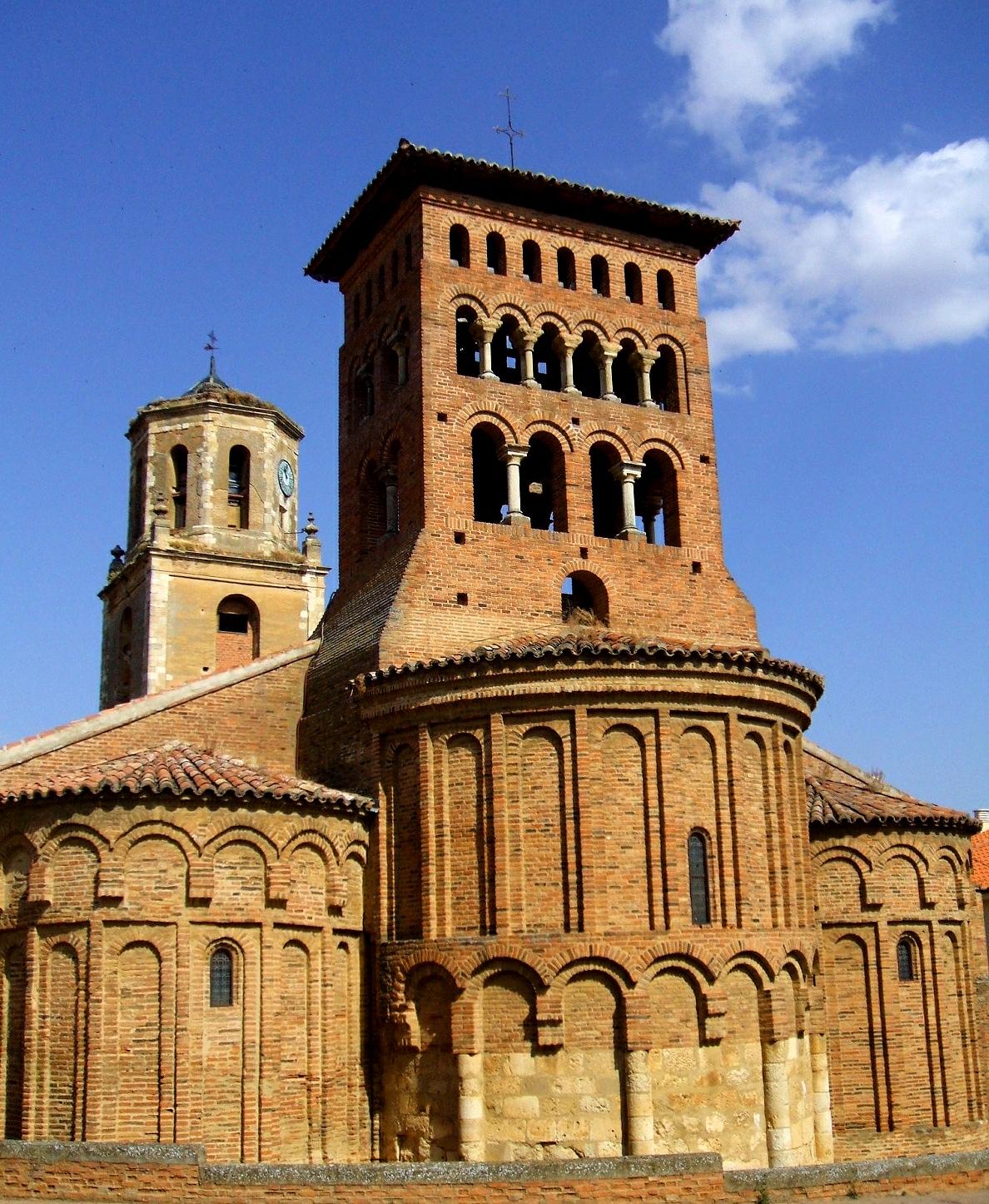
Church of San Tirso stands in Sahagún, a small town in the province of León on the Camino de Santiago, and ranks among the oldest and most important Mudéjar buildings in Spain. It was here, in a town with a deep monastic tradition, that the style now known as Castilian-Leonese Mudéjar first took shape before spreading across the wider region.
Where does this building come from?
The church's story begins in the early 12th century — documents dated 1123 and 1126 already mention a church on this site, which allows historians to date its construction with unusual precision. At the time, Sahagún was a major religious and pilgrimage centre: its Benedictine monastery gave the town a standing comparable to the greatest monastic hubs of medieval Spain. San Tirso was built in that context as a parish church, closely tied to the town's growth along the pilgrim route.
What makes this place architecturally unusual?
Construction started in stone — traces of this first phase are still visible today in part of the main apse, where columns and details follow Romanesque forms. The stonework, however, stopped at a height of just over three metres, and the rest of the building was raised in brick, in the Mudéjar style: a distinctive fusion of Islamic building techniques with a Christian architectural programme. This shift in material and style partway through construction is easy to spot with the naked eye and is one of the most interesting details for anyone visiting the site.
San Tirso's importance goes beyond Sahagún itself: the church is considered the prototype that inspired later Mudéjar buildings, both in the town — its typological twin is the Church of San Lorenzo — and in the neighbouring provinces of Zamora, Valladolid, Ávila and Segovia. Since 1931 it has held the status of a Historic-Artistic Monument of national interest, confirming its place in the history of Spanish architecture.
What should you look out for on site?
While visiting San Tirso, pay attention to the tower, the distinctive brick texture of the walls, and the details of the apse, where the transition from Romanesque stone to Mudéjar brick is most clearly visible. The interior, more modest than the exterior, retains a layout typical of churches from this period and lets visitors trace the building's successive alterations across the centuries.
How to get there and when to visit?
Sahagún sits directly on the Camino Francés, the main route of the Camino de Santiago, so the church is seen by many pilgrims walking or cycling toward Santiago de Compostela. The town has good road connections to León and Palencia, and the church itself stands in the centre, within walking distance of the town's other monuments. Spring and autumn are the best times to visit, since temperatures on the Meseta plateau are milder than during the region's hot summers.
Frequently Asked Questions
How old is the Church of San Tirso? The earliest documentary references date to 1123 and 1126, and the building itself was constructed in the early 12th century.
Why is the church considered so significant? It is one of the first and most representative examples of Mudéjar style in Castile and León, and it served as a model for later churches across the region.
Can you actually see the different construction phases? Yes — the lower part of the main apse is stone and Romanesque, while the upper sections of the walls are brick and Mudéjar, a contrast that's easy to notice while touring the building.
Is the church located on the Camino de Santiago? Yes, Sahagún lies on the Camino Francés, one of the most popular routes of the pilgrimage to Santiago de Compostela.
Nearby places

Earn badges for the places you visit
Download NextOnTrip, discover new places and check off your trails.