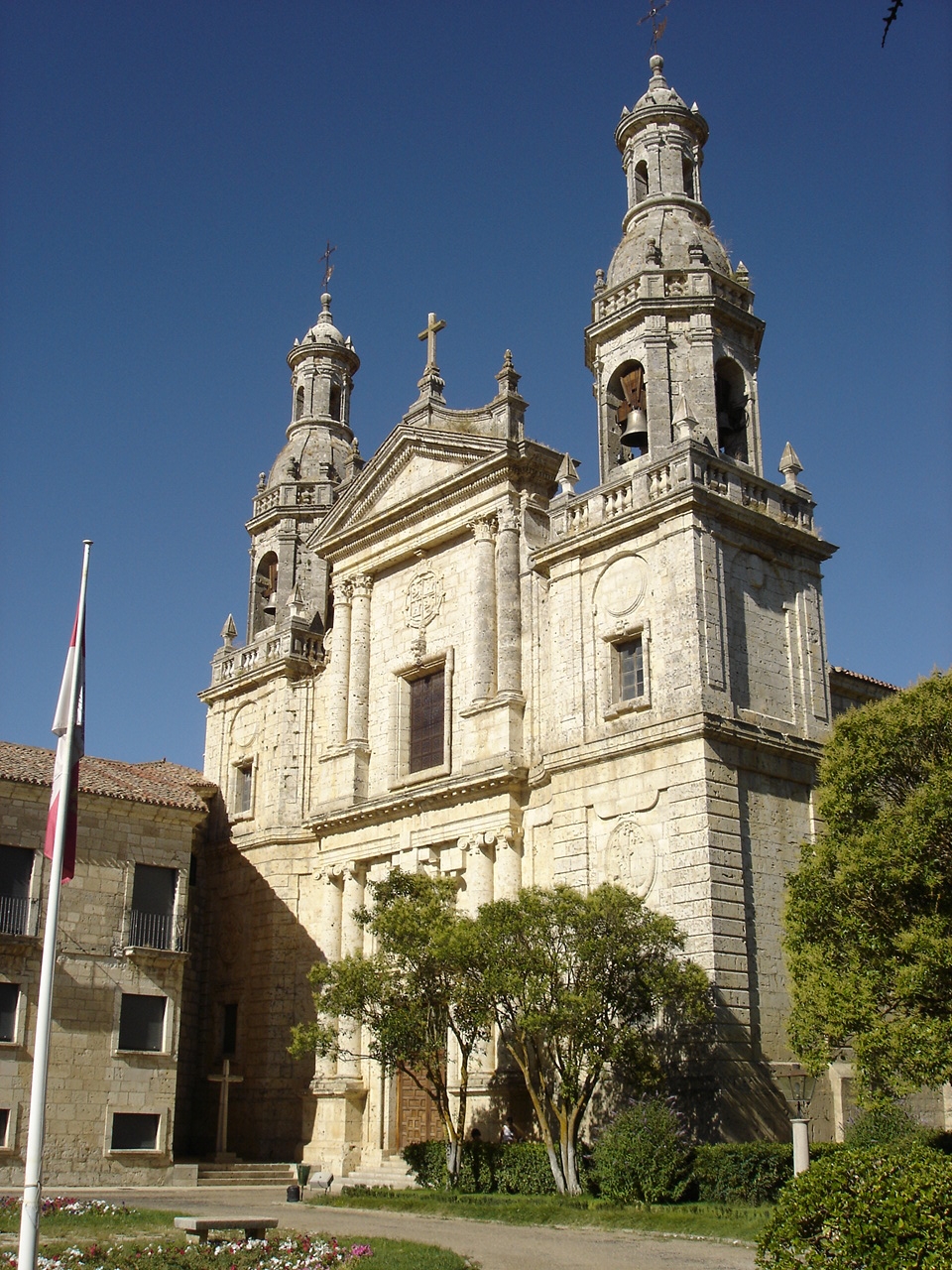
About this place
Monasterio Cisterciense de la Espina is a 12th-century Cistercian monastery set among the open farmland of Tierra de Campos, a few kilometres from Castromonte in the province of Valladolid. Its story ties together a crusade-era relic brought from Paris, one of the oldest Cistercian foundations in Spain, and a building that survived fire, war and religious confiscation.
Where does the name come from and what happened here?
The monastery owes its existence to Sancha Raimúndez, sister of Emperor Alfonso VII of Castile. During a stay in Paris she received from King Louis VII of France a thorn said to come from Christ's Crown of Thorns, a relic previously guarded by the French crown. Back in Castile, Sancha donated her estates near Aborridos to build a monastery that would house the relic, placing it in the hands of the Cistercian Order. The first monks arrived in 1147 from the Abbey of Clairvaux, sent personally by Saint Bernard of Clairvaux, the driving force behind the Cistercian reform. That founding makes La Espina, by tradition, the first Cistercian monastery established on the Iberian Peninsula.
The centuries that followed were not gentle. A fire in 1731 destroyed the monastic library and much of the complex, though the community managed to save both the relic of the Holy Thorn and the Tumbo, the monastery's historic record book. Monastic life finally ended in the 19th century: the disruption of the Napoleonic invasion and the Mendizábal confiscation of church property forced the monks to leave for good in 1835, after which the buildings fell into disrepair until restoration work began.
How do you get there?
Castromonte sits in the quiet farming heartland of Tierra de Campos, in Valladolid province, well off the main tourist routes. The monastery itself stands isolated among the fields, so travelling by car is by far the most practical option; there is no direct rail connection. It works well as a stop on a longer route through the historic towns and villages of the province rather than as a standalone day trip.
What will you see on a visit?
The complex is arranged around two cloisters. The older one, the Regular Cloister, dates from the 12th century and forms the core of the original foundation. The second, known as the Hospedería, was added in the 16th century and originally welcomed travellers and pilgrims. Around both courtyards stand the rooms typical of a Cistercian monastery — the chapter house, the sacristy and the church — all of which can be visited. Walking through the complex traces how a medieval monastic community actually functioned, from prayer spaces to working areas to guest quarters. A guided tour is well worth taking, since it weaves the historical, artistic and religious threads of the site's eight centuries into a single narrative.
When is the best time to visit?
Given its setting in rural central Spain, spring and autumn are the most comfortable seasons, avoiding the harsh heat of the Castilian summer. Because Castromonte is a small village with limited tourist infrastructure, it's worth checking opening hours and guided-tour availability in advance, as visits are often scheduled at set times of day rather than offered continuously.
Frequently asked questions
What is the Holy Thorn relic the monastery is named after? It is a thorn believed to come from Christ's Crown of Thorns, given to the monastery's founder by King Louis VII of France and kept at the site ever since.
Is this really the oldest Cistercian monastery in Spain? According to historical tradition, yes — it was founded in 1147 by monks sent from the Abbey of Clairvaux, making it the first Cistercian foundation on the Iberian Peninsula.
What are the main things to see inside? Two cloisters — the 12th-century Regular Cloister and the 16th-century Hospedería — along with the chapter house, sacristy and monastic church.
Is the monastery still an active religious community? No. The monks left permanently in 1835 following the Mendizábal confiscation of church property; today the building survives as a historic monument open to visitors.
Nearby places
-

Museo Convento de San Francisco
Medina de Rioseco
-
Church of Santa Cruz-Museo de Semana Santa, Medina de Rioseco
-
Ermita de Santa Marina
Belmonte de Campos
-
Monastery of Santa María de Matallana
Villalba de los Alcores
-
Iglesia museo de San Antolín de Tordesillas
Tordesillas
-
Royal Convent of Santa Clara
Earn badges for the places you visit
Download NextOnTrip, discover new places and check off your trails.