About this place
Ermita de Santa Marina is a small, partly ruined Romanesque chapel standing on the edge of Belmonte de Campos, a village in the province of Palencia, in the Tierra de Campos region of Castile and León. It sits in a now-abandoned part of the settlement known as Los Barrios, right next to a spring of the same name, a few hundred metres from the village centre, near a crossroads of country lanes.
What can you see there?
The chapel dates back to the 13th century and was originally built as a typical rural late-Romanesque church, using rubble stone and dressed limestone blocks. The square-shaped chancel visible today, however, is not part of the original design — it results from a later rebuild carried out in the 16th or 17th century, when sections of brick and adobe were also added, a construction style typical of the Tierra de Campos region.
The most notable surviving feature is the doorway on the south façade. It projects slightly from the wall face and is capped by an overhanging roof resting on ten concave-profile corbels (known locally as "nacela" corbels) — a decorative detail characteristic of Romanesque stonework in this part of Castile. This single architectural element is what gives the otherwise abandoned building its heritage value.
The state of conservation is concerning: the structure is partially in ruins, and dense vegetation has overtaken much of the south-facing wall, obscuring parts of the façade. As a result, Ermita de Santa Marina appears on Spain's Red List of Heritage (Lista Roja del Patrimonio), a register of monuments considered at serious risk of collapse or permanent loss.
How do you get there?
Belmonte de Campos lies at the heart of Tierra de Campos, an agricultural region known for its wide cereal fields and distinctive earth-and-brick architecture. The village is reached via local roads connecting it to the larger cities of Palencia and Valladolid. The hermitage itself stands outside the built-up centre, so the easiest approach is on foot from the village — a short walk of a few minutes across the fields toward the old, abandoned Los Barrios quarter.
When is the best time to visit?
Because the surrounding landscape is open farmland with little shade, spring and autumn are the most comfortable seasons to visit, when temperatures are mild and the fields look their best — green after the winter rains or golden just before harvest. Summers in Tierra de Campos can be intensely hot and sunny, which makes longer walks around the exposed site less pleasant.
Who is this site for?
Ermita de Santa Marina appeals to travellers interested in Romanesque architecture, endangered heritage, and the lesser-known corners of Castile. It is not a conventional tourist attraction — there is no visitor infrastructure, signage, or information point on site. Its appeal lies precisely in that authenticity: a 13th-century doorway standing in an unspoiled rural setting, far from crowds and commercial development.
Frequently asked questions
Can you go inside the hermitage? No. The building is abandoned and partly in ruins, with no visitor access or facilities. It is best viewed from the outside.
What is the most important architectural feature? The Romanesque doorway on the south façade, with its roof overhang supported by ten concave corbels, is the only element that has survived largely intact from the original 13th-century construction.
Why is it listed on Spain's Red List of Heritage? Because of its poor structural condition, lack of maintenance, and the encroaching vegetation that threatens to further damage the building over time.
Are there other sights nearby? Yes. Belmonte de Campos itself, along with neighbouring villages in Tierra de Campos, preserves traditional earth-and-brick architecture and other small Romanesque chapels and churches, making it easy to combine several stops on a single regional trip.
Nearby places
-

Church of Santa Cruz-Museo de Semana Santa, Medina de Rioseco
-
Museo Convento de San Francisco
Medina de Rioseco
-
Monastery of Santa María de Matallana
Villalba de los Alcores
-
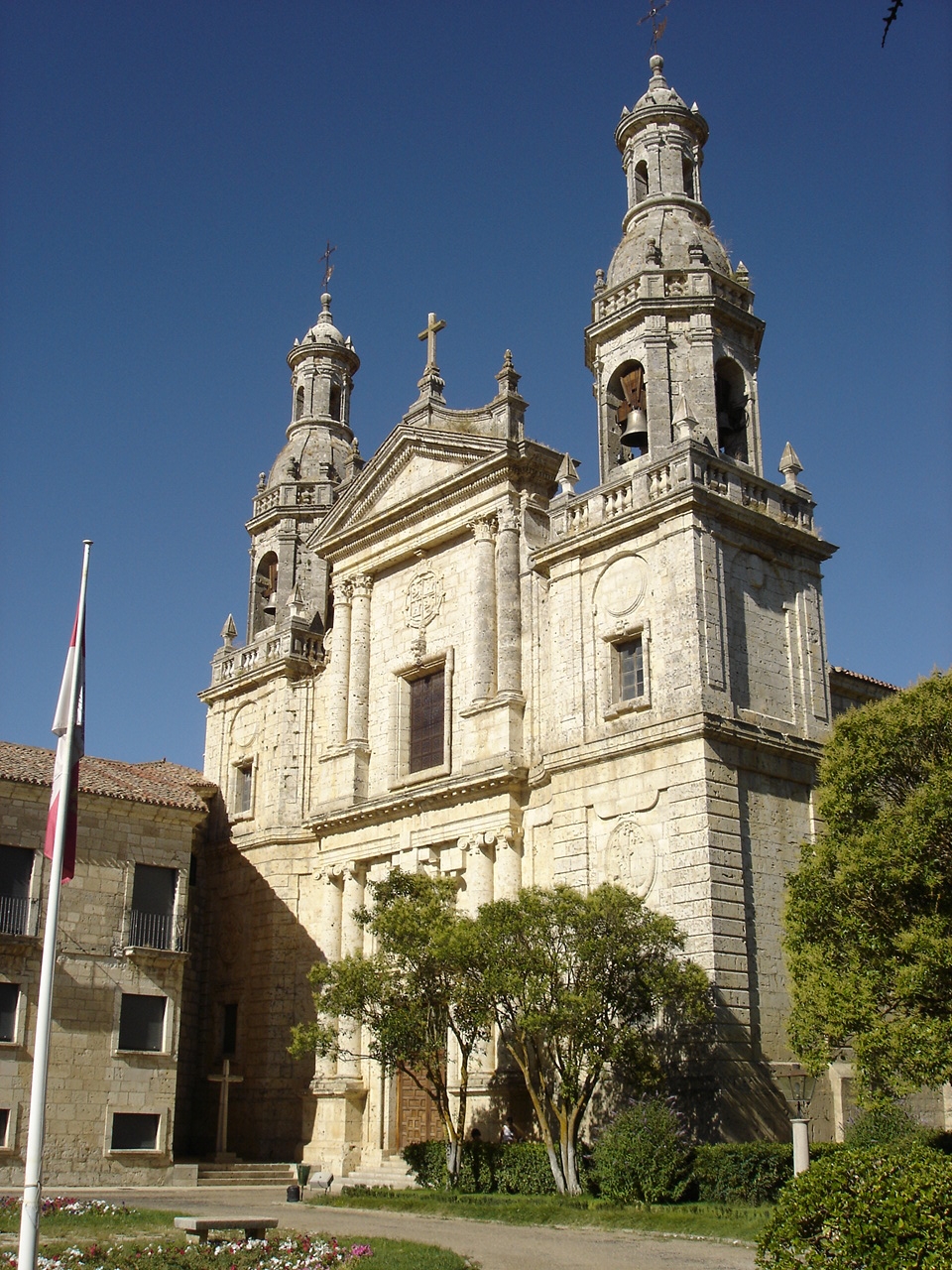
Monasterio Cisterciense de la Espina
Castromonte
-
Church of Santa María, Paredes de Nava
Paredes de Nava
-
Monastery of Santa María de Palazuelos
Corcos
Earn badges for the places you visit
Download NextOnTrip, discover new places and check off your trails.