About this place
Maple Copse Cemetery is a small war cemetery tucked among trees near Zillebeke, just outside Ypres, close to Sanctuary Wood and Hill 62 — a quiet spot that has marked one of the bloodiest chapters of the Ypres Salient for over a century.
Where does the name Maple Copse come from?
The name was given by the army to a modest plantation of trees that stood roughly 900 metres east of the village of Zillebeke, right on the western edge of Sanctuary Wood. During the war this unassuming patch of woodland became strategically important, hosting advanced dressing stations that treated soldiers wounded just meters away on the front line.
What battle shaped this place?
Burials in the copse began even before June 1916, but it was the Battle of Mount Sorrel — one of the pivotal engagements of the Ypres Salient in 1916, fought largely by Canadian troops against a determined German assault — that gave the site its grim significance. Shelling in the area was so intense that many of the earlier graves were destroyed even while the war continued, and further fighting later in the same sector compounded the damage.
Why are so many graves unmarked?
After the Armistice, the ground on the north side of the copse was enclosed and cleared, and an effort was made to account for what remained of the burials. The trouble was that of the graves known to have existed, only a fraction could actually be located, and among those, just a small number could be positively identified. As a result, alongside conventional headstones bearing names, the cemetery holds numerous special memorials dedicated to soldiers whose original graves had been destroyed and could never be recovered — a stark testament to the devastation this stretch of the front endured.
Who designed the cemetery?
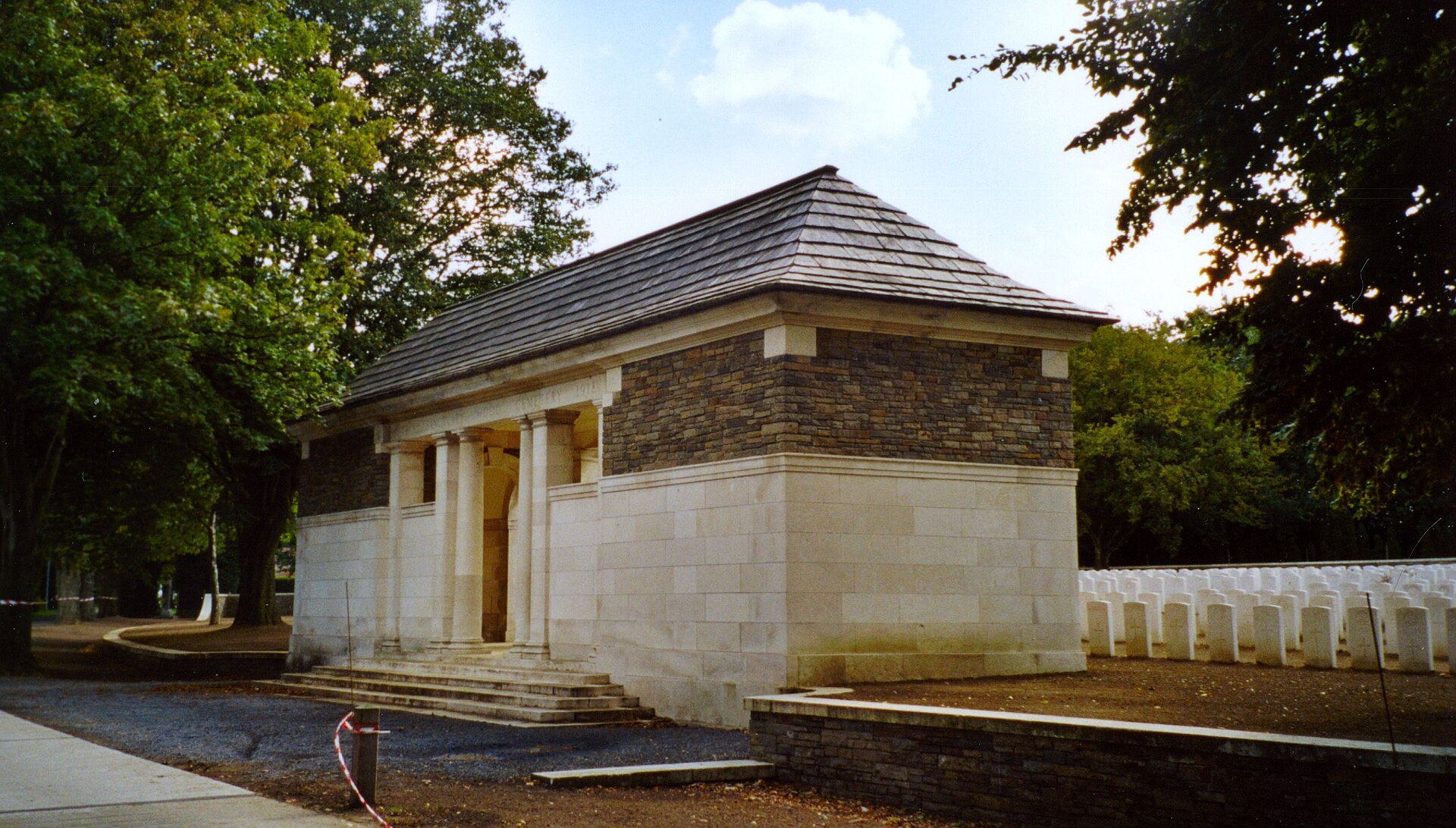
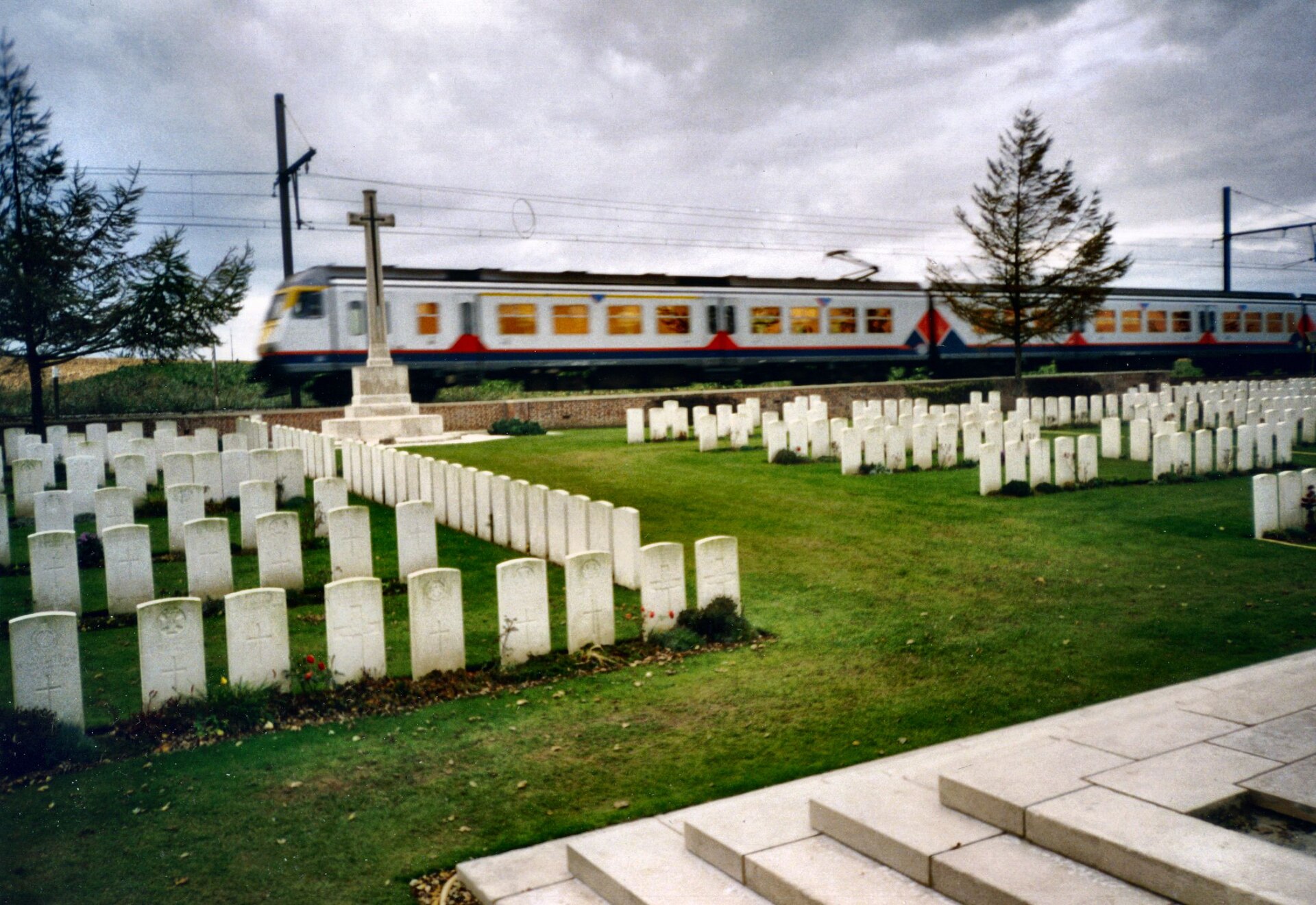
Maple Copse Cemetery was designed by Sir Edwin Lutyens, one of the principal architects behind Britain's war cemeteries after the First World War. His restrained, monumental style — centered on the stone Cross of Sacrifice — appears across many similar burial grounds throughout the Ypres region, giving the scattered cemeteries of the Salient a shared architectural language of remembrance.
How many soldiers are buried here?
Today, Maple Copse Cemetery holds a total of 308 burials and commemorations from the First World War. The largest single group are Canadian soldiers, alongside a substantial number from the United Kingdom. A significant portion of those buried here remain unidentified, marked simply as unknown soldiers — a common and sobering feature of cemeteries across the Ypres Salient, where fighting raged with extraordinary intensity for months on end.
Why is it worth visiting?
Although less visited than some of the larger cemeteries around Ypres, Maple Copse Cemetery offers a particularly authentic experience: it sits in a quiet, wooded corner away from the main tourist routes, making for a calm and reflective stop. It pairs naturally with a visit to nearby Hill 62 and Sanctuary Wood, where preserved trench remains can still be seen today. For anyone interested in the history of the Canadian Expeditionary Force and the Battle of Mount Sorrel, this cemetery carries considerable symbolic weight.
Frequently asked questions
Where exactly is Maple Copse Cemetery located? It lies around 5 km southeast of Ieper (Ypres) town centre, along a road leading off the Meenseweg (N8) that connects Ieper to Menen, near the village of Zillebeke.
Who is buried at this cemetery? Mainly Canadian and British soldiers who died during the Battle of Mount Sorrel in 1916 and in subsequent fighting in this part of the Ypres Salient.
Are most of the graves identified? No — a large proportion of those buried here are unknown soldiers, and many casualties are commemorated only on special memorials because their original graves were destroyed in later fighting.
Nearby places

Earn badges for the places you visit
Download NextOnTrip, discover new places and check off your trails.