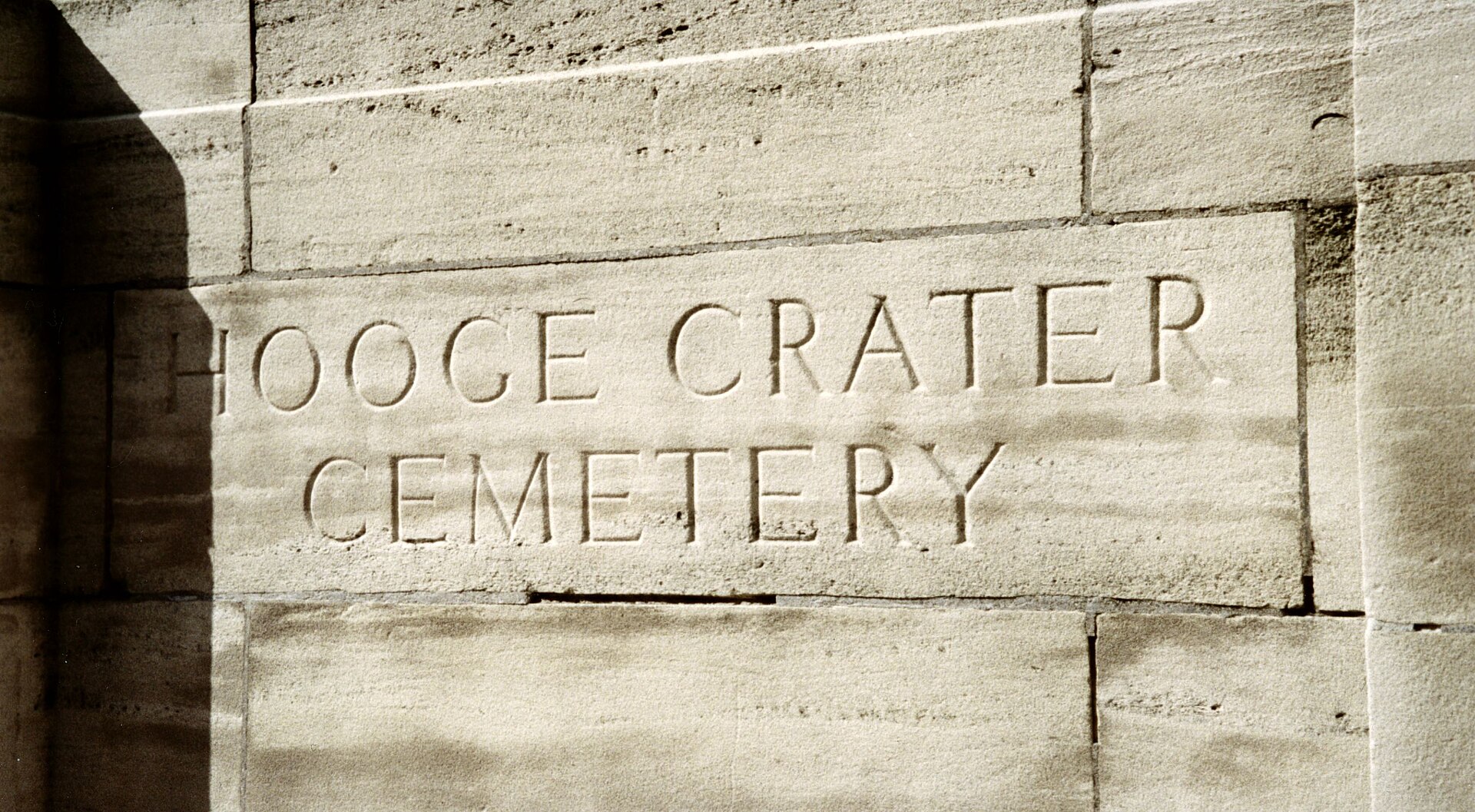
About this place
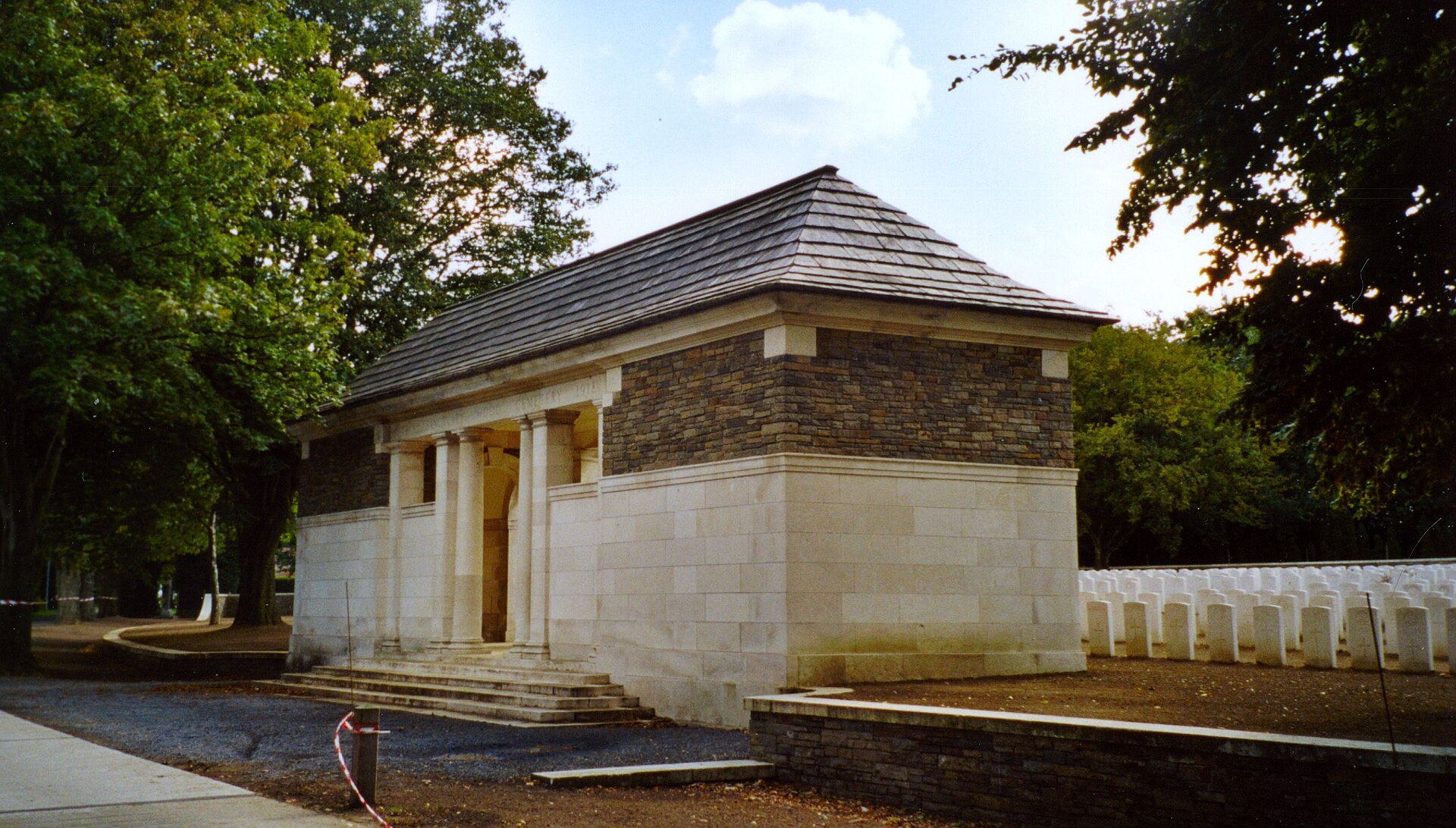
Hooge Crater Cemetery is a Commonwealth War Graves Commission burial ground for the dead of the First World War, located in the Ypres Salient in Belgium, on what was once the Western Front. It lies close to the village of Hooge, roughly 4 kilometres east of Ypres, in the province of West Flanders.
Where does the cemetery's name come from?
The cemetery takes its name from a mine crater created by an explosion in 1915 near this spot. Underground mining was one of the tactics used during the First World War: both sides dug tunnels beneath enemy lines and detonated explosive charges within them. The crater left behind by one such blast in the Hooge area later gave its name to this burial ground.
Where exactly is the cemetery located?
The cemetery sits near the centre of Hooge, a small village positioned on the Bellewaerde Ridge. Directly across the Menin Road stands the Hooge Crater Museum, dedicated to the history of the fighting that took place in this area. The proximity of the cemetery and the museum means visitors can, in a single visit, learn about the historical background of the events here while also paying their respects to those buried on the site.
The Menin Road itself is one of the best-known roads associated with the fighting around Ypres. It ran from the town toward the front lines and saw thousands of soldiers pass along it during the war.
What is the Commonwealth War Graves Commission?
The cemetery is maintained by the Commonwealth War Graves Commission (CWGC), the organisation responsible for the graves and memorials of Commonwealth service members who died during the two World Wars. The CWGC cares for hundreds of cemeteries and memorials across the Ypres Salient, a region that saw some of the bloodiest fighting of the Western Front, including three separate Battles of Ypres.
Why was the fighting around Hooge so fierce?
The area around Hooge, situated on the Bellewaerde Ridge, held significant tactical value: control of this slightly elevated ground offered an observational advantage over the surrounding flat Flemish countryside. This is part of why the area saw such intense, close-quarters fighting, with control changing hands repeatedly and mining operations — like the one that produced the crater giving the cemetery its name — used to break the deadlock.
Frequently asked questions
Where is Hooge Crater Cemetery located? It lies near the village of Hooge, about 4 km east of Ypres, in the province of West Flanders, Belgium.
Where does the cemetery's name come from? From a mine crater created by an explosion in 1915 near the site.
What stands opposite the cemetery? The Hooge Crater Museum, dedicated to the history of the fighting in the area, stands across the Menin Road.
Who manages the cemetery? It is maintained by the Commonwealth War Graves Commission (CWGC), which cares for the graves of Commonwealth service members.
From which period does the cemetery date? The cemetery is connected to the fighting of the First World War in the Ypres Salient on the Western Front.
Nearby places

Earn badges for the places you visit
Download NextOnTrip, discover new places and check off your trails.