About this place
Leonor Pérez Cabrera is a small memorial relief in the historic quarter of La Orotava, Tenerife, honoring a woman born in the Canary Islands who became one of the most recognized figures in Cuban history — the mother of José Martí, the poet and national hero of Cuba's independence movement.
Who was Leonor Pérez Cabrera?
Leonor Pérez Cabrera was born in 1828 in Santa Cruz de Tenerife. As a teenager she emigrated with her family to Havana, following a path taken by hundreds of Canarian families in the 19th century in search of better prospects across the Atlantic. In Havana, in 1852, she married Mariano Martí, and a year later gave birth to her firstborn son, José. The couple went on to have seven more children, but it was their eldest who became the writer, philosopher, journalist and independence leader remembered today across Cuba. Leonor Pérez died in Havana in 1907, outliving her famous son by more than a decade — Martí was killed in 1895 during the fight for Cuban independence.
Why is she honored in La Orotava?
The memorial in La Orotava does not mark her birthplace — that is Santa Cruz de Tenerife, where a separate bronze bust by Cuban sculptor Thelvia Marín Mederos was unveiled in 2006. The relief in La Orotava serves a different purpose: it stands as a symbol of the long, multigenerational ties between the Canary Islands and Cuba. Canarian emigration to Cuba continued throughout the 19th century and into the early 20th, and many island families still have Cuban relatives today. Leonor Pérez — mother of a man Cubans regard on a par with their national heroes — became a natural emblem of that relationship, which is why several towns across the archipelago commemorate her, not only her actual birthplace.
How do you get there?
The memorial sits in the historic centre of La Orotava, a town on the northern slope of Tenerife, about 15–20 minutes by car from Puerto de la Cruz and a similar distance from Tenerife North Airport. The easiest options are driving or taking a local TITSA bus connecting the coast with the island's interior; from the town-centre stop it is a short walk to the old quarter. The historic core of La Orotava itself is pedestrian-friendly, so exploring it means strolling its cobbled streets on foot.
What else is worth seeing nearby?
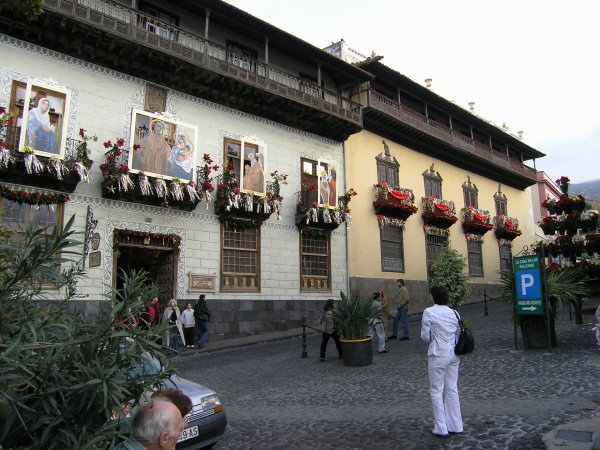
La Orotava is one of the best-preserved colonial towns on Tenerife and is a listed historic site. Within a few hundred metres of the memorial stand grand townhouses with traditional Canarian wooden balconies, the church of Nuestra Señora de la Concepción, and the Hijuela del Botánico gardens. It's worth planning a longer walk through the old town, since the relief itself is a small stop along a much larger historic route rather than a destination on its own.
When is the best time to visit?
Spring and autumn bring mild temperatures and quieter streets than the summer peak season. If your trip can be timed for June, check the dates of the Corpus Christi festival — La Orotava is famous for its enormous street carpets made of flowers and colored volcanic sand laid out across the old town, turning a visit into a genuinely memorable experience.
Frequently asked questions
Was Leonor Pérez Cabrera born in La Orotava? No, she was born in Santa Cruz de Tenerife in 1828. The memorial in La Orotava honors the historic ties between the Canary Islands and Cuba rather than her birthplace.
Who was her son? José Martí — a poet, writer and leader of the Cuban independence movement, regarded as Cuba's national hero.
Is there an entrance fee to see the memorial? No, the relief stands in an open public space in the old town and can be visited free of charge year-round.
How much time should you set aside? The memorial itself takes only a few minutes to see, but it's best combined with a visit to the whole historic centre of La Orotava, which is worth 1.5–2 hours.
Nearby places

Earn badges for the places you visit
Download NextOnTrip, discover new places and check off your trails.