About this place
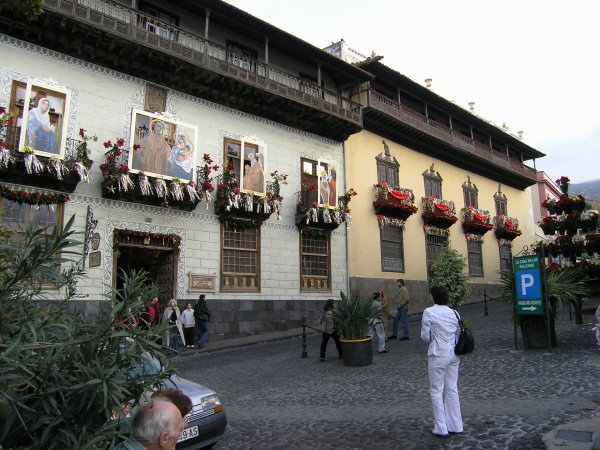
The Conjunto Histórico-Artístico la Villa de la Orotava is a protected historic urban ensemble in the town of La Orotava, Tenerife, covering the old town center shaped during the colonial era. It ranks among the best-preserved historic urban layouts in the Canary Islands, combining cobbled streets, colonial façades and the timber balconies typical of the region's traditional architecture.
Where does this place come from?
The land now occupied by La Orotava once belonged to the Menceyato de Taoro, one of the nine aboriginal kingdoms into which Tenerife was divided before the Spanish conquest, completed in 1496. After the conquest, the town's urban character began taking shape in the early 16th century, reaching its definitive form during the 17th century — the period of the town's greatest prosperity. That growth was driven largely by the wine trade, as exports from surrounding vineyards enriched the local landowning class and funded the construction of grand townhouses.
What does the historic center look like?
The buildings of the ensemble reflect the economic and social life of the town in the 16th and 17th centuries, while also adapting closely to the terrain of the valley in which La Orotava sits. The center is traditionally divided into the Villa Alta (Upper Town) and Villa Baja (Lower Town), and despite its compact layout, it hides considerable typological variety among its buildings. Numerous manor houses and structures of significant architectural value stand out, built by families who grew wealthy through trade and agriculture.
Legal protection of the site
On December 10, 1976, Royal Decree 3.302/76 officially declared the Villa de la Orotava a Historic-Artistic Ensemble (Conjunto Histórico-Artístico). A further step in safeguarding the heritage came on February 22, 2005, when Decree 22/2005 of the Government of the Canary Islands approved the precise delimitation of the protection zone for this Asset of Cultural Interest (Bien de Interés Cultural, BIC), under the category of historic ensemble. The area is also listed in the Inventory of Protection of European Cultural Heritage as a monumental ensemble.
What can you see while walking through the center?
Exploring La Orotava's historic center means wandering among cobbled lanes, colonial façades and the wooden balconies that decorate the fronts of former noble houses, a hallmark of Canarian civil architecture. The uneven, sloping terrain of the valley gives the street layout a picturesque quality, opening up unexpected views toward the surrounding hills and, on clear days, toward the Teide volcano. Walking through both the Villa Alta and Villa Baja reveals the atmosphere of a town that for centuries was one of the island's key economic and social centers.
When is the best time to visit?
Thanks to Tenerife's mild, Atlantic-Mediterranean climate, the historic center of La Orotava can be visited comfortably year-round. Spring and autumn offer pleasant temperatures well suited to longer walks along the steep, cobbled streets, while festival days — most notably Corpus Christi, when the town becomes famous for its ephemeral carpets made of flowers and volcanic sand laid out across the streets — draw especially large crowds, so planning a visit around that date in advance is worthwhile.
Frequently asked questions
What is the Conjunto Histórico-Artístico la Villa de la Orotava? It is a legally protected historic urban ensemble covering the old town center of La Orotava in Tenerife, recognized as an Asset of Cultural Interest.
When did the ensemble receive legal protection? It was declared a Historic-Artistic Ensemble on December 10, 1976 through Royal Decree 3.302/76, with its protection zone further defined in 2005.
Where did the town's architectural wealth come from? La Orotava's 17th-century prosperity came mainly from the wine trade, which allowed the local landowning class to finance the construction of grand manor houses.
How is the historic center divided? Traditionally into the Villa Alta (Upper Town) and Villa Baja (Lower Town), with an urban layout shaped by the surrounding valley's terrain.
Nearby places

Earn badges for the places you visit
Download NextOnTrip, discover new places and check off your trails.