About this place
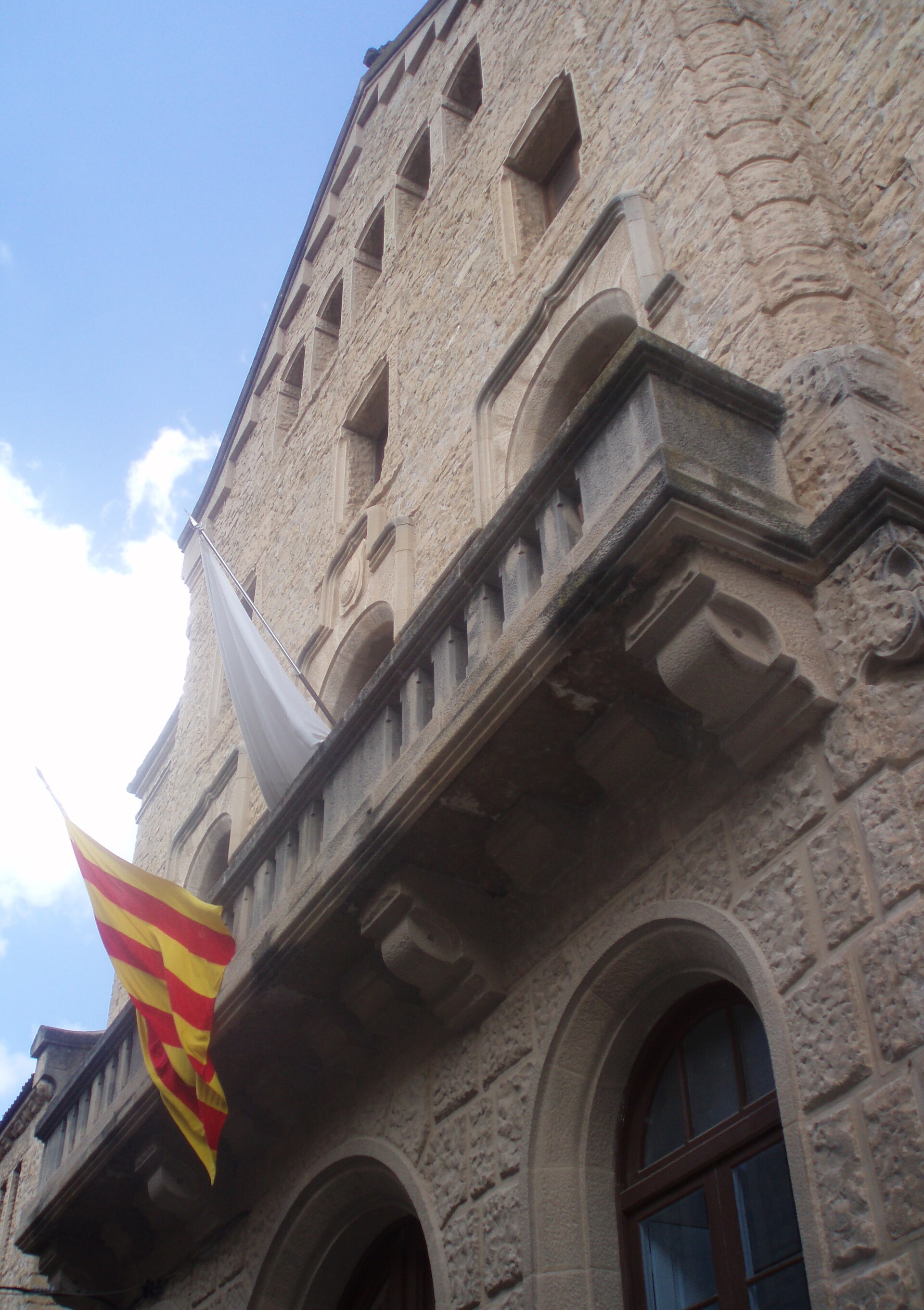
La Pobla de Cérvoles town hall sits at the heart of the small village of La Pobla de Cérvoles, a municipality in the Les Garrigues region of Lleida province, Catalonia. It's one of the more unusual examples in the area of an industrial building repurposed for public use — the seat of local government shares its roof with a small museum dedicated to olive oil.
What's inside the building?
The town hall occupies a former olive oil mill built in 1870 by a local producers' cooperative. The building was carefully restored and is listed in the Inventory of Architectural Heritage of Catalonia as a record of the 19th-century rural economy built around olive cultivation. Alongside its administrative role, it also houses the Ecomuseu de l'Oli, a small museum tracing the tradition of olive oil production in Les Garrigues, where visitors can see surviving equipment from the original mill.
How do you get to La Pobla de Cérvoles?
The village lies in the hilly, sparsely populated southeastern corner of Les Garrigues. A car is by far the easiest way to arrive — local roads connect La Pobla de Cérvoles with nearby villages such as Cervià de les Garrigues and Vinaixa. Given the small population and remote setting, public transport options are very limited, so driving is effectively the only practical way to reach it.
What else is worth seeing nearby?
The village makes a good base for exploring the surrounding hills of Les Garrigues, known for their sweeping olive and almond groves and for the traditional dry-stone shelters (barraques de pedra seca) scattered across this rocky, arid landscape. The settlement's history goes back to the 13th century: the original hamlet of Cérvoles was founded in 1236 by five families, on land that had earlier belonged to the Cistercian monastery of Poblet — one of Catalonia's most important religious houses — after Guillem de Cervera donated the local castle and its lands in 1163. In 1314, the abbot of Poblet issued La Pobla de Cérvoles a Carta de Poblament, a settlement charter that formally established the community and laid the foundation for today's municipality.
When should you visit?
Spring and autumn bring the mildest weather to Les Garrigues and show the olive-grove landscape at its best. Autumn is especially rewarding, since the olive harvest (roughly October to November) lets visitors combine sightseeing with a glimpse of the traditional fieldwork that has shaped this land for generations. Summers tend to be hot and dry, which makes extended walking less comfortable.
Frequently asked questions
Can visitors go inside the town hall? Yes — the building combines its administrative function with the small Ecomuseu de l'Oli, which presents the history of local olive oil production. It's worth checking opening hours in advance, as is typical for a small municipal facility.
Where does the name La Pobla de Cérvoles come from? The name refers to the original hamlet of Cérvoles, founded in the 13th century, and to its status as a "pobla" — a medieval settlement created under a charter, the Carta de Poblament granted by the abbot of Poblet in 1314.
Does the building still show traces of the original olive mill? The building retains its 19th-century architectural character from 1870, and its industrial past is documented in the museum section devoted to traditional olive oil production.
What other attractions are nearby? Nearby you'll find the remains of the medieval Cérvoles castle and the wider Les Garrigues landscape, with its characteristic dry-stone shepherd shelters and extensive olive groves.
Nearby places

Earn badges for the places you visit
Download NextOnTrip, discover new places and check off your trails.