About this place
Castell de l'Albi is a medieval stronghold overlooking the village of l'Albi in the Garrigues comarca, Catalonia. Its ruins crown a hilltop by the Serra de la Llena and are protected as a cultural property of national interest.
How do you get there?
L'Albi sits well inland in the Garrigues, away from the main motorways, so the easiest option is driving — roughly forty minutes from Lleida. The castle rises right above the village centre, so park near the main square and follow the steep lane climbing to the hill. The walk up takes only about fifteen minutes, but sturdy shoes help, since the last stretch is rocky and uneven.
What will you see on site?
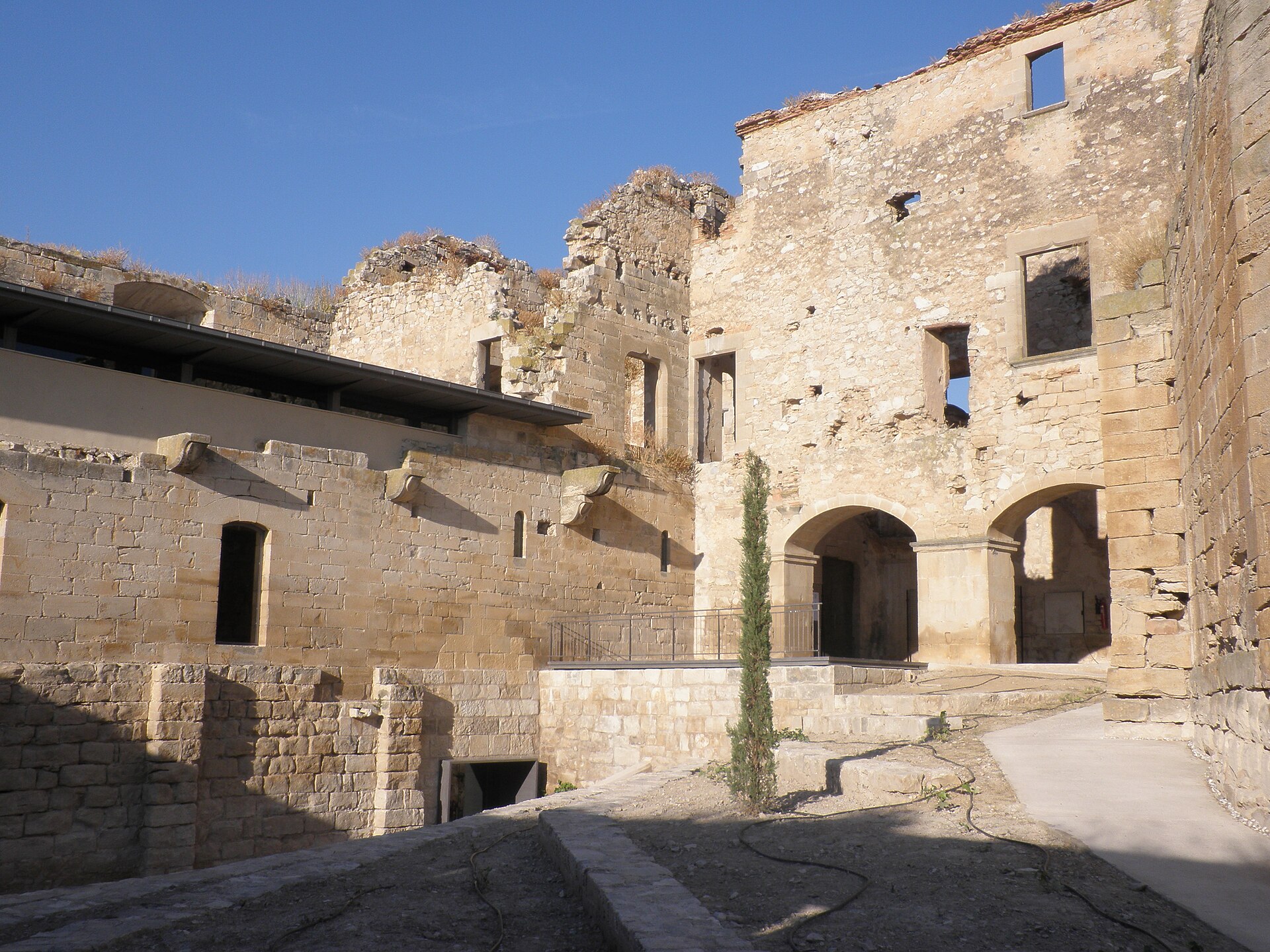
The castle is first documented in 1179, when King Alfons the Chaste entrusted it to Guillem de Cervera along with several other regional fortresses. The castrum de Albio then served, together with the nearby castles of Cervià and Vilosell, as a defensive line guarding the frontier against the County of Barcelona. It was originally built in Romanesque style and later reworked in Gothic — remains of the old cellar and prison are still visible today. From 1336 the building was expanded into one of the grandest residences in Catalonia at the time, and by the late sixteenth century it had been remodelled into a pure Renaissance palace.
The nineteenth-century civil wars marked a turning point. During the First Carlist War the castle was plundered and badly damaged: on 29 July 1836 troops under Agustí Cendrós ransacked it, and between 8 and 10 January 1838 forces led by Andreu Torres set fire to what remained. From then on the building stood in ruins. It stayed in the hands of the Montoliu family through the twentieth century until 1977, when Baron Carles de Montoliu i Carrasco donated it to the municipality of l'Albi. Excavation and conservation work followed, and in 2011 sections of the defensive walls and staircases were reconstructed, making the original layout of the fortress legible again.
From the hilltop, the view stretches over the rooftops of l'Albi and the surrounding hills of the Garrigues — reason enough on its own to make the climb, even without knowing the castle's history in advance.
When should you visit?
Spring and early autumn are the most comfortable seasons, since inland temperatures are milder and the exposed hilltop doesn't heat up the way it does in summer. In summer, an early-morning visit is worth planning, as the site offers almost no shade. Winter can be cold and windy, but visibility is often excellent.
Frequently asked questions
Is there an entrance fee? No — the ruins sit in an open hilltop area and can be visited freely along the paths that circle the walls.
How long does a visit take? Walking up and exploring the ruins usually takes 30–45 minutes, though history enthusiasts may linger longer tracing the different building phases.
Can you drive up to the castle? No — the road ends at the village, and only a footpath leads up the hill, steep on its final stretch.
What else is worth combining with the visit? Pair it with a stroll through l'Albi's narrow streets and a look at the surrounding Garrigues hills, known for their olive and almond groves.
Nearby places

Earn badges for the places you visit
Download NextOnTrip, discover new places and check off your trails.