About this place
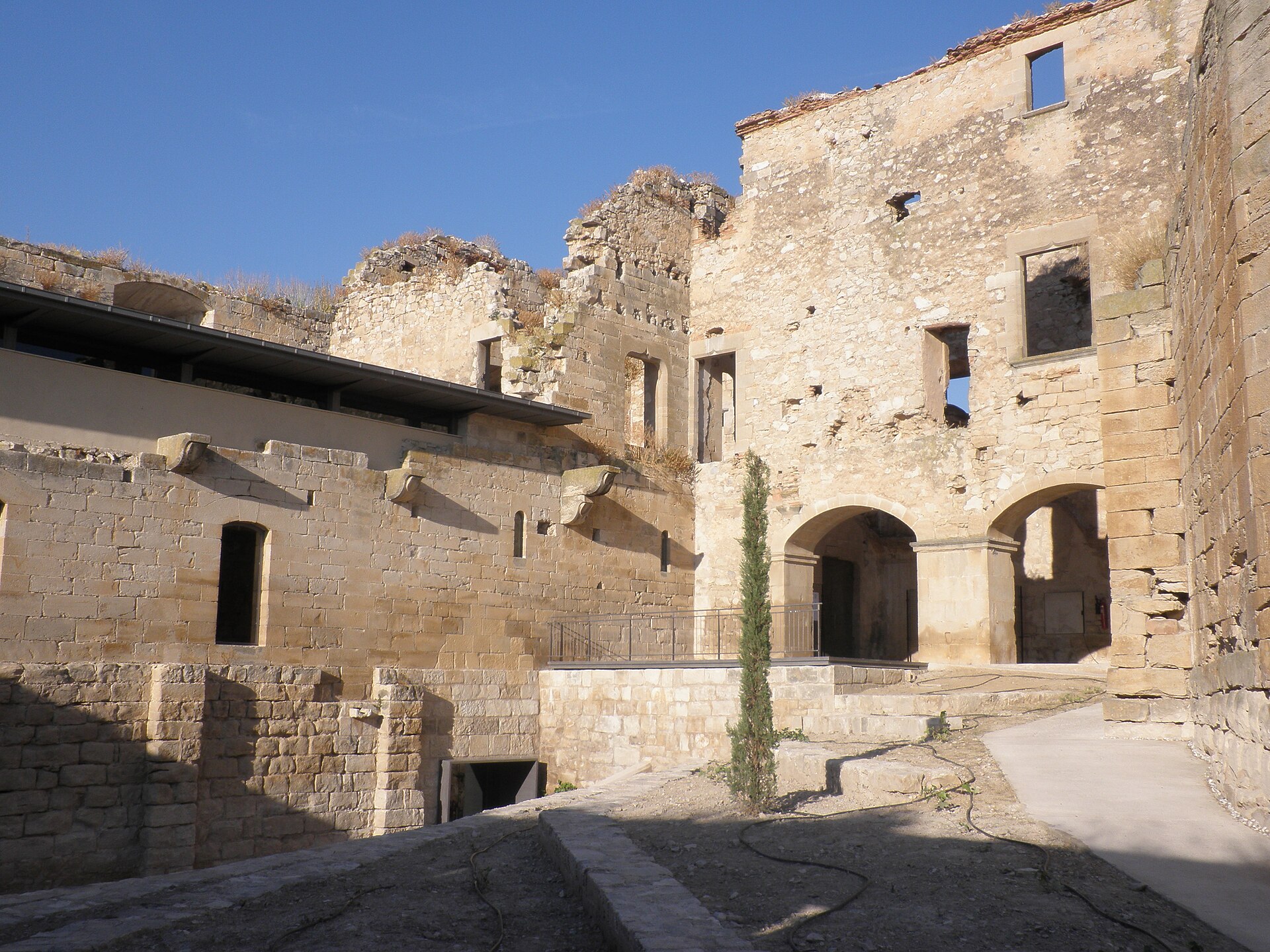
Castell de Maldà is a medieval castle standing above the town of Maldà in the Urgell region of Catalonia. Recognized as a cultural asset of national interest, it serves as the symbol and main landmark of the town and ranks among the best-known castles in the area.
When was the castle first mentioned in writing?
The earliest documentary reference to the castle dates back to 1082. It records a donation made by the counts of Barcelona — brothers Ramon and Berenguer — together with countess Mafalda, to viscount Ramon Folch of Cardona. The donation covered both the castle of Maldà and the nearby castle of Maldanell, making this one of the oldest written traces of any fortification in the district.
How did the castle change over the centuries?
The building's history unfolds in five distinct phases. The 11th and 12th centuries saw the construction of the original castle. In the 13th and 14th centuries a new fortress rose on the present site — work began in 1212, as recorded in a surviving inscription naming master builder Andreu Felip, commissioned by Guillem de Cardona. Between the 15th and 16th centuries the castle was remodeled, taking on much of the appearance it still shows today. During the 17th and 18th centuries construction was abandoned partway through, leaving the castle permanently unfinished. From the 19th century onward, the building has faced ongoing decay and plundering.
The castle also witnessed notable historical episodes. A royal visit is documented in 1249. A century later, in 1350, viscountess Beatriu d'Anglesola, widow of Hug I of Cardona, spent long periods at the castle — her stay is believed to coincide with a phase of enlargement works.
Who owned the castle through history?
Ownership of the castle changed hands repeatedly. In 1450, Pere de Cardona sold it to Bernat Albert, lord of Ponts. An inventory of the estate from 1662 has survived. Five years later, in 1667, the castle was put up for public auction and acquired by Jaume de Cartellà i Sala, who also financed the square that precedes the castle's entrance — the very square that still serves as the starting point for visits today.
What happened to the castle in modern times?
In 1833 the castle suffered damage during the Carlist conflicts, which accelerated its gradual deterioration. Despite this damage, the building survives today as a layered record of successive architectural periods — from its oldest defensive walls to the unfinished elements of its later expansion.
Who looks after the castle today?
The current Baron of Maldà and Maldanell is Alfons de Vilallonga i Serra. The owner has handed over management of the building in exchange for a seat on the Board of the Castell de Maldà, a body made up of various institutions and individuals committed to preserving the monument, including the municipality of Maldà. Thanks to this arrangement, the castle remains under continuous care, with its history documented and made accessible to visitors.
The castle stands in the town of Maldà, at coordinates 41.551277, 1.037775, in the heart of the Urgell district.
Frequently asked questions
When was Castell de Maldà built? Its oldest sections date from the 11th and 12th centuries, with the first written mention appearing in 1082. Construction of the new castle on its current site began in 1212.
Why is the castle unfinished? Building work was abandoned during the 17th and 18th centuries, so part of the planned expansion was never completed.
What damaged the castle in the 19th century? In 1833 the castle was damaged during the Carlist conflicts, marking the start of a long period of decline that continued into modern times.
Who manages the castle today? Baron Alfons de Vilallonga i Serra transferred management of the castle in exchange for a place on the Board of the Castell de Maldà, a group of institutions and individuals, including the municipality of Maldà, dedicated to its preservation.
Nearby places

Earn badges for the places you visit
Download NextOnTrip, discover new places and check off your trails.