About this place
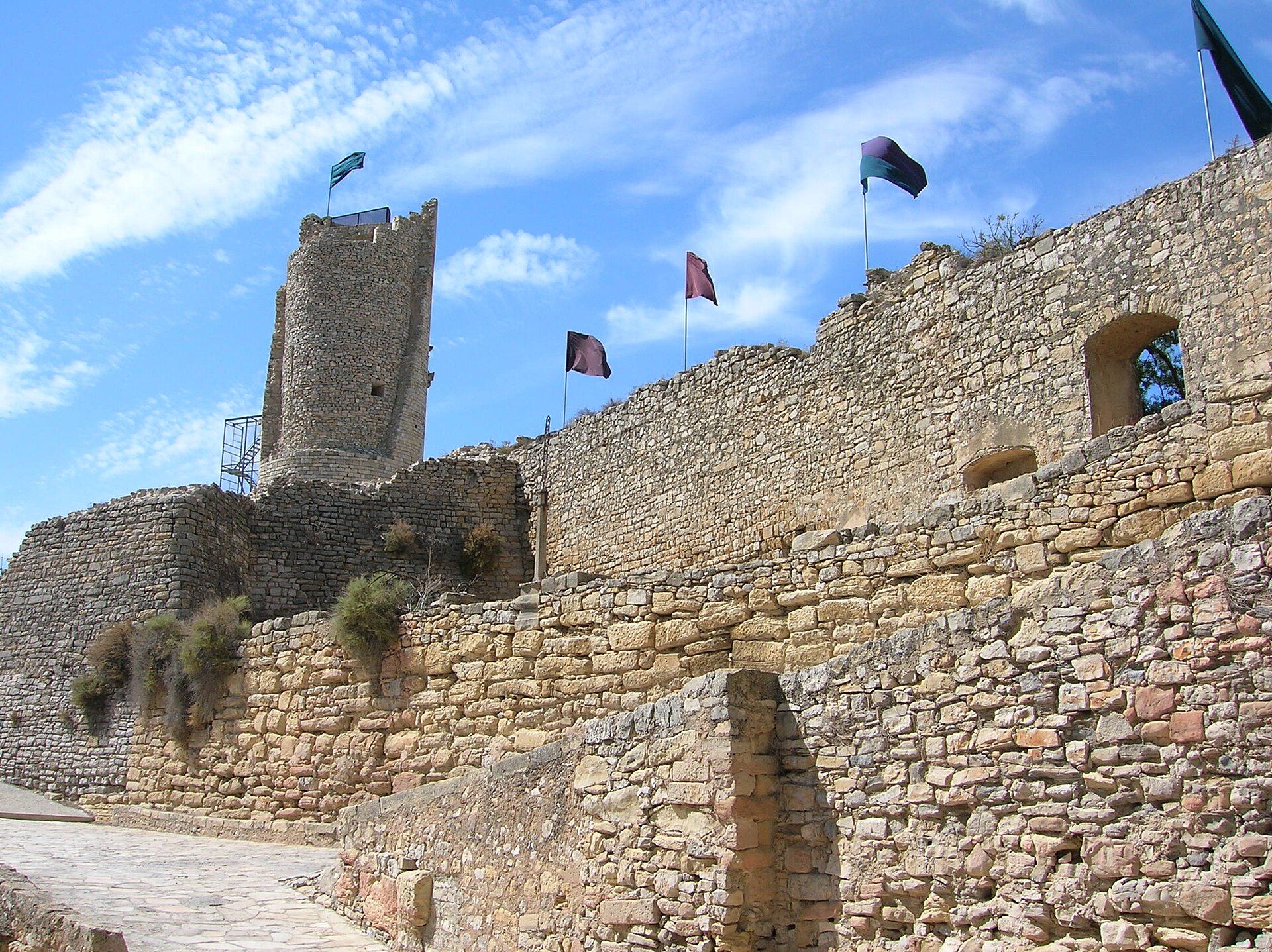
Castell de Ciutadilla is a medieval stronghold overlooking the town of Ciutadilla in the Urgell region of Catalonia. Its ruins crown a hill above the left bank of the Corb river and can be seen from a considerable distance, giving the whole area its distinctive silhouette.
Where is the castle located?
The building sits on top of a small hill, dominating the village of Ciutadilla from the side facing the Corb river. Its coordinates are 41.56099, 1.14093. The site holds the status of a cultural asset of national interest (bé cultural d'interès nacional), the highest level of heritage protection granted to historic sites in Catalonia.
How old is the castle and how did it develop?
The origins of the fortress go back to the 11th century. The earliest written reference dates from 1061, when the married couple Guillem Ramon de Camarasa and Arsenda reached an agreement with Bernat d'Oluja, under which the latter would receive the castles of Guimerà and Ciutadilla along with half of the tithes they generated. This shows that Ciutadilla already functioned as a significant defensive point at the time, administratively linked to the neighbouring Guimerà. Over the following centuries, Romanesque and Gothic elements were added to the original military structure, a common pattern for fortifications expanded in stages.
Who ruled the castle over the centuries?
In 1358, Gispert de Guimerà is recorded as lord of Ciutadilla, and his successor, Gispertó, appears in documents from 1365–1370. The same records show that Ciutadilla counted a hundred hearths (fogatge) at that time — the standard unit then used to measure a settlement's population. The Guimerà family governed Ciutadilla and its surrounding territory until the late 17th century, when the lineage merged through marriage with the Meca family, barons of Castellar del Vallès. In 1702, the title of Marquess of Ciutadilla was created, later passing to the Cortés d'Andrada, then the Sentmenat, and today it belongs to the Sagnier family.
Why was a defensive castle turned into a palace?
The biggest transformation came in the 16th century, when Gispert de Guimerà converted the old military fortress into an imposing Renaissance palace, also raising the main keep (torre de l'homenatge) — still one of the most recognisable parts of the ruins today. In this form the building served as the family residence until 1835, when it stopped being used as a permanent home.
What happened to the castle afterwards?
The building was finally abandoned in 1908. From that point on, it entered a slow process of decay that led to its current ruined state — without roofs or most of its interiors, but with the perimeter walls and the remains of the keep still standing and visible from afar.
Frequently asked questions
How old is Castell de Ciutadilla? The earliest documented traces date to the 11th century, with the first written mention from 1061; in the 16th century the fortress was rebuilt into a Renaissance palace.
Who owned the castle? For centuries it belonged to the Guimerà family. After the line merged through marriage with the Meca family, the title of Marquess of Ciutadilla, created in 1702, passed successively to the Cortés d'Andrada, Sentmenat, and Sagnier families.
Is the castle legally protected? Yes, Castell de Ciutadilla holds the status of cultural asset of national interest (bé cultural d'interès nacional), the top heritage protection category in Catalonia.
Can the castle be visited today? The site is now a ruin, abandoned since 1908, but its walls and the remains of the keep can still be viewed from the outside and offer a vantage point over the Corb valley.
Nearby places

Earn badges for the places you visit
Download NextOnTrip, discover new places and check off your trails.