About this place
Molí del Salvat de Baix is the ruin of a former water mill on the Siurana river, in the municipality of Cornudella de Montsant, in the heart of Catalonia's Priorat region. It rarely appears in mainstream guidebooks, but for visitors interested in the old rural economy of the Siurana valley and off-the-beaten-path hiking, it makes for an interesting stop near the Siurana reservoir.
What is left to see?
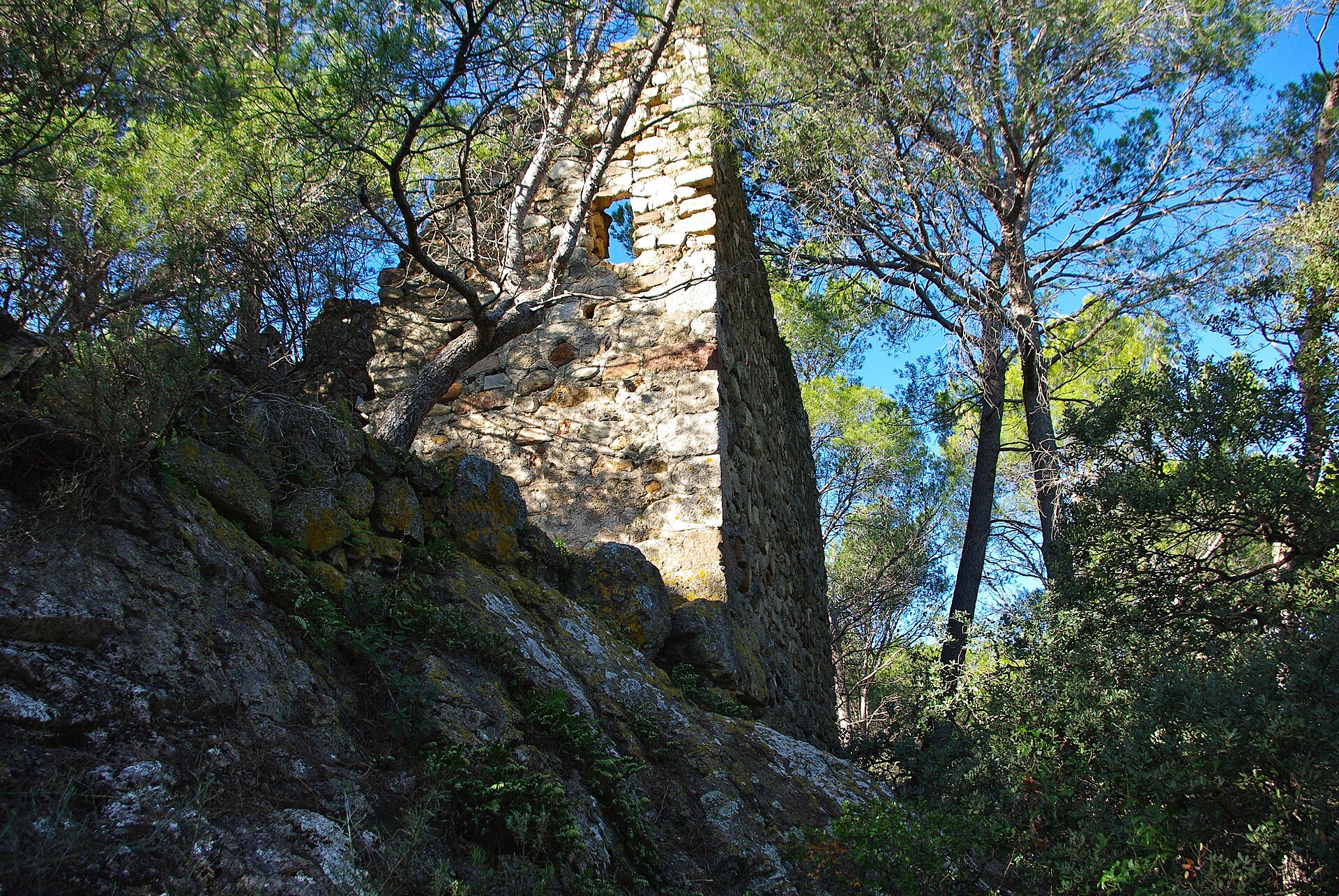
Only fragments of the mill's walls remain, in places no more than a metre and a half high. What survives today are the remnants of a larger complex of mill buildings that was historically known under other names as well — "del Pellisser" and "d'en Siurana". The ruins sit in the river valley, close to the Collet de la Mina saddle and the l'Escrivania peak, surrounded by the landscape typical of Priorat: rocky slopes, terraced vineyards and dense Mediterranean scrub. One distinctive feature is that part of the structure is sometimes fully submerged — when the nearby Siurana reservoir is full, the ruins disappear under water, only re-emerging once the level drops. That means the visible extent of the ruins changes throughout the year, so it is worth checking the reservoir's water level before planning a visit.
How do you get to Molí del Salvat de Baix?
The starting point is the town of Cornudella de Montsant, from where marked footpaths lead into the Siurana valley, toward the village of Siurana and on to the natural river pools known as the Gorgs. The ruins lie along this same valley, where several water mills once operated — reaching them requires walking, as no road leads directly to the site; a car only gets you as far as Cornudella or Siurana. Cornudella de Montsant is most easily reached via the C-242 road, either from Reus through Les Borges del Camp, or from Falset via the N-420, through Porrera and Venta d'En Pubill. The nearest larger cities are Reus and Tarragona, roughly an hour away by car. The walk calls for sturdy footwear, since paths become rocky and unmarked near the ruins.
What is the history behind the mill?
The mill went through several distinct phases of use. In the 1920s, the main building operated as a small hydroelectric generator, supplying power to nearby farms. After the Spanish Civil War it returned to its original purpose as a flour mill, running with considerable activity and serving farmers throughout the valley. Its end came with the construction of the Siurana dam and the reservoir behind it: the mill buildings were dynamited, and the resulting reservoir flooded most of the valley at this point. What visitors see today is only a fragment of the original complex — low wall remnants and foundations that survived both the demolition and years of submersion.
When is the best time to visit?
The best time to visit is during periods when the Siurana reservoir's water level is low, typically in late summer and early autumn, when the ruins are most exposed. Spring and autumn are also good seasons for walking the valley in general, since temperatures are milder than in the height of summer, when the rocky Priorat terrain can heat up considerably. It is worth combining the visit with a trip to Siurana itself, the historic clifftop village nearby, and a swim at the Gorgs pools if the weather allows.
Frequently asked questions
Can you drive to the ruins? No — you need to walk the path along the Siurana valley from Cornudella de Montsant or from Siurana; a car only takes you as far as those villages.
Why is the mill partly destroyed? The buildings were dynamited when the dam and reservoir were built on the Siurana river, which flooded most of the original mill complex.
Are the ruins always visible? Not always — visibility depends on the reservoir's water level; when it is high, part of the structure remains submerged.
What else is nearby? The area includes the clifftop village of Siurana with its historic castle, the natural river pools of the Gorgs de Siurana, and the terraced vineyards of the Priorat and Montsant wine regions.
Nearby places

Earn badges for the places you visit
Download NextOnTrip, discover new places and check off your trails.