About this place
Castell de Siurana is a ruined medieval castle perched on a cliff above the village of Siurana, in the municipality of Cornudella de Montsant, in the Priorat region of Tarragona province. The site combines dramatic views over the Montsant mountains with one of the most turbulent chapters in medieval Catalan history.
Who built the castle and why did it matter so much?
The clifftop fortification above Siurana dates back to the Islamic period, likely established sometime between the turn of the 8th century and the mid-9th century. From this stronghold, its rulers controlled an extensive territory stretching between the Camp de Tarragona and Les Garrigues — an area covering most of today's Priorat plus parts of Alt Camp, Baix Camp, Conca de Barberà, Les Garrigues, and, according to some sources, Ribera d'Ebre. The emirate of Xibrana, as Siurana was then known, held on as the last Muslim power center in what is now Catalonia, long after most of the surrounding region had fallen under Christian control.
How was the castle finally taken?
The cliff's natural defenses let Siurana hold out well after neighboring Muslim strongholds had already fallen. The castle was eventually captured in 1153-1154 by the forces of Ramon Berenguer IV, Count of Barcelona, following a prolonged siege. Once conquered, most of the former emirate's territory was reorganized into a new royal bailiwick, the "Mountains of Siurana," under King Alfonso I.
What happened once the castle lost its military role?
By the 13th century, with the Christian-Muslim frontier long since pushed far to the south, Siurana no longer served as a strategic border fortress. Instead, the castle was repurposed as a prison for high-ranking nobility. Its most notable prisoner was Charles the Lame — Charles II of Anjou, Prince of Salerno and later King of Naples — held at Siurana between 1286 and 1288. That a figure of this rank was imprisoned here shows how much strategic and symbolic weight the fortress still carried long after its military purpose had faded.
Why are only ruins left today?
The castle's fate was sealed during the Reapers' War (Guerra dels Segadors), the 17th-century conflict between Catalonia and the Spanish crown. In 1651, near the end of that war, the fortress was destroyed on the orders of King Philip IV of Castile. Siurana never regained a defensive function after that, and its walls remained in ruins until modern conservation work began.
What can visitors see on site now?
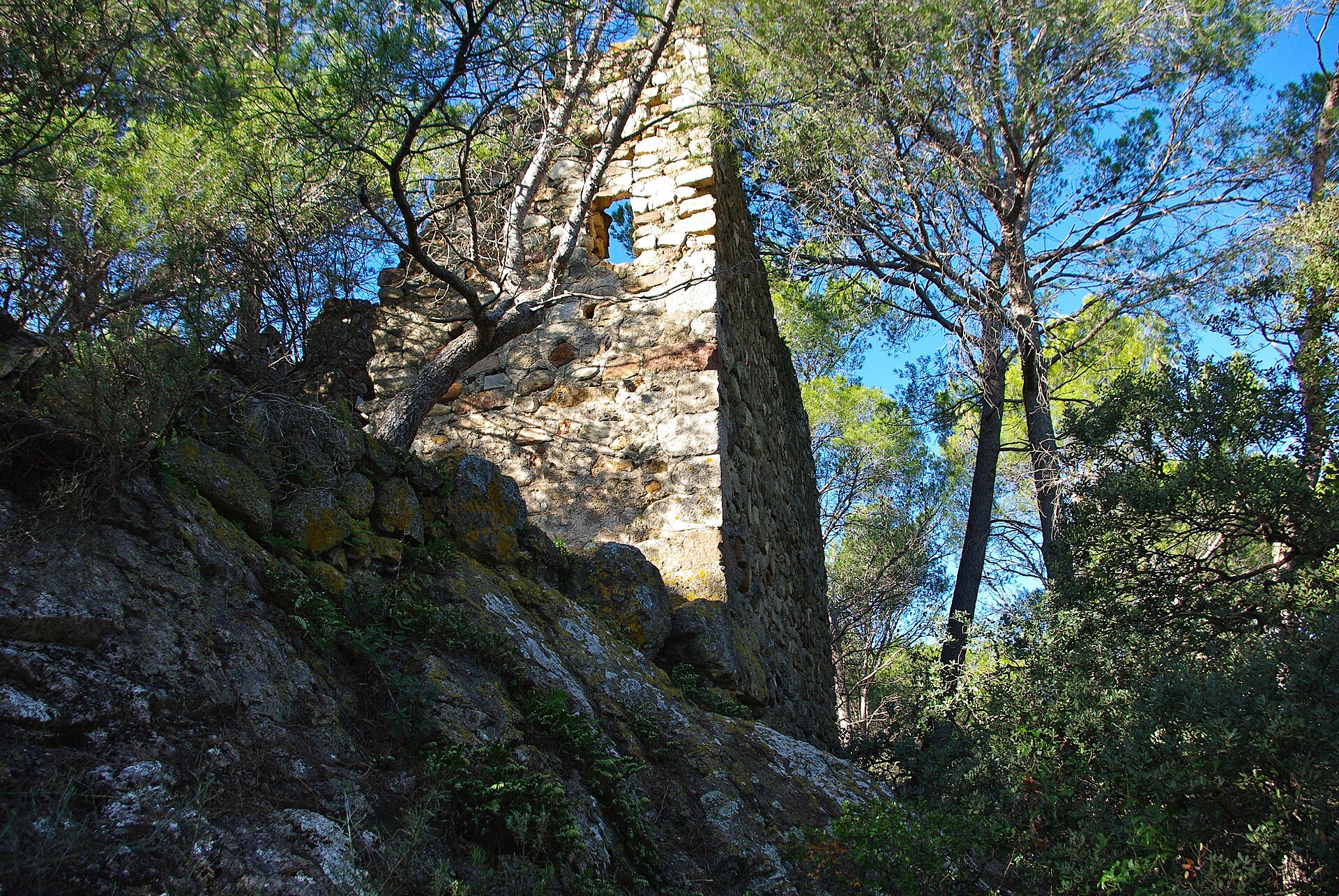
The interior of the former stronghold cannot be entered today, but consolidation work has preserved visible sections of the walls and the remains of a tower, viewable from outside. The castle stands right at the entrance to the village of Siurana, on the very spot that for centuries was the settlement's only natural access point — today it offers sweeping views over the rocky outcrop, the valley below, and the Montsant mountain range.
How do you plan a visit to Siurana?
The municipality of Cornudella de Montsant organizes guided visits on weekends: standard guided tours run every Saturday and Sunday at 12:00, with themed, dramatized tours added on the second weekend of each month at the same time. Information and bookings go through the local tourist office, reachable by email at visites@turismesiurana.org and by phone.
Frequently asked questions
Can you go inside the castle? No — the interior of the former stronghold is not open to visitors, but the consolidated wall sections and tower remains are clearly visible from outside.
Who was the castle's most famous prisoner? Charles the Lame (Charles II of Anjou), later King of Naples, imprisoned at Siurana between 1286 and 1288.
When and why was the castle destroyed? In 1651, on the orders of King Philip IV of Castile, near the end of the Reapers' War.
Can Siurana be visited with a guide? Yes — standard guided tours run on weekends (Saturdays and Sundays at 12:00), with dramatized tours once a month on the second weekend; details are handled through the Cornudella de Montsant tourist office.
Nearby places

Earn badges for the places you visit
Download NextOnTrip, discover new places and check off your trails.