About this place
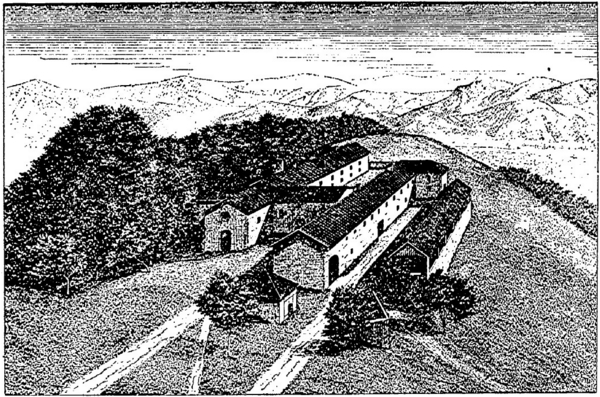
La Grande Chartreuse is the mother monastery of the entire Carthusian order, tucked away in the Chartreuse mountain range just north of Grenoble, within the commune of Saint-Pierre-de-Chartreuse. It is the place where the order's contemplative way of life began nearly a thousand years ago and where it continues largely unchanged today.
How old is the monastery, and what happened to the original building?
The community traces its roots to 1084, when Bruno of Cologne and six companions settled in this remote valley in search of silence and solitude. The first settlement did not survive intact: a rockslide destroyed it in 1132, forcing the monks to rebuild about two kilometres further south, on the site the monastery occupies today. Fire proved just as persistent a threat as the mountain itself — the buildings burned down eight separate times over the centuries, and each time the community rebuilt. What visitors see from a distance today dates mostly from the 17th century, though a handful of architectural elements go back as far as the 14th and 15th centuries.
Can you actually visit the monastery?
No. La Grande Chartreuse is not open to visitors of any kind. It functions as an active enclosed monastery, and the monks who live there follow a rule built entirely around silence and prayer. That enclosure is strict and allows no exceptions, even for people arriving with a genuine spiritual interest in the place. From the surrounding roads and paths you can see the monastery's silhouette from a distance, but stepping inside the walls is reserved exclusively for members of the community.
So where can travelers actually learn about Carthusian life?
About two kilometres from the main monastery, along what is known as the Route de la Correrie, stands a building that once housed the order's lay brothers — the monks responsible for the community's external affairs and practical needs. That building, the Correrie, now hosts the Musée de la Grande Chartreuse, the only site open to the general public where one can learn about Carthusian history and daily monastic life. The museum runs on a seasonal schedule and closes over winter; during the high season it opens Monday through Saturday with a midday break, plus Sunday afternoons.
Is the famous Chartreuse liqueur actually made inside the monastery?
Not at the monastery itself. The recipe comes from a manuscript dated 1605 describing an "elixir of long life" built from roughly 130 herbs, plants and flowers, and it took the monks more than a century to decode the formula and begin producing it regularly. Even now, only three monks know the complete recipe, and the two directly involved in production each hold just part of the formula — both bound to silence about the details. Distilling historically took place in nearby Voiron; in 1903, when the French government attempted to nationalize the distillery, the monks relocated production to Tarragona, Spain, rather than surrender the secret. In 2017, for safety reasons, the distillery moved again, from Voiron to the nearby site of Aiguenoire. More recently, in 2023, the community announced it was scaling back liqueur production, citing a wish to preserve balance between work and contemplative life along with concern for environmental impact.
Frequently asked questions
Can I go inside La Grande Chartreuse monastery? No. It is a strictly enclosed monastery where monks live in silence and prayer, and it does not admit visitors under any circumstances.
What can visitors see if the monastery itself is closed? The Musée de la Grande Chartreuse, housed in the nearby Correrie building, is the only place open to the public for learning about Carthusian history and monastic life.
Where is Chartreuse liqueur actually distilled? Not inside the monastery — production takes place at Aiguenoire, near Voiron, following a 2017 relocation.
Who founded the monastery, and when? Bruno of Cologne founded it in 1084 together with six companions.
Nearby places

Earn badges for the places you visit
Download NextOnTrip, discover new places and check off your trails.