About this place
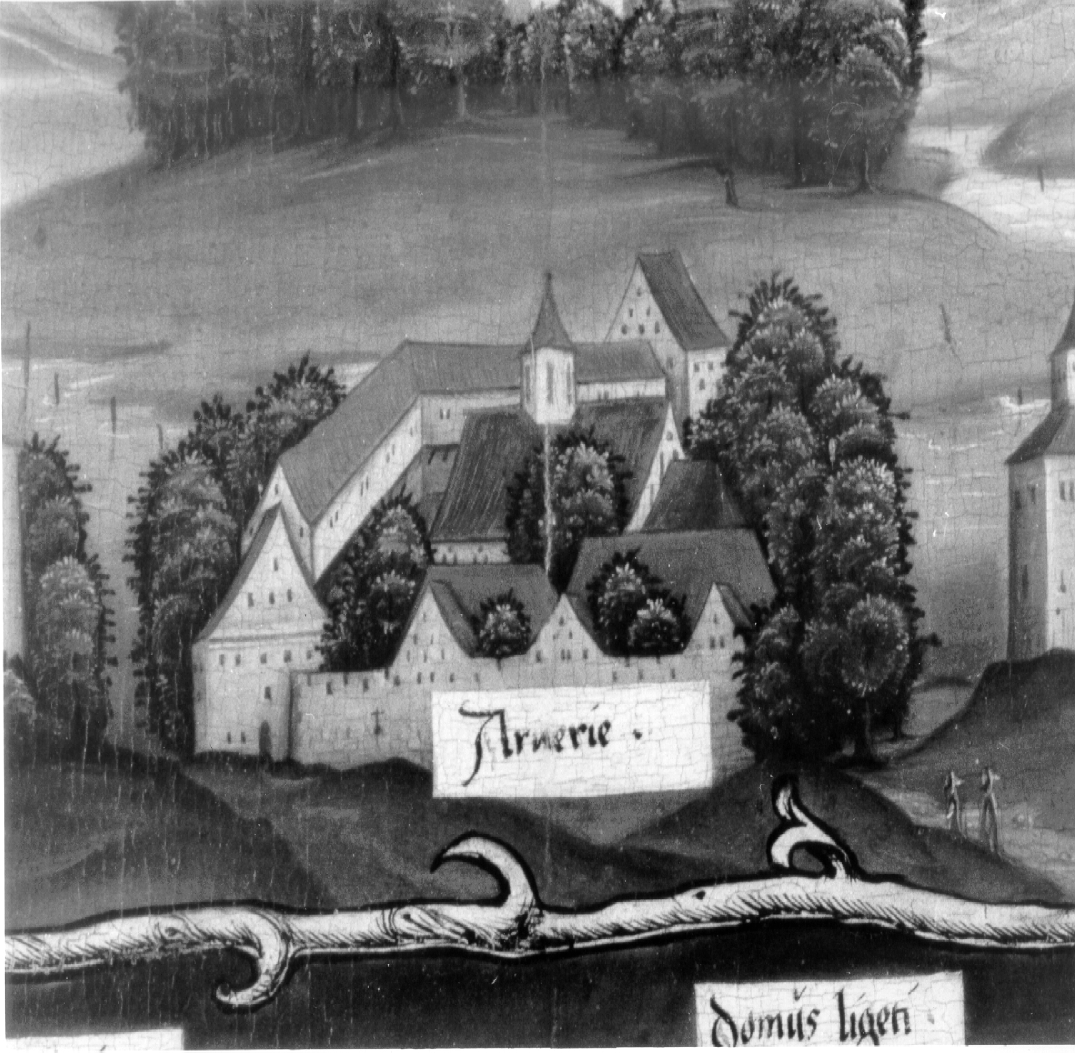
Chartreuse d'Aillon is the last surviving trace of a Carthusian monastery tucked into a side valley of the Bauges massif, in the commune of Aillon-le-Jeune in Savoie. For six centuries this remote community shaped both the economy and the landscape of the entire massif.
Who founded the monastery, and why here?
The story begins in the second half of the 12th century. Around 1178, Count Humbert III of Savoy granted land and income to a group of Carthusian monks so they could settle in the Combe de Lourdens and establish a monastery. The site's isolation was the whole point: Carthusian life is built on solitude, and this high mountain valley in the Bauges offered exactly the seclusion the order required.
How did the monks shape the region's economy?
Over its six hundred years of existence, the monastery grew into a substantial landowner. The monks managed alpine pastures and vineyard plots scattered across the massif, drawing income that sustained the community. One particularly striking detail is their involvement in metalworking: iron ore was brought in from the Hurtières valley in Maurienne, carried by mule train over the Col du Frêne, then processed on site at forges and hammer mills the monks had built at several points across the massif. In effect, the monastery doubled as a religious house and a small industrial hub for its time.
Fire, revolution, and near-erasure
The building's history is one of repeated destruction. Fire struck the monastery three times, the last occurrence coming in 1582 and leaving it badly weakened. A harder blow followed the French Revolution: the property was sold off as national land and, for years afterward, treated as a stone quarry, its walls dismantled for building material elsewhere. In the second half of the 19th century, what remained passed to the Bérard brothers, who turned it into a working farm, reshaping former monastic cells and halls to suit agricultural use.
What survives of the monastery today?
Since 2008, the surviving structure has housed the Heritage House (Maison du Patrimoine) of the Bauges Massif Regional Nature Park. It holds no collection of artifacts in the museum sense; instead it functions as an interpretation center, helping visitors understand how the Carthusians' presence shaped the identity of the wider region. The visit route winds through the preserved sections of the building, covering the monks' daily life, their pastoral and metalworking economy, and the site's fate after the Revolution.
How can you plan a visit?
The site sits at 630 route de la Chartreuse, in Aillons-Margériaz 1000, 73340 Aillon-le-Jeune. Groups are welcomed year-round, while individual visitors can access the site from June through September. Two visit formats are on offer: a guided tour led by a heritage guide, or a self-paced visit with an audio guide lasting between one and one and a half hours. Admission is €6 for adults and €4 for children aged 7 to 17, with children under 7 admitted free.
Frequently asked questions
When was the monastery founded? A community of Carthusian monks settled here around 1178, under the patronage of Count Humbert III of Savoy.
Why is so little of the original monastery left? Fire damaged it repeatedly — the last time in 1582 — and after the French Revolution it was stripped for stone before being converted into a farm in the 19th century.
What did the monks do besides pray? They ran a pastoral and wine-growing economy and processed iron ore hauled in from the Hurtières valley at forges built across the massif.
What is there to see on site now? The Heritage House of the Bauges Massif Regional Nature Park, open since 2008, with a visit route and audio guide.
Is the site open all year? Groups can visit year-round; individual visitors are welcome only from June to September.
Nearby places

Earn badges for the places you visit
Download NextOnTrip, discover new places and check off your trails.