- Sacred Monuments
- Religious monuments
couvent Notre-Dame de la Délivrande
About this place
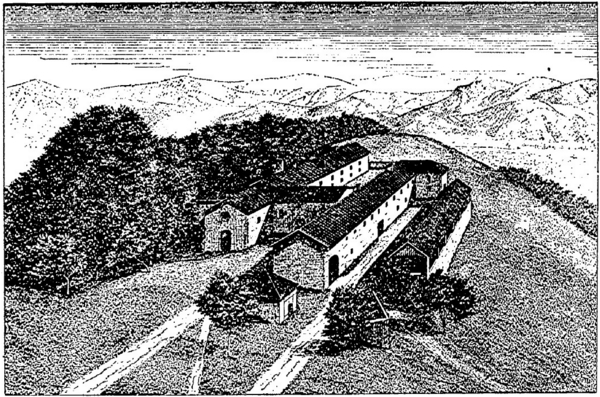
Couvent Notre-Dame de la Délivrande is a former convent of the Dominican Missionary Sisters, built between 1885 and 1887 in Saint-Martin-d'Hères, right next to Grenoble, in the Isère department of France. The building is listed as "Patrimoine en Isère" heritage and was awarded the Fondation du Patrimoine's 2024 Sésame Prize, given to projects that safeguard local built heritage.
Where did the community come from?
The congregation of the Sisters of Notre-Dame de la Délivrande traces its origins to the missionary work of a French priest, Father Dufrien, whose ministry was linked to the Antilles. It was in Grenoble, however, that the community put down lasting roots: in 1885, foundress Laure Sabès chose the Croix Rouge district, then home to a very poor population, as the base for the sisters' charitable and educational work. The convent in neighboring Saint-Martin-d'Hères was built to support exactly that mission.
How was the building constructed?
The design is the work of Alfred Berruyer, a diocesan architect who used a technique that was innovative for the late 19th century: cast concrete, known locally as "or-gris". The method allowed walls to be raised faster and more cheaply than traditional cut stone, a practical advantage for a congregation with limited funds at the time. Construction ran from 1885 to 1887.
What was the building used for over the years?
From the start, the convent served several purposes at once. It housed a novitiate, where new generations of sisters entering the congregation completed their initial formation, and a studentate for further religious study. Over time it also became a home for elderly and retired sisters, cared for on site by the community. This combination — training the young and caring for the oldest members under one roof — was typical of religious houses of this kind in the region.
What is happening to the convent today?
In recent years the number of sisters living in the building has fallen sharply, and maintaining such a large property has outstripped the congregation's financial means. The Dominican Missionary Sisters were preparing to leave the convent altogether. Rather than closing it entirely, the building has been given a new lease of life: it is now shared with a newly founded association that helps victims of domestic violence. The arrangement keeps the historic building standing while giving it a new, socially useful role.
Can visitors tour the convent?
The Couvent Notre-Dame de la Délivrande remains first and foremost a working, inhabited site — home to the community and to the association now running support activities there — rather than a conventional tourist attraction with set visiting hours. Even so, the building itself, raised using the era's distinctive cast-concrete technique, is a notable example of late 19th-century religious and conventual architecture and is valued as part of Isère's local heritage.
Frequently asked questions
When was the couvent Notre-Dame de la Délivrande built? The building went up between 1885 and 1887 in Saint-Martin-d'Hères.
Who designed the convent? Diocesan architect Alfred Berruyer designed it, choosing cast concrete over traditional cut stone.
Which community did the building serve? It belonged to the Sisters of Notre-Dame de la Délivrande, a congregation founded by Laure Sabès, present in the Grenoble area since 1885.
Is the building protected as heritage? Yes. It is listed as "Patrimoine en Isère" and received the Fondation du Patrimoine's Sésame Prize in 2024.
What is the convent's future? The building is now shared with a new association supporting victims of domestic violence, which keeps it in use as the number of resident sisters declines.
Where exactly is the couvent Notre-Dame de la Délivrande located? It stands in Saint-Martin-d'Hères, in the Isère department, immediately next to Grenoble.
Nearby places

Earn badges for the places you visit
Download NextOnTrip, discover new places and check off your trails.