About this place
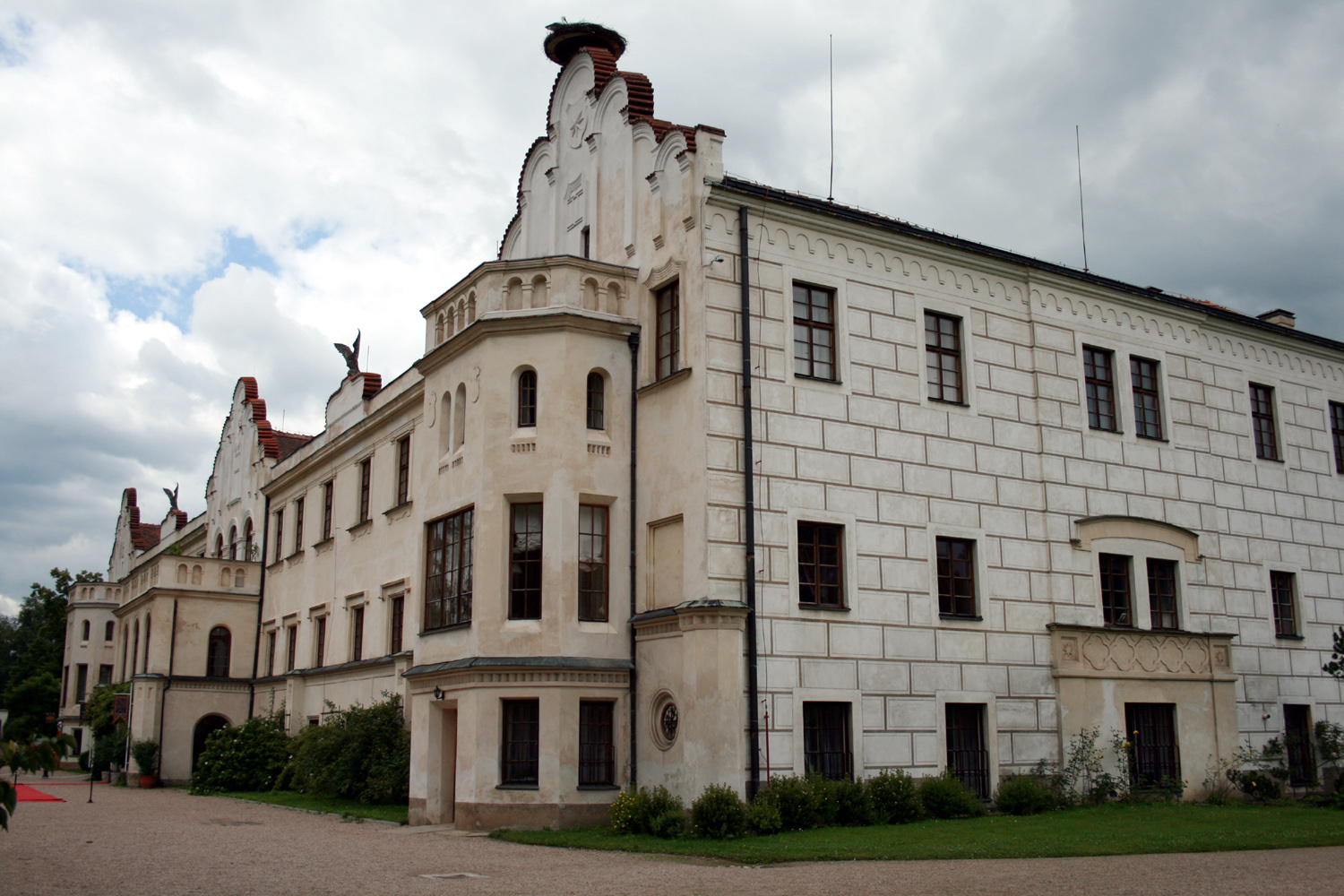
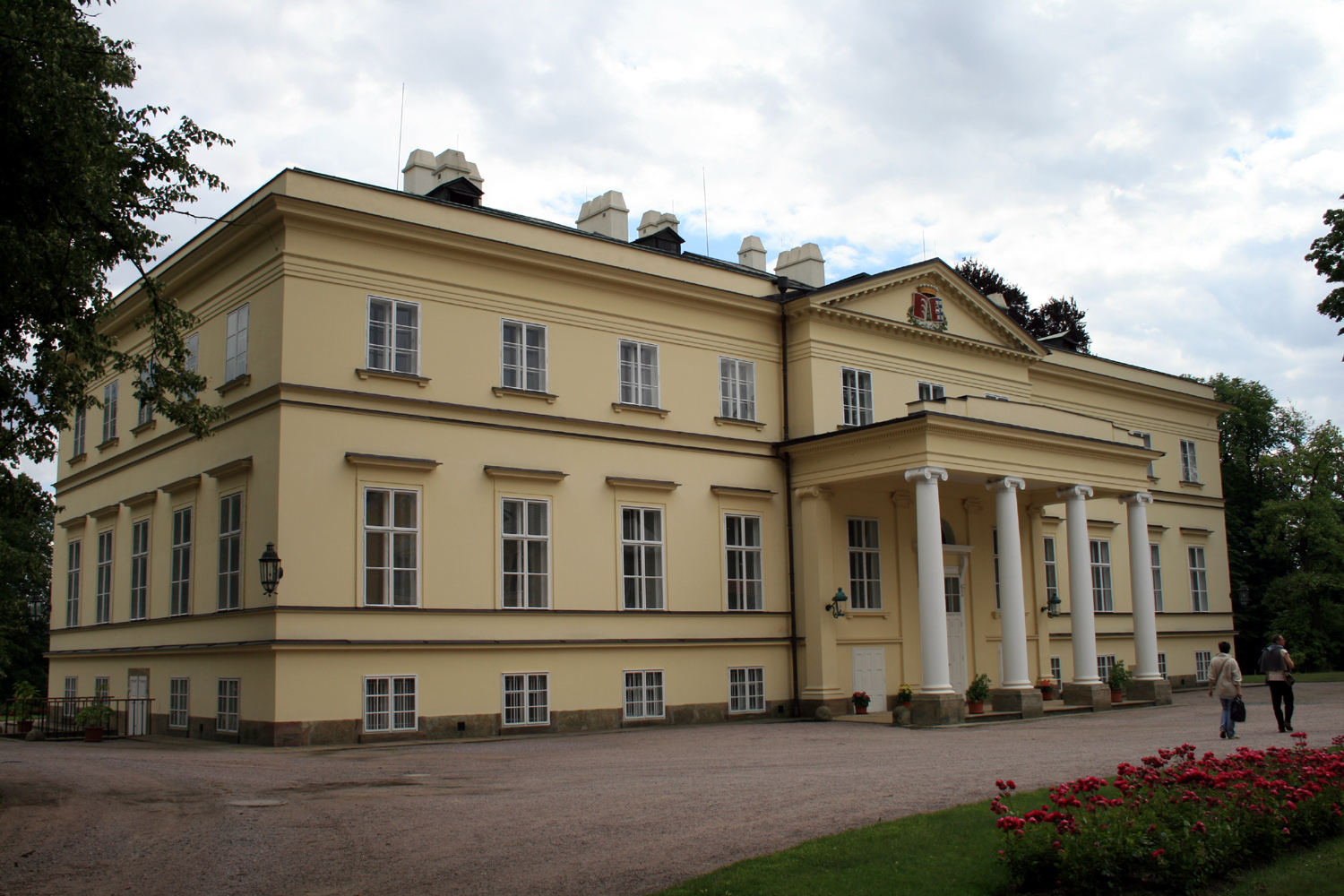
Kvasiny Castle stands in the village of Kvasiny, in the Rychnov nad Kněžnou district of the Hradec Králové Region in eastern Czechia. Behind its quiet Classicist facade on the banks of the Bělá river lies a nearly four-hundred-year story that runs from a fortified Renaissance stronghold, through decades of monastic ownership, all the way to the family home of the man who co-founded the Jawa motorcycle brand.
How old is the castle, and how did it start?
The estate's history begins in 1608, when Frederick of Vlkanov built a defensive Renaissance stronghold on the site, overlooking the Bělá river. Structures of this kind were common across Bohemia at the time, built primarily to secure the surrounding landed estate rather than serve as a comfortable residence. That original fortified building did not survive unaltered — over the following centuries it was reshaped again and again, each phase erasing more of its military character.
Why did a monastic order end up owning it?
In 1653 the property passed to the Order of Discalced Carmelites, linked to the Church of Our Lady Victorious in Prague. The friars converted the old stronghold into a single-story Baroque chateau, a project that took decades and was only finished in 1706. The three-wing layout still visible today largely dates from this monastic-era rebuilding, which turned a working fortification into a residence fit for representative use.
Where does the current, more classical look come from?
The building's present appearance is mostly a legacy of the 19th century, when it was remodeled in a late Classicist style. In the second quarter of that century, under knight Antonín Slivka of Slivice and his sister Anna, the main wing gained an extra storey and a wooden turret, while the side wings received half-storey attic additions. Later, in 1874, Baron von Valbella extended the main building with a hunting hall and an adjoining winter garden, adding a distinctly aristocratic leisure function to the estate.
What is the castle's connection to the automotive industry?
The most recognizable chapter of the estate's history opened in 1928, when businessman František Karel Janeček bought the property and turned it into his family residence. Together with his father, he founded a nearby weapons factory and, notably, the Jawa motorcycle works — a brand that would go on to earn international recognition. This makes Kvasiny Castle a rare landmark tied not just to noble and religious history, but to the story of Czech industry and motoring as well.
What happened to the castle after World War II?
Following the war, the property was nationalized. The building was first repurposed as housing for workers of the nearby Kvasiny car factory, and later served as an Institute of Social Care for Youth. It was only in 1992, through post-communist restitution proceedings, that the castle and a reduced portion of its estate returned to the heirs of František Karel Janeček.
Is Kvasiny Castle worth visiting?
The castle is a compact but layered record of Czech architectural history: Renaissance foundations, a Baroque monastic rebuild, and a 19th-century Classicist remodeling all sit within the same walls, topped off by an unusual industrial-era episode linked to one of the country's best-known motorcycle brands. That combination of noble, ecclesiastical, and industrial heritage makes it a worthwhile stop for anyone exploring the historic residences of eastern Bohemia.
Frequently asked questions
When was Kvasiny Castle built? The original Renaissance stronghold was built in 1608 by Frederick of Vlkanov; the building acquired its present Classicist appearance through renovations carried out in the 19th century.
Who converted the fortress into a Baroque chateau? The Order of Discalced Carmelites, tied to the Church of Our Lady Victorious in Prague, took over the estate in 1653 and completed the Baroque rebuilding in 1706.
What is the castle's link to the Jawa motorcycle brand? In 1928 the estate was bought by František Karel Janeček, who made it his family residence while founding the Jawa motorcycle factory and a weapons plant nearby together with his father.
What became of the castle after the Second World War? It was nationalized and used first as housing for car factory workers, then as a youth social care institute, before being returned to the Janeček family through restitution in 1992.
Nearby places

Earn badges for the places you visit
Download NextOnTrip, discover new places and check off your trails.