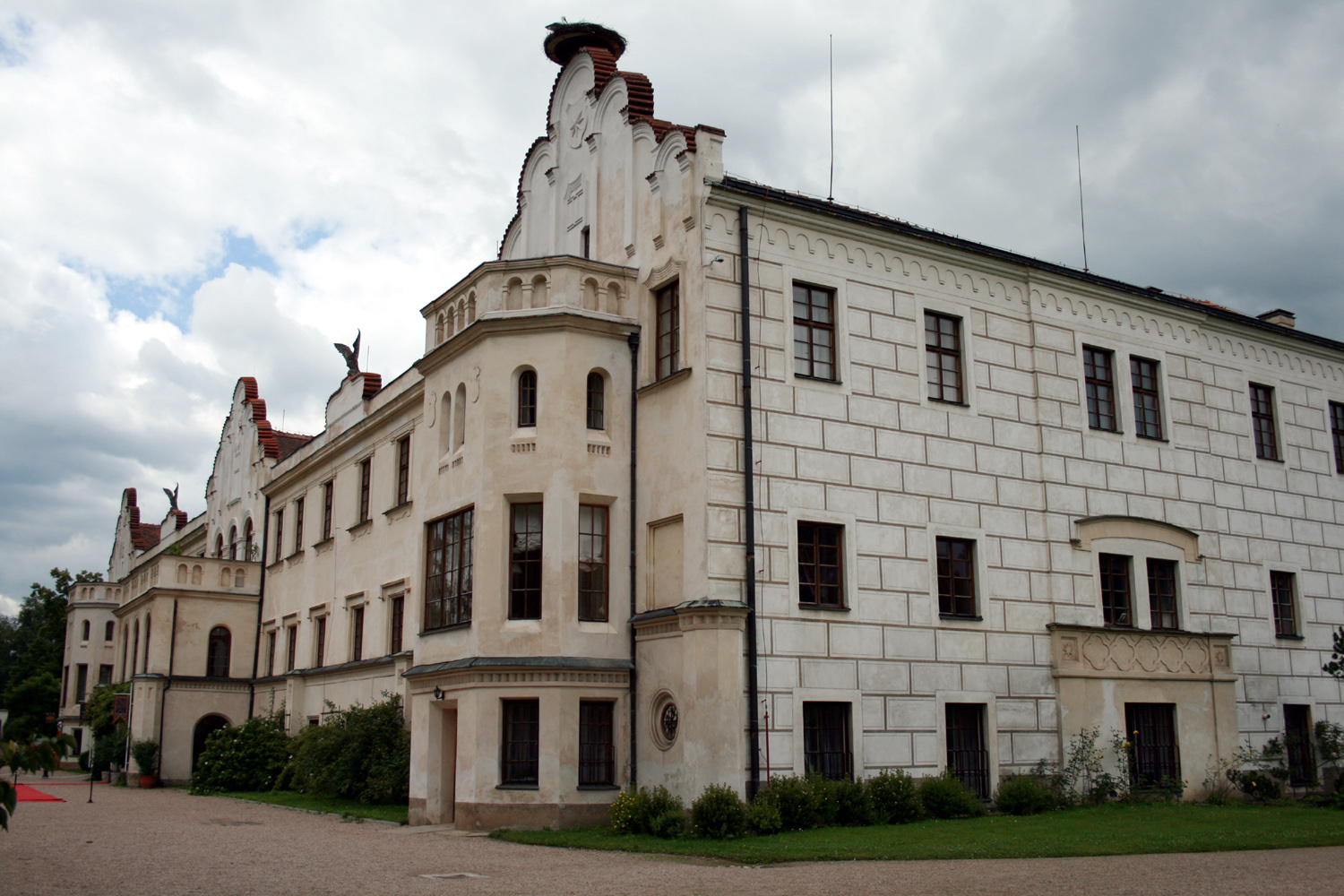
About this place
Częstolovice Castle (Zámek Častolovice) is a historic Renaissance chateau in the town of Častolovice, in northeastern Czechia, in the Hradec Králové region. Few Czech aristocratic residences combine a genuine dynastic story with a working, lived-in interior quite like this one.
What stood here before the chateau was built?
The site was originally home to a 13th-century water fortress. One of its most notable early owners was King George of Poděbrady, and in 1495 the estate passed to Vilém of Pernštejn, a member of one of the most powerful noble families in the Czech lands at the time. From that point on, Častolovice kept changing hands among influential aristocratic houses, each adding to its prestige.
When did the fortress become a Renaissance chateau?
The turning point came between 1588 and 1615, when Jan Bedřich of Oppersdorf and his wife Magdalena of Donín converted the old water fortress into a Renaissance residence. That rebuilding still defines much of the chateau's architectural character today. In 1694, the estate was bought by Adolf Vratislav of Sternberg, the highest burgrave of the Kingdom of Bohemia — a purchase that opened centuries of association between the Sternberg family and the property.
How did the building change in the 19th and 20th centuries?
In the second half of the 19th century, part of the chateau was rebuilt in neo-Gothic style, and an English-style park was laid out around it. At the start of the 20th century, however, the owners decided to strip away most of the neo-Gothic additions and restore the original Renaissance appearance. As a result, the chateau visitors see today largely reflects its look from several centuries earlier.
What makes the surrounding park worth a visit?
The English park surrounding the chateau covers roughly 42 hectares and is one of the estate's biggest draws. It includes a deer park with white fallow deer and a small zoo where visitors can view, pet, and feed various domestic and exotic animals. After the property was returned to the Sternberg family through restitution, its owner planted new trees and shrubs throughout the grounds and established a rose garden and a water garden — the park now holds around 200 varieties of old, heritage roses.
Who owns the chateau today?
After 1945, the estate was confiscated from the family — first by the Germans, then by the Czechoslovak communist state. It was only in 1992, following post-communist restitution, that the property was returned to the Sternberg family, specifically to Diana Phipps-Sternberg, who still lives there today. That makes Częstolovice one of the few Czech aristocratic seats that remains an actual family home rather than functioning purely as a museum.
Why is Częstolovice Castle worth visiting?
The combination of authentic Renaissance architecture, centuries of Sternberg family history, and an extensive park with a deer reserve makes Częstolovice appealing both to history enthusiasts and to families traveling with children. It is not a static, purely museum-like space — the chateau is still very much lived in, which gives a visit a distinctly personal atmosphere rarely found at larger, state-run castles.
Frequently asked questions
Is Częstolovice Castle still inhabited? Yes. A member of the Sternberg family, who reclaimed the estate through restitution in 1992, still lives there today.
How large is the chateau park? The English-style park surrounding the chateau covers about 42 hectares, including a white fallow deer park and a rose garden.
When did the chateau get its current Renaissance appearance? Its core Renaissance form dates from 1588–1615, and in the early 20th century later neo-Gothic additions were removed to restore that original look.
Which family has owned Częstolovice the longest? Since 1694, when Adolf Vratislav of Sternberg bought the estate, the Sternberg family has been associated with the chateau almost continuously to this day.
Nearby places

Earn badges for the places you visit
Download NextOnTrip, discover new places and check off your trails.