About this place
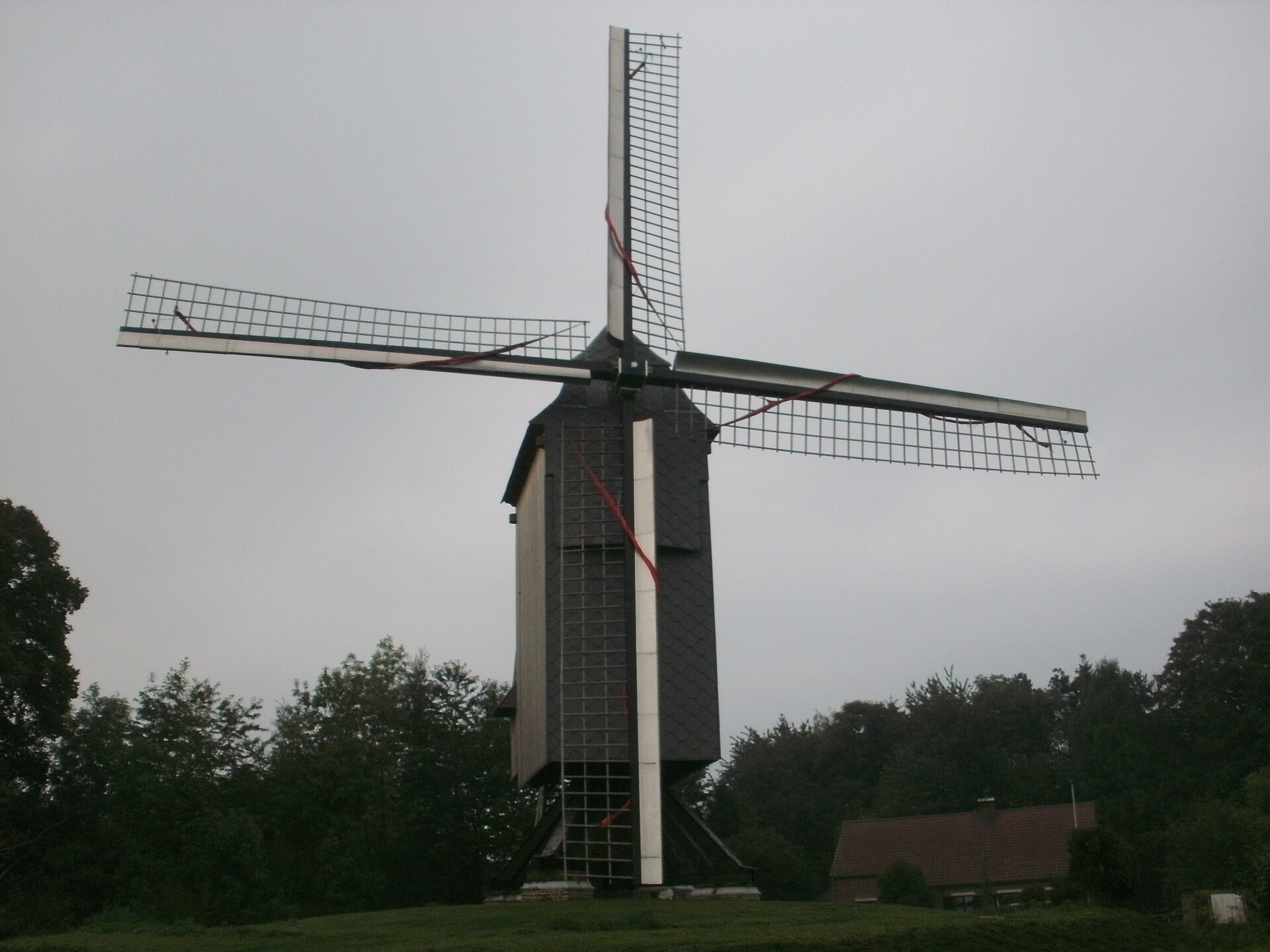
Kruiskoutermolen is a wooden post mill standing at the corner of Schoolstraat and Dieptestraat in the village of Mere, part of the municipality of Erpe-Mere in the Belgian province of East Flanders. Its story is far older and more eventful than its current address suggests, since the mill was not originally built here at all — it arrived after a painstaking relocation in the early twentieth century.
How did the mill end up in Mere?
The structure's origins go back to before 1384, when it stood in nearby Nieuwerkerken, a district of Aalst. At that time it was known as the Jezuïetenmolen, a name likely reflecting ownership ties to the Jesuit order. The mill was rebuilt in 1632 and continued serving the community of Nieuwerkerken in that form until 1921.
The turning point came when Jozef Van der Haegen, a local carpenter from Mere, purchased the Jezuïeten Molen in 1921. Two years later, in 1923, the entire structure was dismantled, transported and reassembled in Mere — a move that required 44 separate cart loads. The rebuilding was completed the same year, and by 1924 the first grain was already being milled under its new name, Kruiskoutermolen.
The mill through the twentieth and twenty-first centuries
This imposing post mill, fitted with three pairs of millstones, was listed as a protected monument in 1956. Six years later, in 1962, it underwent a thorough renovation. Disaster struck in 1972, when a severe storm caused significant damage, after which the mill fell into gradual disrepair for many years.
The situation changed in 1997, when the municipality of Erpe-Mere took ownership of this valuable piece of heritage. A decisive rescue effort began on 30 September 2004, when the mill was taken apart and moved to the workshop of Molenbouw Thomaes in Beveren-Roeselare for detailed restoration work. The project succeeded, and on 3 June 2006 the Kruiskoutermolen was officially reopened and inaugurated.
What makes this mill worth knowing about?
The Kruiskoutermolen is classified as a "three-storey" type post mill, a design in which the entire body of the mill can be rotated around a central post so that the sails always face into the wind. The presence of three pairs of millstones indicates that, in its working heyday, it was a genuinely productive facility serving the milling needs of surrounding farms.
Today the mill stands as one of the symbols of local heritage in Erpe-Mere and regularly welcomes residents during milling festivals. In 2023, the community of Mere marked the hundredth anniversary of the mill's arrival in the village (dating from 1923) with a dedicated mill festival. For visitors, it offers not only a rare chance to see a surviving piece of wooden industrial architecture, but also a lesson in how a small community can preserve a monument across decades despite storm damage, neglect and costly restorations.
The mill's coordinates place it at roughly 50.9136°N, 3.9719°E, right in the heart of the village of Mere, easily reached from the center of Erpe-Mere. It makes for a worthwhile stop for anyone interested in Flemish rural heritage and the history of milling craftsmanship in the region.
Frequently asked questions
Has the Kruiskoutermolen always stood in Mere? No — it originally stood in Nieuwerkerken (Aalst) and was only moved to Mere between 1921 and 1923.
Can visitors go inside the mill? The mill is opened to the public during local events and milling festivals; it is worth checking the current schedule with the Erpe-Mere municipality.
How many pairs of millstones does the Kruiskoutermolen have? Three pairs, which made it a relatively productive mill for this type of post mill.
Nearby places

Earn badges for the places you visit
Download NextOnTrip, discover new places and check off your trails.