About this place
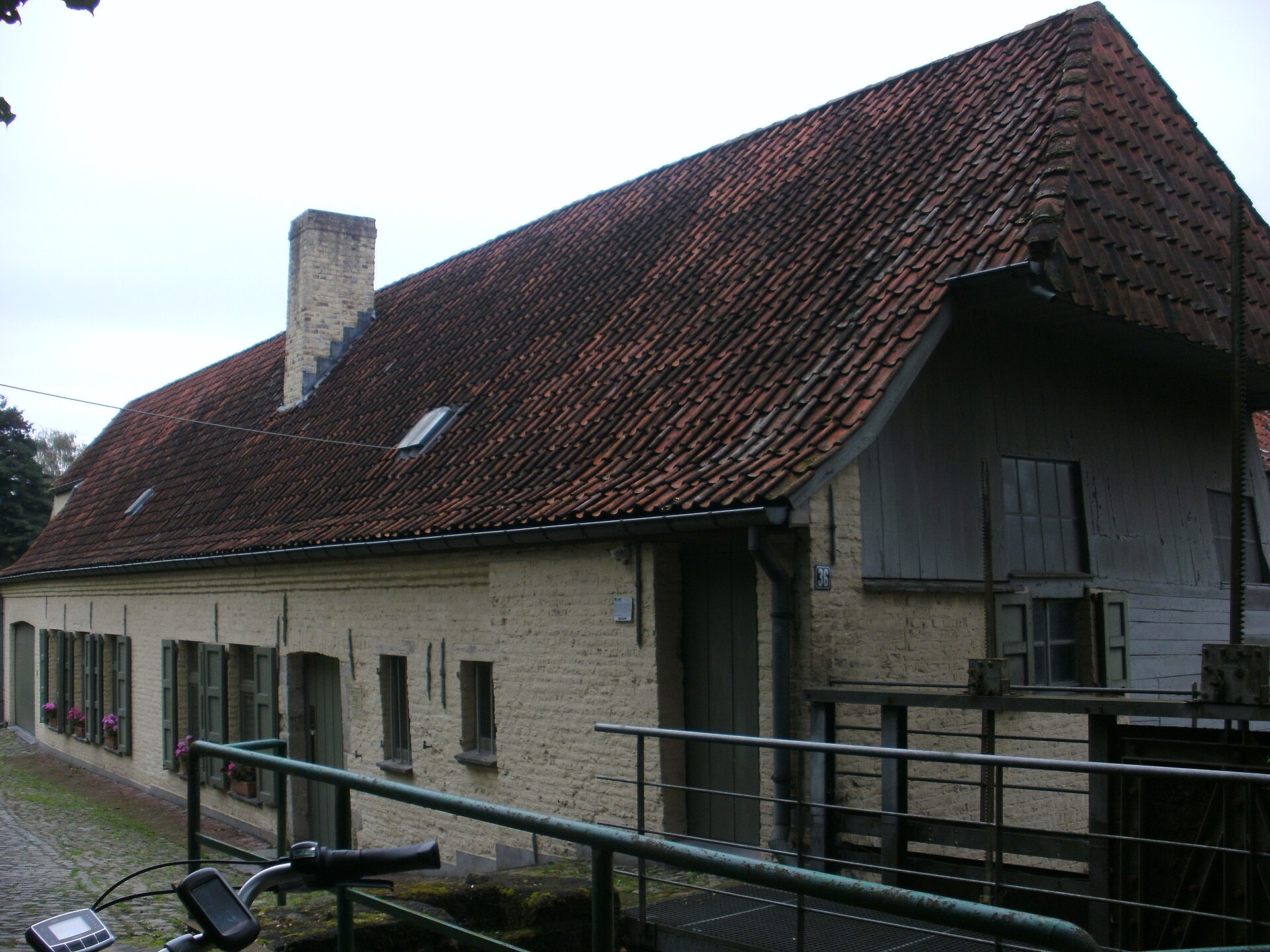
Cottemmolen is a historic watermill standing on the Molenbeek brook in Erpe, part of the municipality of Erpe-Mere in East Flanders, Belgium. The mill sits along Molenstraat and is one of two surviving watermills in this stretch of countryside.
Where does the name come from and how old is the mill's history?
The name Cottemmolen derives from the de Cotthem family, a member of which sold land next to the mill to the Sint-Pietersabdij (St Peter's Abbey) in Ghent as early as 966. That transaction suggests a mill, or at least a predecessor structure, already existed at this spot in the 10th century, though the first direct written reference to the mill itself — recorded as "molendinum de cotthem" — dates from 1216. That makes the milling tradition on this section of the Molenbeek over a thousand years old, placing Cottemmolen among the older traces of economic activity in the region.
The building that stands today, however, is not medieval throughout: the façade bears the date 1796, pointing to a substantial rebuild or renovation near the end of the 18th century. This pattern is common for watermills across Western Europe — the mechanisms and structures were rebuilt repeatedly over the centuries, while the site itself and the water rights attached to it remained unchanged.
What was the mill used for?
Cottemmolen originally served a dual economic purpose: it operated as both a grain mill and an oil mill. Over time oil production was discontinued, and the mill continued solely as a grain mill, processing wheat as well as grains destined for livestock feed. Power came from an overshot waterwheel, meaning water was directed onto the wheel from above rather than below, a design that delivers greater driving efficiency than undershot wheels.
The mill remained in continuous operation until 1982 — a comparatively late date for this type of industrial site, indicating that the local farming community relied on it for a long time rather than shifting entirely to mechanized industrial milling.
What does it look like today, and can it be visited?
After production ceased, the mill gained protected status. In 1986 Cottemmolen was listed as a protected monument, and the surrounding area was simultaneously designated a protected historic rural landscape. A few years later, in 1997, the building and its milling mechanism underwent a thorough restoration, which preserved its historic appearance and character.
Today Cottemmolen stands as a piece of the industrial heritage of the Erpe-Mere region, illustrating how small, local watermills shaped the landscape and rural economy of Flanders over the centuries. The setting along the Molenbeek retains a quiet, rural character, making the mill an interesting stop for anyone drawn to the history of craft and industrial architecture.
Frequently asked questions
Is Cottemmolen still used for milling grain? No, production ended in 1982 — the mill now exists primarily as a heritage monument.
What is an overshot mill? It is a watermill where water strikes the wheel from above and flows down along its circumference, generating more driving force than wheels fed from below or the side.
Is the land around the mill also protected? Yes, since 1986 heritage protection has covered not only the building itself but also the surrounding historic rural landscape.
Where exactly is the mill located? At Molenstraat 36 in Erpe, on the Molenbeek brook, within the municipality of Erpe-Mere in East Flanders.
Nearby places

Earn badges for the places you visit
Download NextOnTrip, discover new places and check off your trails.