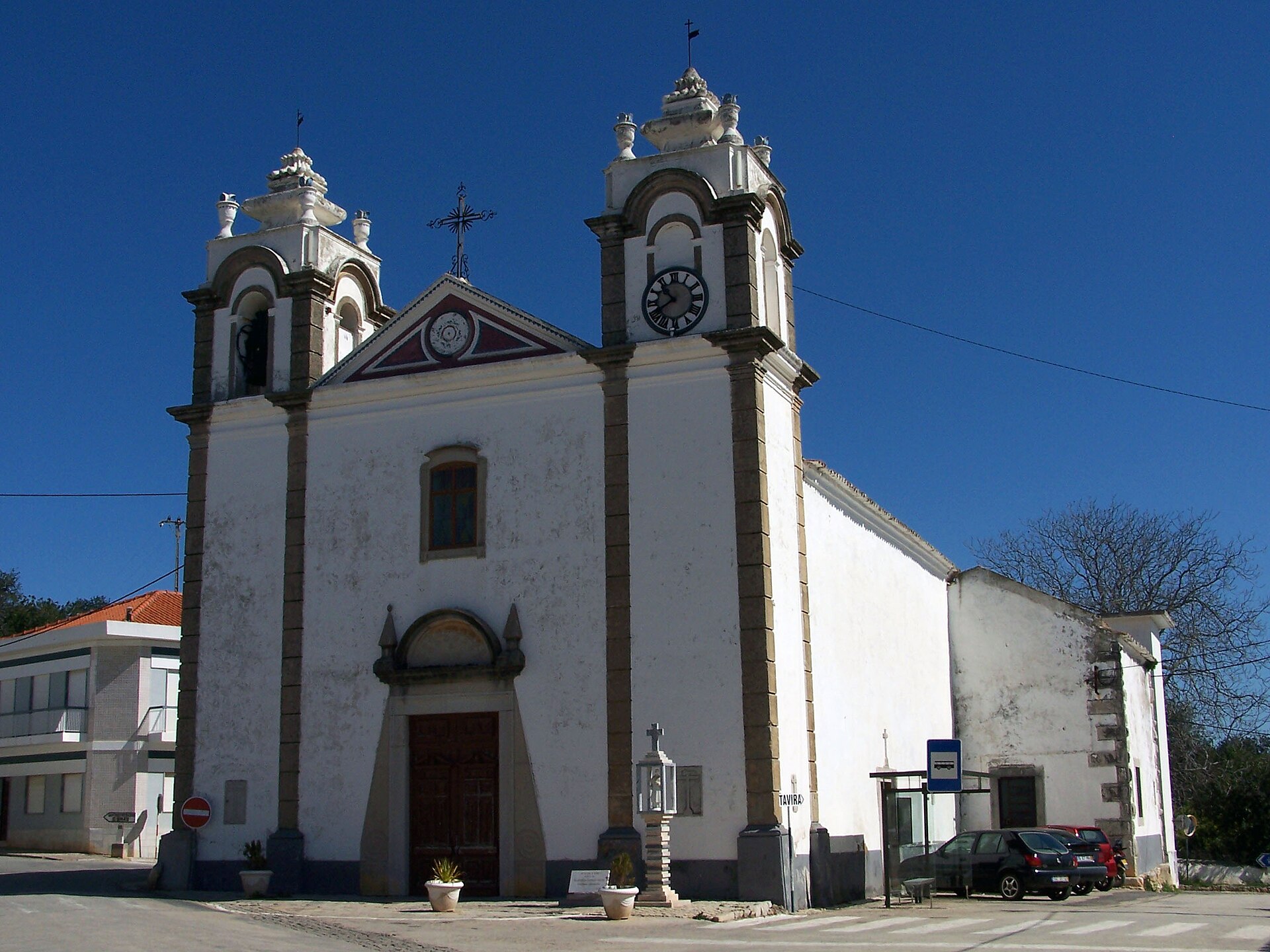
About this place
Igreja de Santo Estêvão (Church of Saint Stephen) is one of the oldest churches in Tavira, a town in Portugal's Algarve region. Today it serves as a parish church, and its façade combines a neoclassical design with a medieval Gothic portal.
What is the history of the church in Tavira?
The church grew out of a small late-medieval hermitage that depended on the parish of Santiago in Tavira. It is recorded as dating to the thirteenth century, built on the site of a former mosque from the period of Muslim rule. In 1270, King Afonso III donated the church to the Bishop of Silves, after which it passed to the Cathedral Chapter.
In the sixteenth century the post of governor of the Algarve was created, and once its regulations were issued in 1624, Tavira became a seat of provincial government. The church then served as the governor's private chapel, built into his palace. That change of role led to various alterations during the eighteenth century.
How was the church damaged and rebuilt?
The 1755 earthquake seriously damaged the building. In 1763, King José I ordered that the income of the brotherhoods active in the church be used to fund its reconstruction. Work only began in 1790, under the Bishop of the Algarve, D. Francisco Gomes de Avelar. It followed a neoclassical design by the Italian architect Francisco Xavier Fabri.
What can you see on site?
The strength of the rebuilding lies in how skilfully the new design was joined to what survived of the old church. The chancel and some of the side chapels were reused. The old Gothic portal was also kept and set into the neoclassical logic of the main façade. Several eras are therefore visible in one building: the Middle Ages, the years of the Algarve governors, and the post-earthquake reconstruction.
Where is Igreja de Santo Estêvão?
The church stands in Tavira, in southern Portugal, near the coordinates 37.127 N, 7.715 W. The town is known for its many churches, and Santo Estêvão is among those covered in the municipality's official guide to the churches and chapels of Tavira.
Frequently asked questions
Is this the same church as Santo Estêvão in Lisbon? No. A different church with the same name stands in Lisbon's Alfama district. The one described here is in Tavira, in the Algarve.
When was the church built? Its origins go back to the thirteenth century, but its present appearance owes most to the reconstruction begun in 1790 after the 1755 earthquake.
Who designed the reconstruction? The neoclassical project was drawn up by the Italian architect Francisco Xavier Fabri.
What survives from the medieval building? The chancel, some of the side chapels and the Gothic portal in the main façade.
Why was the church linked to the governor? From the sixteenth century, when Tavira became a seat of provincial government in the Algarve, the church served as the governor's private chapel and formed part of his palace.
Tips for visitors
When exploring Tavira, combine a visit to Santo Estêvão with the town's other churches to compare styles and periods. At the façade, notice the contrast between the plain neoclassical lines and the Gothic portal that survived from the earlier building. It is the simplest way to see, in one place, how the town's history left its mark on a single building.
Nearby places

Earn badges for the places you visit
Download NextOnTrip, discover new places and check off your trails.