About this place
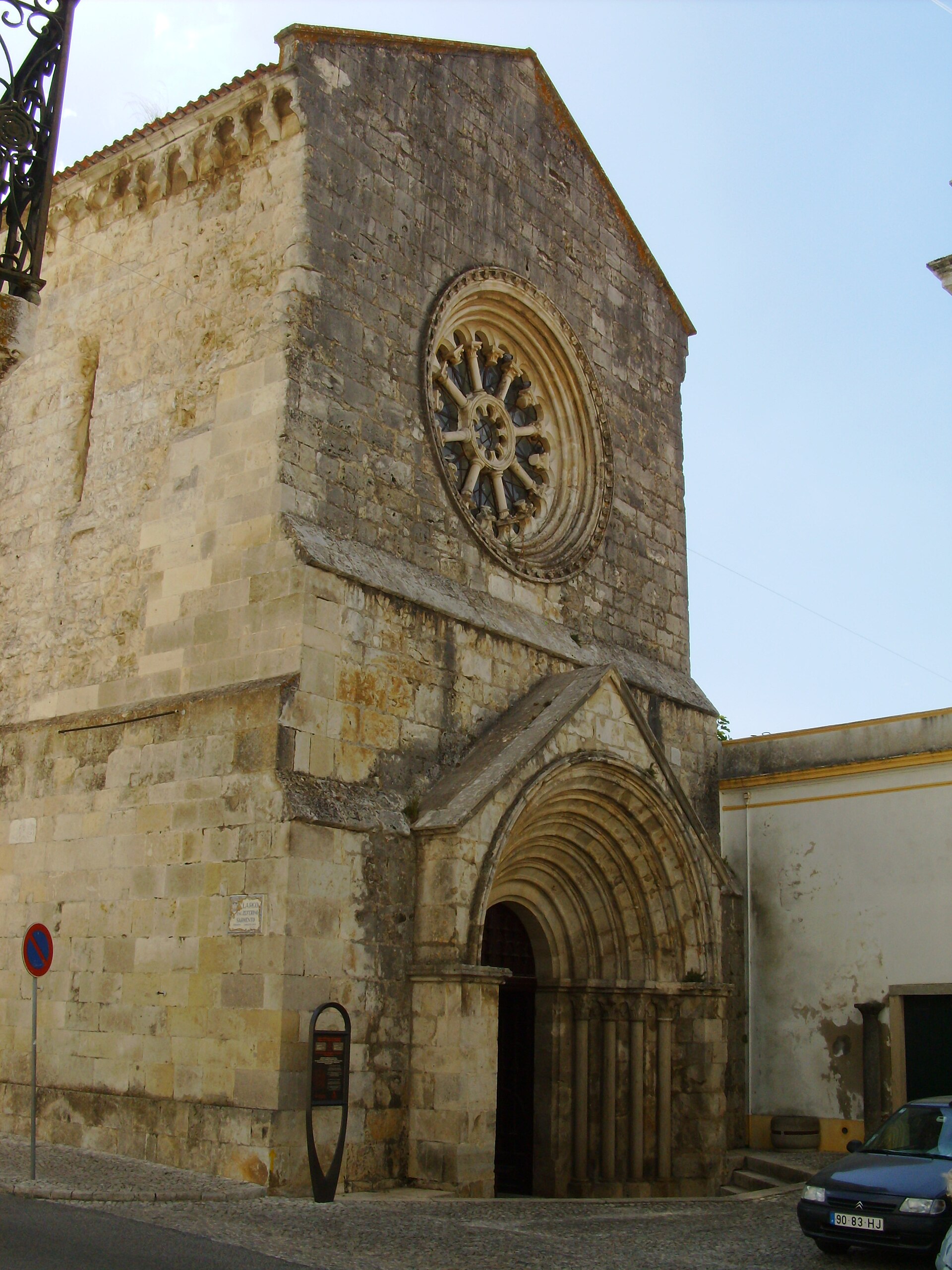
Igreja de Santa Maria do Castelo is a medieval church inside the castle grounds of Abrantes, in the Santarém District of central Portugal. Today it is best known as the funerary pantheon of the Almeida family and for some of the oldest flamboyant Gothic tombs in the region.
What should you know about this place?
The church stands on a hill within the castle walls, above the town of Abrantes. Most visitors reach it on a walk around the castle, of which it is an integral part. Its coordinates are roughly 39.465 N, 8.195 W. It has been protected as a National Monument since 16 June 1910.
What is the history of the church?
Tradition holds that King Afonso II ordered the first church on this site in 1215. That original building did not survive in its early form. In 1429 an earthquake destroyed it. It was rebuilt between 1433 and 1451 on the orders of Diogo Fernandes de Almeida, the alcaide-mor, or castle governor, of Abrantes. This reconstruction gave the church the shape visible today and tied it permanently to the Almeida family.
In 1834 the church ceased to be used for worship. Since then its interior has served museum purposes.
Why is it called the Almeida Pantheon?
The church shelters the tombs of members of the powerful Almeida family. In the chapel you can see the oldest fifteenth-century tombs in flamboyant Gothic style. Among those buried here are Diogo Fernandes de Almeida, who rebuilt the church, and Lopo de Almeida, the first Count of Abrantes. This funerary sculpture is the main reason lovers of Gothic art seek out the site.
What else is there to see inside?
The chapel preserves fragments of sixteenth-century mudéjar tiles, ceramic panels inspired by Islamic art. Part of the original altarpiece and its baldachin can also be seen. Together they show late Gothic sculpture alongside decoration with Moorish influence, typical of Portugal in this period.
In 2019, during conservation work, restorers made a surprise find: frescoes beneath a panel of tiles in the main chapel. The discovery shows the interior may still hold hidden layers of history.
Is there a museum in the church?
Yes. The building houses the D. Lopo de Almeida Museum, founded in 1931. Its collections are varied, with particular emphasis on flamboyant Gothic funerary sculpture and works from the sixteenth century. A visit therefore combines historic architecture with a look at art collections.
Frequently asked questions
Who founded the church? The first church is presumed to have been commissioned by King Afonso II in 1215. Its present form comes from the reconstruction of 1433-1451, ordered by Diogo Fernandes de Almeida.
Why was the church rebuilt? An earthquake destroyed it in 1429.
Are services still held here? No. The church was withdrawn from religious use in 1834 and now serves as a museum.
What is the most valuable thing inside? The fifteenth-century Gothic tombs of the Almeida family, sixteenth-century mudéjar tiles, parts of the original altarpiece and the frescoes found in 2019.
Is it a National Monument? Yes, it has held that status since 16 June 1910.
How can I fit it into a visit to Abrantes? The church lies within the castle grounds, so the easiest way is to see it during a single walk around the hill, which offers views over the town and surrounding countryside. Check current museum opening hours with local cultural institutions before you go, as they may vary by season.
Who is this place for?
It suits anyone interested in medieval Portuguese history, funerary art and sacred architecture. It is also a good stop for travellers crossing the Ribatejo and Médio Tejo region who want places less obvious than the country's biggest cities. Allow about an hour to look at the tombs, the tiles and the museum collections without rushing.
Nearby places

Earn badges for the places you visit
Download NextOnTrip, discover new places and check off your trails.