- Sacred Monuments
- Religious monuments
Hermitage of Nossa Senhora da Conceição (Tomar)
About this place
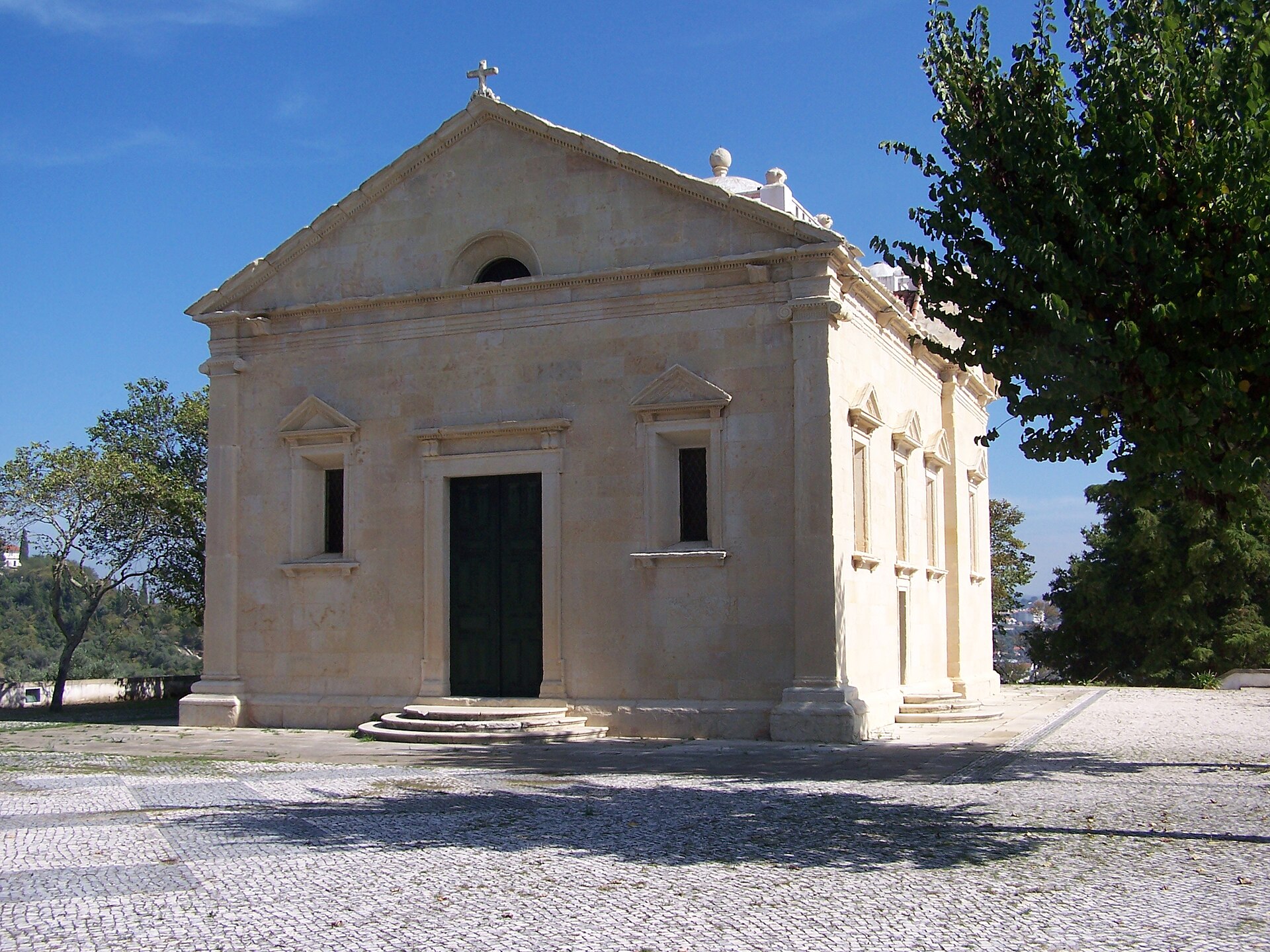
The Hermitage of Nossa Senhora da Conceição in Tomar (Portuguese: Ermida de Nossa Senhora da Conceição) is a 16th-century chapel in the civil parish of São João Baptista, in the municipality of Tomar, Portugal. It was designated a National Monument in 1910. It is regarded as one of the purest Renaissance works in the country and a rewarding stop for anyone exploring the Templar town.
How was the chapel built?
Construction began around 1541, when Friar António de Lisboa was prior and the Order of Christ had its seat in Tomar, at the Convent of Christ. Direction of the works went to João de Castilho, one of the most important Portuguese architects of the 1500s. The chapel was among his last projects. Castilho died in 1553, and Diogo de Torralva took over the site, leading the work until it was finished around 1573.
Why was it built here?
The ambition was considerable: the building was meant to serve as the pantheon of King John III. That plan never came to pass. The king died unexpectedly in 1557 without leaving a will and was not buried in Tomar. He was laid to rest in the Jerónimos Monastery in Lisbon instead.
What is notable about the architecture?
The chapel is a strongly defined Renaissance design and was genuinely new within the Portuguese architectural scene of its day. Its structure echoes the Malatesta Temple in Rimini, designed by Leon Battista Alberti, yet it keeps some distinctly national solutions, such as windows arranged in a perspective manner.
The floor plan is composite: a perfect rectangle with a Latin cross inscribed inside it. The interior resembles a small three-aisled basilica, with columns of the Corinthian order marking out the bays. Despite its modest size, the whole conveys a sense of grandeur through balanced proportions and a unified style.
Frequently asked questions
Where is the chapel? In the municipality of Tomar, in the parish of São João Baptista, Santarém District, central Portugal. Coordinates are roughly 39.6058 N, 8.4168 W.
What is its heritage status? It has been a National Monument of Portugal since 1910.
Who designed it? João de Castilho began the work, and Diogo de Torralva continued it after Castilho's death in 1553.
Is King John III buried here? No. The chapel was intended as his pantheon, but after his death in 1557 he was buried at the Jerónimos Monastery in Lisbon.
When was it completed? Around 1573, after more than three decades of building.
Who is it for?
Anyone interested in Renaissance architecture and Portuguese history. The chapel pairs well with a visit to the Convent of Christ, showing another side of the Order of Christ's patronage. Check current opening hours before you go, as access can be limited to set times.
Nearby places

Earn badges for the places you visit
Download NextOnTrip, discover new places and check off your trails.