About this place
Husův sbor is a functionalist church in Loštice, Moravia, belonging to the Czechoslovak Hussite Church. It stands on the edge of town, along the road toward Mohelnice, and looks nothing like the town's older, Gothic-era religious buildings — this is not the same site as the nearby Church of St. Prokop, but a separate, much younger building.
When was Husův sbor built, and who designed it?
The church was completed in 1933, designed by architect Josef Sova. The Czechoslovak Hussite Church itself had only been founded in 1920 as an independent religious body, and through the following decade it built many of its houses of worship in a deliberately modern, avant-garde style, distancing itself visually from traditional Catholic or Protestant churches. The Loštice building fits squarely into that pattern.
What does the building look like?
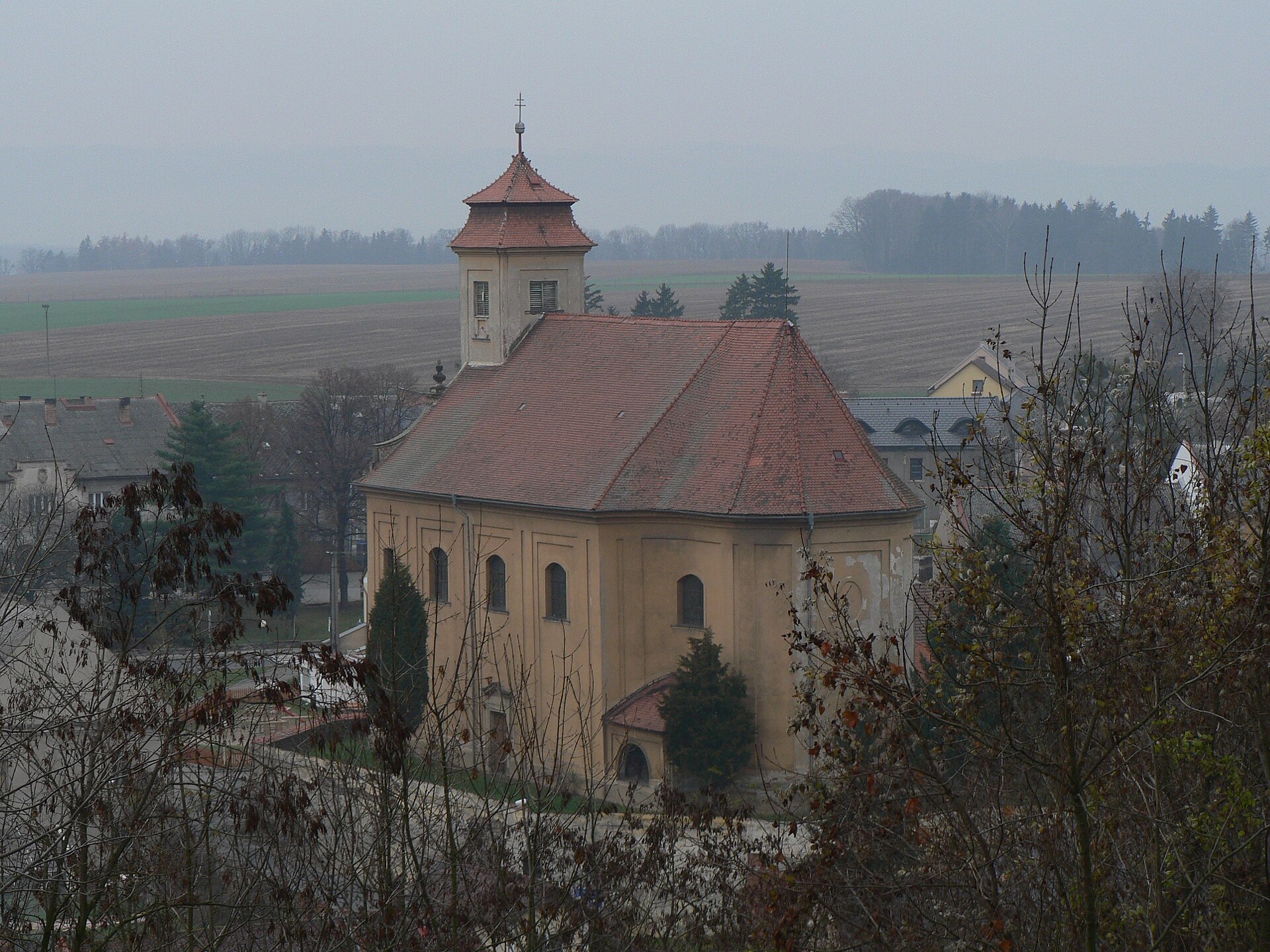
The most distinctive feature is the nave's roof, shaped like a broken arch and built on a lamellar (lattice) timber structure. That same timber structure also forms the interior ceiling, so the roof does double duty as both load-bearing structure and visible interior finish. In front of the nave sits an entrance vestibule with a flat ceiling, and a recessed section of the building houses a choir loft. The central accent of the whole composition is a cubic tower — a strongly geometric form typical of the constructivist and functionalist architecture of the 1930s. The overall impression is spare and modern, without the ornamental detail typical of older church buildings.
Has the building been altered since it was built?
Yes. A later renovation saw a niche originally intended for the priest in the main nave sealed up, along with some modifications to the roof structure. These changes softened the originally clean interior layout that Sova had designed, but the building's overall massing and its most recognizable features — the broken-arch roof and the cubic tower — have survived intact.
Which denomination does the church belong to?
Husův sbor is the generic name used for houses of worship of the Czechoslovak Hussite Church — a religious community whose name references the historical Hussite tradition, though theologically and organizationally it is a modern, independent church rather than a direct continuation of the centuries-old Hussite movement. Buildings called "Husův sbor" can be found in many Czech and Moravian towns; each is a distinct structure, typically dating from the interwar or postwar period.
Why is Husův sbor worth a look in Loštice?
For visitors interested in 20th-century architecture, it's a compact but consistently designed piece of interwar religious architecture that contrasts sharply with the town's historic core. Loštice is best known for producing tvarůžky (Olomouc cheese) and for its nearby Jewish cemetery, so Husův sbor offers a less obvious, architecture-focused stop when exploring the town.
Frequently asked questions
How is Husův sbor different from the Church of St. Prokop in Loštice? They are two separate religious buildings in the same town. Husův sbor is a much younger, functionalist structure from 1933 belonging to the Czechoslovak Hussite Church, while the Church of St. Prokop represents the town's older Catholic tradition.
Who designed Husův sbor in Loštice? The church was designed by architect Josef Sova and completed in 1933.
What is the most distinctive architectural feature of the church? The nave's broken-arch roof, built on a timber lamellar structure that also forms the interior ceiling, together with the cubic tower that anchors the composition.
Is "Husův sbor" a name unique to Loštice? No — it's a generic designation used for Czechoslovak Hussite Church buildings across many towns in Bohemia and Moravia. The Loštice building is one specific example of this type of church.
Nearby places

Earn badges for the places you visit
Download NextOnTrip, discover new places and check off your trails.