About this place
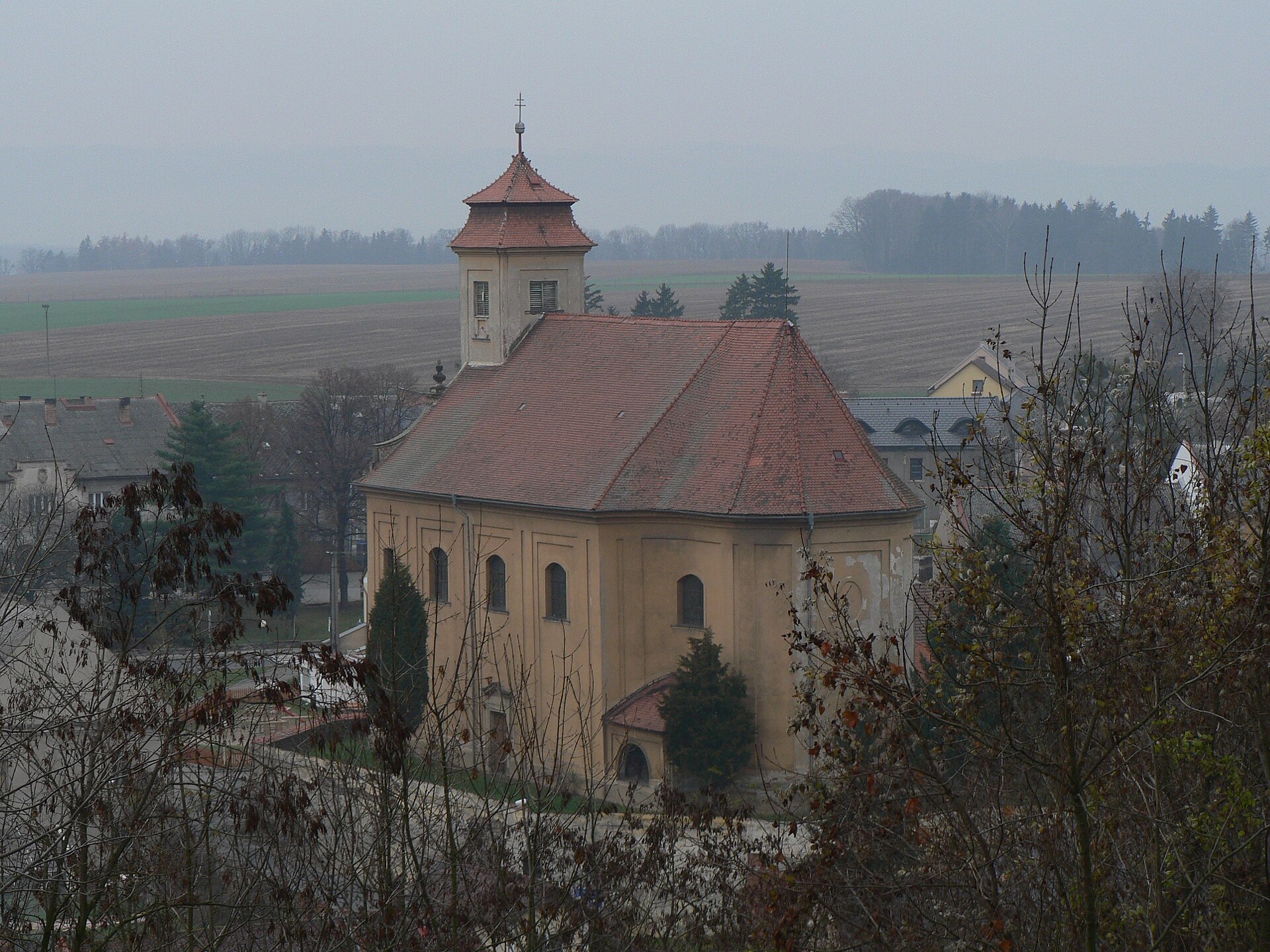
St. Procopius' Church in Loštice is a Roman Catholic parish church standing on the former village green in the centre of Loštice, a small town in the Šumperk district of the Olomouc region in Moravia, Czech Republic. The building brings together Romanesque, Gothic, Renaissance and Baroque elements, making it one of the more architecturally layered churches in the region.
How old is the church and how did it develop?
The site's earliest traces go back to around 1208, when a Romanesque structure already stood here, though the first written record of the church dates only from 1396. In the 16th century, under Prokop Podstatský, the building was enlarged and the nave took on roughly its present size. The church received its current Baroque exterior, including its bell tower, during a major reconstruction carried out between 1787 and 1792.
What can visitors see inside?
The interior holds several notable pieces of religious art. In the vestibule stand the Renaissance tombstones of Prokop Podstatský (d. 1560) and his wife Kateřina (d. 1564). The marble Baroque main altar was made in 1852 by local master Cyril Kutzer, topped with a painting by František Havelka from 1854. Life-size, polychrome wooden statues of Saints Cyril and Methodius, dated to 1850, stand alongside four side altars decorated with older paintings. The pulpit, carved in 1810 by the Brno woodcarver Ondřej Schweigel, and a historic bell cast in 1550 and weighing about 1,200 kilograms, hanging in the 45-metre bell tower, round out the church's furnishings.
Is the church a protected monument?
Yes. The church was listed as a Czech cultural monument in 1964, under protection code 14285/8-1006, in recognition of its historical and architectural value.
Frequently asked questions
Where exactly is St. Procopius' Church located? The church stands in the centre of Loštice, in the Šumperk district of the Olomouc region, on the site of the town's former village green.
How old is the church? Its oldest architectural traces date to around 1208, though the first documented mention of the church is from 1396.
What architectural styles does the church combine? It combines Romanesque foundations, a Gothic presbytery, Renaissance details, and a Baroque exterior and tower shaped during the 1787–1792 reconstruction.
What are the most valuable features inside? The Renaissance tombstones of the Podstatský family, the 1852 Baroque main altar, and the 1550 historic bell are among the most notable.
Nearby places

Earn badges for the places you visit
Download NextOnTrip, discover new places and check off your trails.