About this place
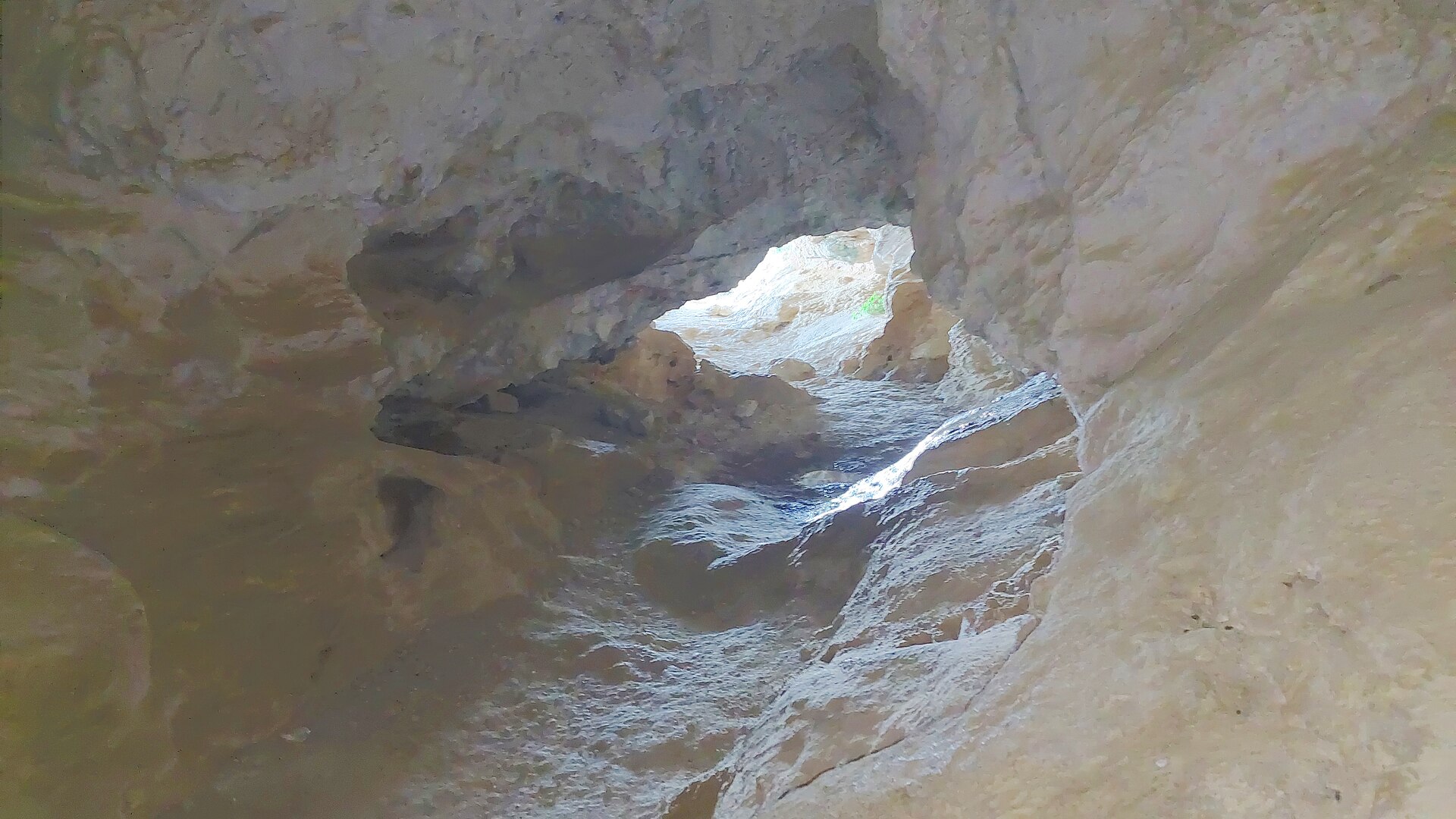
Grotte Saint-Vincent is a natural cave in the commune of Le Castellard-Mélan, tucked into the Monges massif in the Alpes-de-Haute-Provence department. Roughly thirty metres deep, it holds a main chamber lined with stalactites and small pools, carved out over millennia as carbon-dioxide-charged water slowly dissolved the Jurassic limestone of the massif.
How do you get to the cave?
Two yellow-marked footpaths, laid out by the Haute-Provence Geological Reserve, lead to the cave in about an hour's walk. Visitors who want to turn the trip into a longer outing can follow a loop of roughly 10.7 kilometres, which takes around four hours to complete. Both routes cross quiet, sparsely populated countryside typical of upland Provence, with views over the hills of the Monges massif. Sturdy walking shoes are worth packing, since the final stretch tends to be rocky and steep.
What will you see inside?
A staircase leads up to a metal viewing platform, built in the early 2000s as part of the Haute-Provence Geological Reserve's development of the site, now integrated into the UNESCO Haute-Provence Geopark. The platform overlooks the vast entrance chamber, which visitors can light up themselves by turning a bicycle dynamo fixed to the structure — no torches required, and no need to disturb the fragile rock formations to see them properly. It's a simple, low-impact way to experience the cave's interior while keeping energy use and environmental disruption to a minimum.
Where does the name come from?
The cave takes its name from Saint Vincent, a 4th-century priest said to have arrived in Provence from Africa alongside Saints Domninus and Marcellinus to spread Christianity through the region. Local tradition remembers him as a healer and a tireless preacher, which supposedly enraged the Devil so much that he tried to trap the saint inside the cave to starve him. Vincent, the story goes, overpowered the demon instead and turned him into a five-metre stone serpent. Until the early 20th century a small chapel stood just outside the cave entrance, and the people of Mélan would walk there in procession every Trinity Sunday. The chapel is long gone, but the legend still circulates among locals in the valley.
When is the best time to visit?
Late spring through early autumn is the most comfortable window, when the approach trails are dry and easier underfoot and temperatures suit a longer walk across the Monges massif. In summer, setting out early helps avoid the midday heat on the more exposed sections of the path. Autumn and spring bring particularly scenic light over the Castellard-Mélan countryside, though trails can turn slippery after rain.
Frequently asked questions
Do you need a guide to visit the cave? No — the site is freely accessible via the marked trails, and the viewing platform with its dynamo-powered lighting lets visitors explore without a guide or special equipment.
How long does the walk to the cave take? The shorter approach takes about an hour each way. Those after a fuller day out can follow the roughly 10.7-kilometre loop, which takes around four hours in total.
Can you actually walk inside the cave? Visits centre on the metal viewing platform overlooking the large entrance chamber — that platform is the main vantage point set up for visitors.
Should you bring a torch? Not really — the entrance chamber can be lit up on the spot using the bicycle dynamo mounted on the platform, which is one of the more memorable features of a visit here.
Nearby places

Earn badges for the places you visit
Download NextOnTrip, discover new places and check off your trails.