About this place
Grotte du Château de Saint-Didier is a small, wild cave in the commune of Valernes, in the Alpes-de-Haute-Provence department, right above the Durance valley. Its name comes from the medieval Château de Saint-Didier, whose ruins sit on the rocky spur directly over the cave's entrances. This is a stop for travelers curious about local geology and history off the beaten path, not a lit, walkway-equipped "show cave."
Where exactly is it?
The cave lies within the commune of Valernes, in the Préalpes de Digne, in the canton of Sisteron. Its main entrance sits at roughly 480 m altitude, cut into the escarpment of a Durance river terrace (coordinates approximately 44°13'51" N, 5°56'00" E). The nearest town of any size is Sisteron, known for its citadel overlooking the river — from there it's a short drive along the Durance valley to Valernes.
What will you actually see?
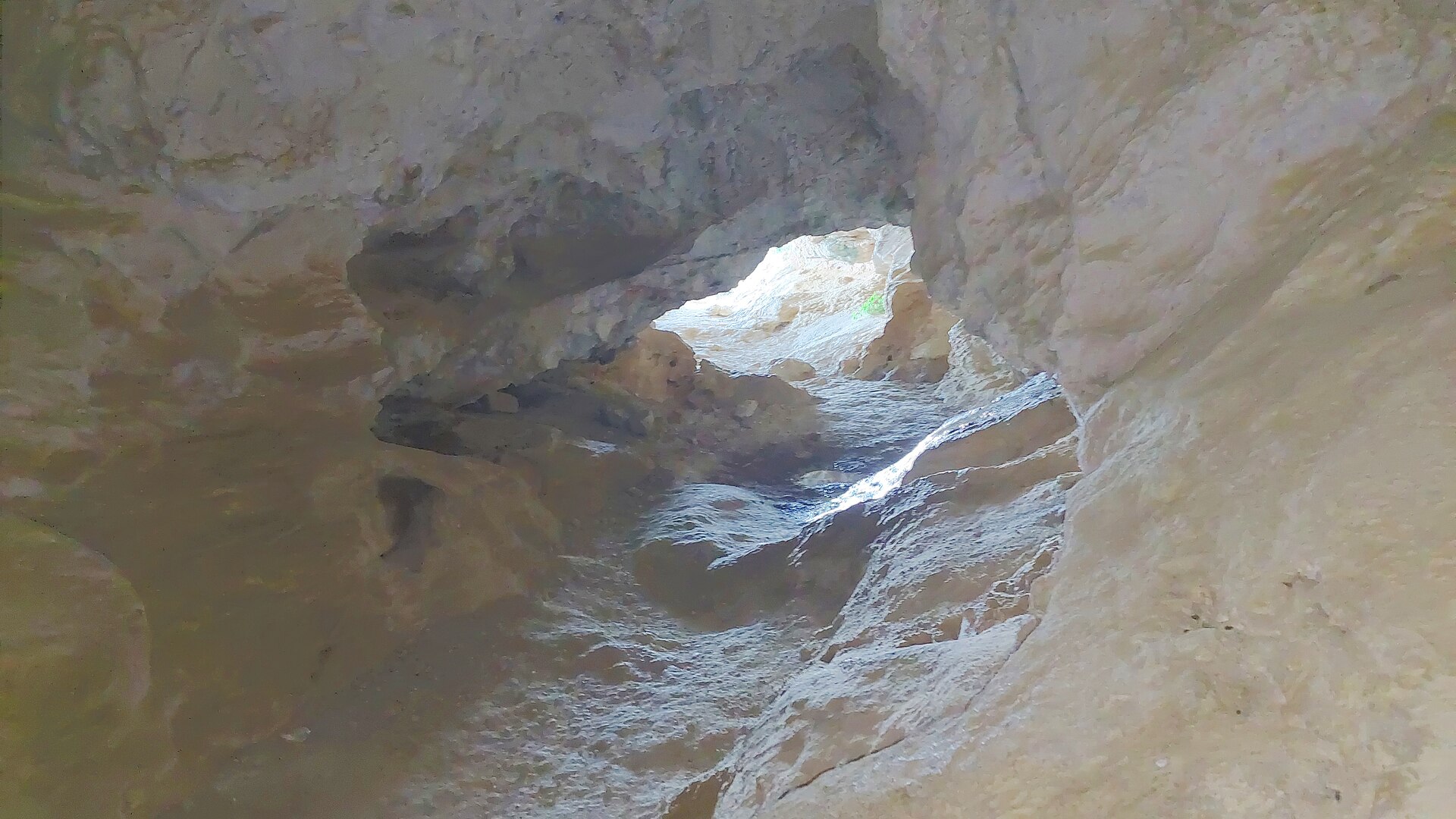
The cave runs for about 304 meters of passages and has three separate entrances. What makes it unusual is its geology: it didn't form in classic limestone but in Quaternary conglomerate deposited by the Durance's river terraces. Geologists describe it as a parakarstic feature — the passages were carved out of the cement binding the pebbles together rather than out of solid karst rock, a much rarer process than the limestone caves typical of the region.
At the middle entrance, part of an old wall still stands. The most likely explanation is that it was built to divert branches of the Durance away from the cave's interior, protecting the conglomerate spur that carries the castle above. It's a simple but deliberate piece of old water-management engineering tied to the defense of the site.
The cave itself develops directly beneath the cliffs that support the ruined Château de Saint-Didier. The castle's history runs deeper than its current state suggests: a church and priory on the site is documented as early as 1208, when it belonged to the abbey of Saint-Guilhem-le-Désert in Languedoc. In 1452 the estate passed to the Sainte-Claire abbey in Sisteron, and later to the Ursuline order in Gap. The castle, once the seat of the viscounts of Valernes, was pillaged in March 1792, and by 1793 it had been put up for auction for demolition and torn down entirely. Only its foundations remain today.
The cave was studied by caver Jacky Estublier in 1977, which shows that despite its modest size it has long drawn the interest of the speleological community.
How do you get there, and what should you watch for?
There's no car park, ticket booth, or lighting here — access is on foot, across the terrain of the Valernes commune along the Durance valley slope. Treat it as a countryside excursion goal: viewing the entrances, the wall, and the castle ruins from outside requires no caving gear. Going into the passages themselves is a different matter — the ground is uneven and unsecured, so that's really only for people with caving experience and their own lighting.
When should you visit?
The dry months — spring and autumn — work best, when temperatures in the Durance valley are mild and the approach on dry ground is easier. In summer, an early start helps you avoid the heat on the exposed slope. In winter the path can turn slippery after rain.
Frequently asked questions
Is the cave set up for tourists, with a guide and lighting? No. It's an undeveloped natural site with no visitor infrastructure — exploring the interior requires your own equipment and caving experience.
Where does the cave's name come from? From the Château de Saint-Didier, whose ruins stand on the cliff directly above the cave's entrances.
How is this cave different from the region's typical karst caves? It formed in Quaternary conglomerate rather than solid limestone — a parakarstic phenomenon, rarer than classic karst formation.
Is it worth combining with other nearby sights? Yes — Sisteron, with its citadel and the Durance gorge, is only a short drive from Valernes, making it easy to plan a full day around the valley.
Nearby places

Earn badges for the places you visit
Download NextOnTrip, discover new places and check off your trails.