About this place
Caverne des Peyrourets is a small karst cave in the commune of Valbelle, on the northern slope of the Montagne de Lure massif, in the Alpes-de-Haute-Provence department of France. It pairs a compact but striking underground chamber system with a genuine archaeological backstory, reached via a marked hiking trail.
Where is it and how do you get there?
The cave sits on the north face of Lure, above the village of Valbelle. Access is on foot only — a hiking trail leads up to the entrance, and the route is documented on regional trail databases such as SityTrail and randogps, which list it as a short but rewarding walk combining nature and history. The entrance itself is modest and easy to miss unless you know exactly where to look along the trail, so it's worth checking a route description before setting out.
What will you see inside?
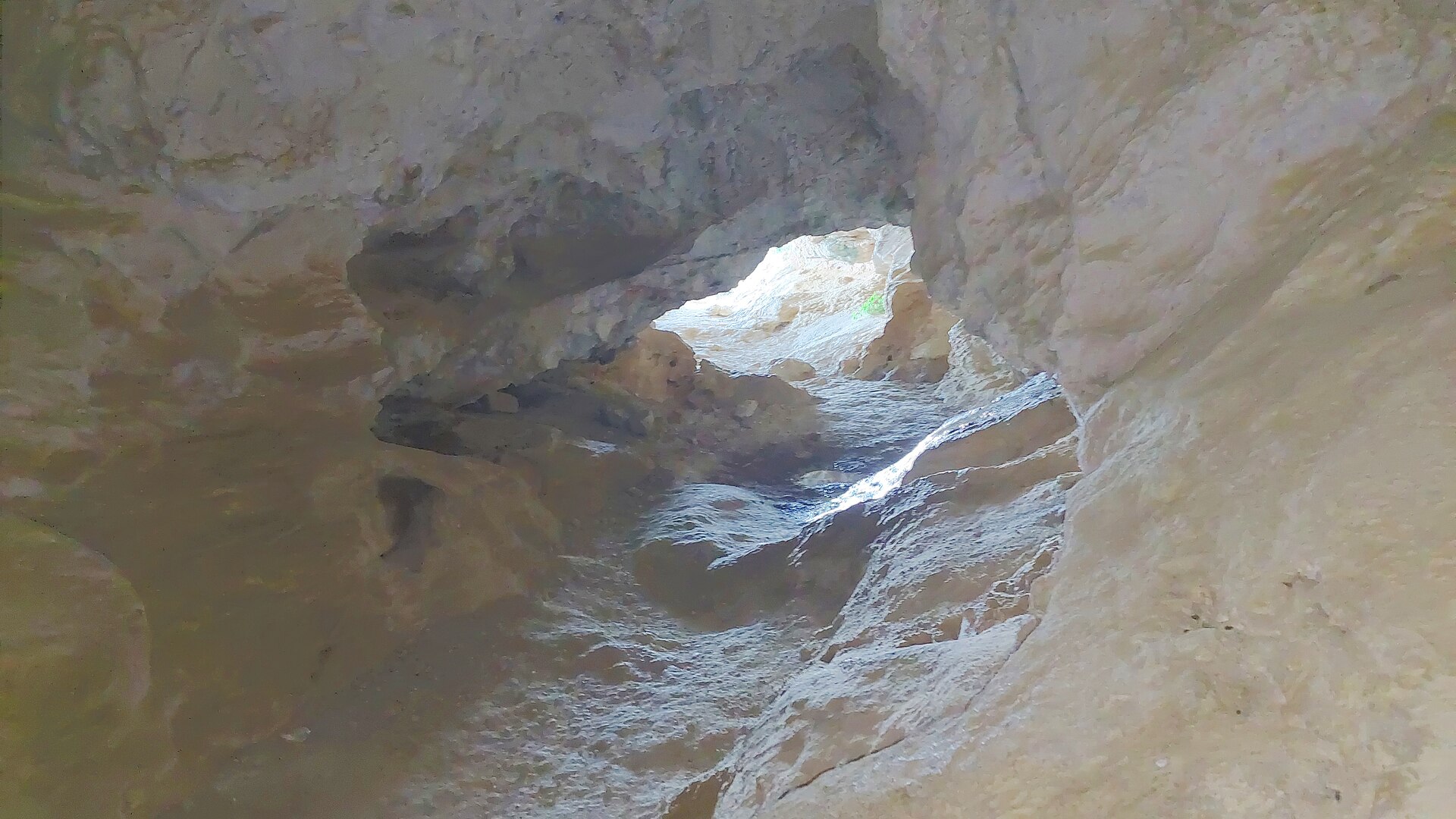
Caverne des Peyrourets extends for roughly 60 metres through Upper Jurassic limestone. Past the narrow entrance, a passage opens into a first chamber that is surprisingly tall given how unassuming the entry point is. This chamber holds a distinctive rock formation nicknamed "the Jellyfish" ("la Méduse"), a concretion that has become the chamber's namesake. The passage continues into a second chamber, known as "the Altar Room" ("la salle de l'Autel"), taller still than the first. The cave isn't large by the standards of the region's major cave systems, but the contrast between the tight entrance and the roomy chambers beyond makes an impression.
What is the history behind the cave?
The cave has been known for a long time — the walls of its north gallery still carry graffiti and signatures dating back to the early 19th century, left by earlier visitors. The first documented investigation took place in 1883, when Victrice Maurel carried out excavations here. In 1887, F. Donnadieu visited the cavity and found prehistoric objects made of polished stone, evidence that the cave saw use in prehistoric times. In 1951, speleologist Pierre Martel surveyed the cave and drew up a plan and cross-section during his visit, providing a more precise record of its layout.
Who is this cave suited for?
This is a good stop for hikers who enjoy combining a walk with a bit of underground exploration — it is not a show cave with lighting or visitor infrastructure, but a natural cavity accessible to prepared visitors. Bring your own light source and sturdy footwear, since the interior has no facilities for mass tourism. The surrounding Montagne de Lure area also offers classic Provençal hill views and the option to extend the outing along further trail sections.
When is the best time to visit?
Spring, summer, and early autumn are the best times for the hike, when the approach trails are dry and easy to follow. In summer, an early morning start is worth planning to avoid the heat on the exposed parts of the route — the cave itself, like most underground sites, stays cooler and keeps a fairly constant temperature regardless of the season.
Frequently asked questions
How long is the cave? Caverne des Peyrourets extends for about 60 metres.
Is the cave open for guided tours? No, it's a natural cave with no visitor infrastructure — access is free but requires your own equipment, such as a torch and appropriate footwear.
What's notable to see inside? A distinctive rock formation nicknamed "the Jellyfish" in the first chamber, and a taller second chamber known as "the Altar Room."
Have archaeological finds been made here? Yes — in 1887, F. Donnadieu found prehistoric polished-stone objects inside, and the walls still bear graffiti dating from the early 19th century.
Nearby places

Earn badges for the places you visit
Download NextOnTrip, discover new places and check off your trails.