About this place
Grotte d'Ebbou is a Paleolithic engraved cave tucked into the limestone hillsides of the commune of Vallon-Pont-d'Arc, in the Ardèche department. It sits within the Gorges de l'Ardèche area, a stretch of the valley riddled with decorated caves, and holds one of the richest sets of engraved animal figures found anywhere in the region.
Where is the cave located?
The entrance opens near the hamlet of Ebbou, within the commune of Vallon-Pont-d'Arc, not far from the Ardèche river itself. The cave runs for roughly 260 metres and splits into five distinct sections, one of which — the main chamber — holds the bulk of the surviving engravings.
What do the engravings show?
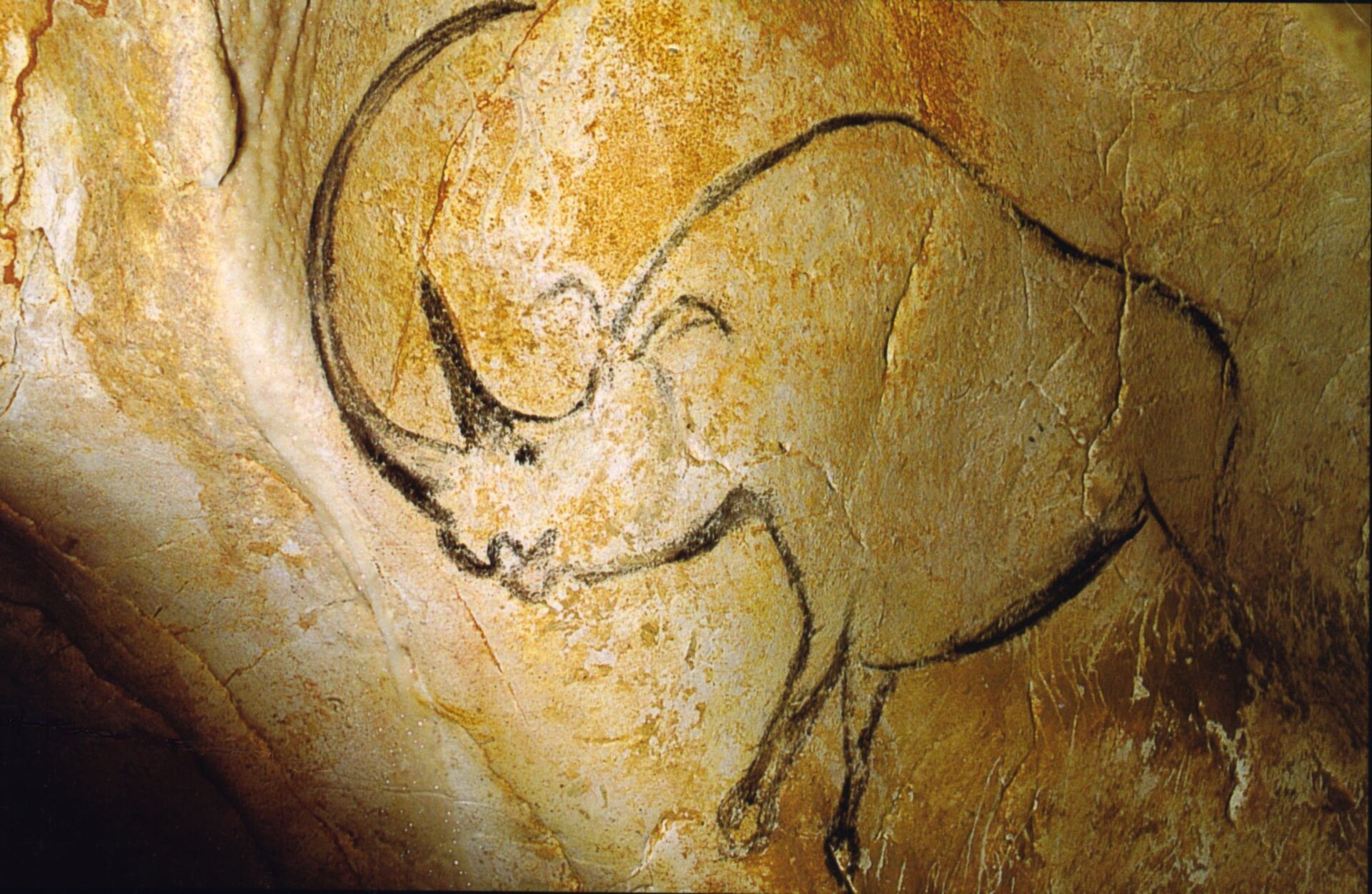
The walls carry 69 identifiable Upper Paleolithic engravings, attributed on stylistic grounds to the late Magdalenian. Ice-age artists worked the rock's natural bulges and hollows into the design, giving the carved outlines a sense of volume and motion despite a spare, economical line. Horses dominate the bestiary with 19 figures, followed by aurochs (10), ibex (6), deer (4), bison (2), and single depictions of a mammoth, a feline, and what is thought to be a bear. A further dozen or so figures are too schematic to assign to a species with confidence. Unlike the nearby Chauvet cave, Ebbou holds no painted imagery — every figure here was produced by engraving the stone directly, without pigment.
When were the engravings found?
The cave was already noted in the second half of the 19th century: between 1867 and 1873, local scholar Jules Ollier de Marichard described animal outlines on its walls along with claw marks left by cave bears, though the true significance of the carvings went unrecognised for decades afterward. The engravings were properly rediscovered in 1945, credited to A. Bonnaud and G. Saussac, and the following year prehistorian André Glory carried out the first scientific study of the site — fieldwork that took him under two weeks to complete. Recognition of the find's importance was swift: on 19 June 1947, Grotte d'Ebbou was listed as a French historic monument.
Can visitors go inside?
No. The cave has been closed to public access since 1964, after conservators observed ongoing damage to the fragile carvings linked to humidity and foot traffic. Today only research teams working on documentation and conservation are allowed inside. Visitors to the Gorges de l'Ardèche can still learn about the valley's Paleolithic heritage through the area's interpretation centres dedicated to its decorated caves, even though Ebbou itself stays off-limits.
Frequently asked questions
Where exactly is Grotte d'Ebbou? In the commune of Vallon-Pont-d'Arc in Ardèche, near the hamlet of Ebbou and the Ardèche river, within the Gorges de l'Ardèche.
How many engravings survive in the cave? 69 identifiable Paleolithic engravings, mostly animal figures, plus roughly a dozen more schematic shapes and signs.
From which period do the engravings date? The Upper Paleolithic, attributed to the late Magdalenian.
Is the cave open to the public? No — access has been restricted to scientific researchers since 1964.
Does Grotte d'Ebbou have painted artwork like Chauvet cave? No. Ebbou's art is engraved directly into the rock; no paint or pigment was used.
Nearby places

Earn badges for the places you visit
Download NextOnTrip, discover new places and check off your trails.