About this place
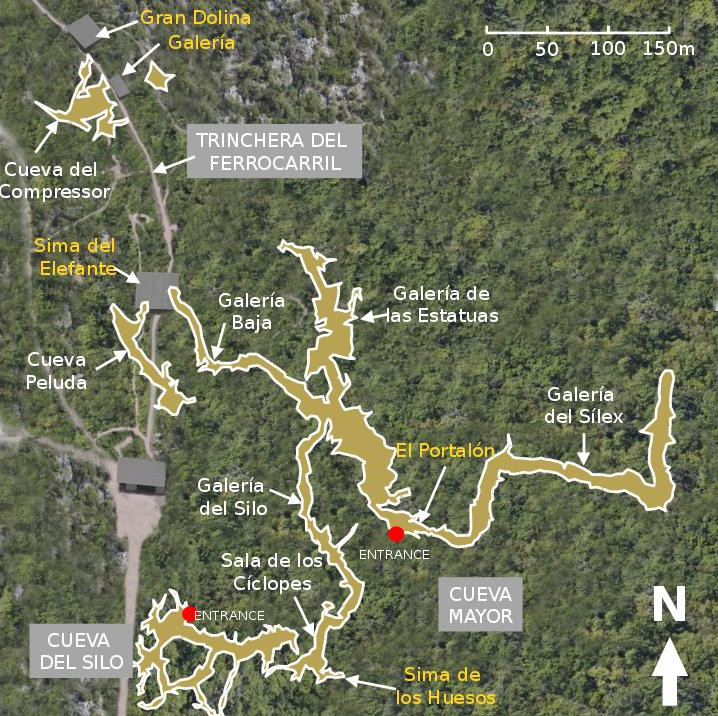
Gran Dolina is one of the key excavation sites within the Atapuerca archaeological complex, located in the province of Burgos in northern Spain.
What makes Gran Dolina significant?
Sediment layers inside the Gran Dolina cave have yielded bone fragments dated to roughly 800,000 years old — the oldest confirmed evidence of human presence in Western Europe. The same excavations also produced the earliest known evidence of cannibalism among hominids found anywhere in the world. These findings turned Atapuerca into a reference point for paleoanthropologists worldwide, and the site is recognized as an area of exceptional scientific value under UNESCO World Heritage protection.
How do you get to Atapuerca?
The site sits near the village of Atapuerca, a short drive from Burgos, a city well connected by road and rail to the rest of Spain. Burgos lies on the main routes linking Madrid with the north, so arriving by car is generally the most convenient option. From central Burgos, a local road leads to Atapuerca, and many visitors combine the trip with a stop at the Museum of Human Evolution (Museo de la Evolución Humana) in Burgos itself, where finds from the excavations are on display.
What will you see on site?
Visits to Gran Dolina run as guided tours led by the team behind the ongoing Atapuerca research. Walking along the excavation face, visitors can see the different sediment layers that correspond to different periods, from the oldest strata hundreds of thousands of years old to more recent ones. Guides explain how the archaeological work is carried out and why each layer matters for reconstructing the history of human settlement in the region. It's worth remembering this is an active research site rather than a staged attraction, which adds authenticity but also calls for practical preparation, such as sturdy shoes and clothing suited to changeable weather.
When should you visit?
The Burgos region has a continental climate with cold winters and warm summers, so spring and autumn are the best times for visiting open-air archaeological sites, when temperatures are milder. Summer tends to be hot but also brings the widest range of available tours and open attractions in the region. In winter, conditions at the site can be less comfortable and some tours may run on a reduced schedule or be cancelled.
Frequently Asked Questions
What sets Gran Dolina apart from the other caves at Atapuerca? Atapuerca is a whole complex of archaeological sites, and Gran Dolina is one of the most important of them — it's where the oldest evidence of human presence in Western Europe was found.
Can you visit the cave on your own? No, visits run as guided groups organized by the Atapuerca research team, which protects the site and ensures the findings are explained properly.
Is it worth combining the visit with the Museum of Human Evolution in Burgos? Yes, the museum displays original finds and reconstructions that help put what you see at the site itself into context.
How far is Atapuerca from Burgos? Atapuerca is a short distance from Burgos, within the same region, so the drive takes only a little while.
Nearby places

Earn badges for the places you visit
Download NextOnTrip, discover new places and check off your trails.