About this place
Faro de Torres is a lighthouse on Cabo Torres, on the western edge of Gijón in Asturias, on Spain's northern coast. It stands on a rocky headland above the Bay of Biscay, where the land drops sharply to the sea and the view stretches along the coastline out into the open Atlantic.
Where did this lighthouse come from?
Faro de Torres replaced an earlier lighthouse in Gijón itself, which was decided to be decommissioned in 1902. Choosing the new site took years of negotiation with Spain's Ministry of War, since Cabo Torres was at the time a protected area occupied by a coastal artillery battery. The project was finally approved in 1917, construction followed over the next several years, and the lighthouse went into operation in 1924.
Its original equipment consisted of a cylindrical lantern, a fourth-order rotating apparatus, and an incandescent petroleum-vapor system that produced its signature signal of two flashes every 10 seconds, visible from up to 25 nautical miles away. The lighthouse was electrified in 1936, and a fog siren was added in 1939.
What will you see there?
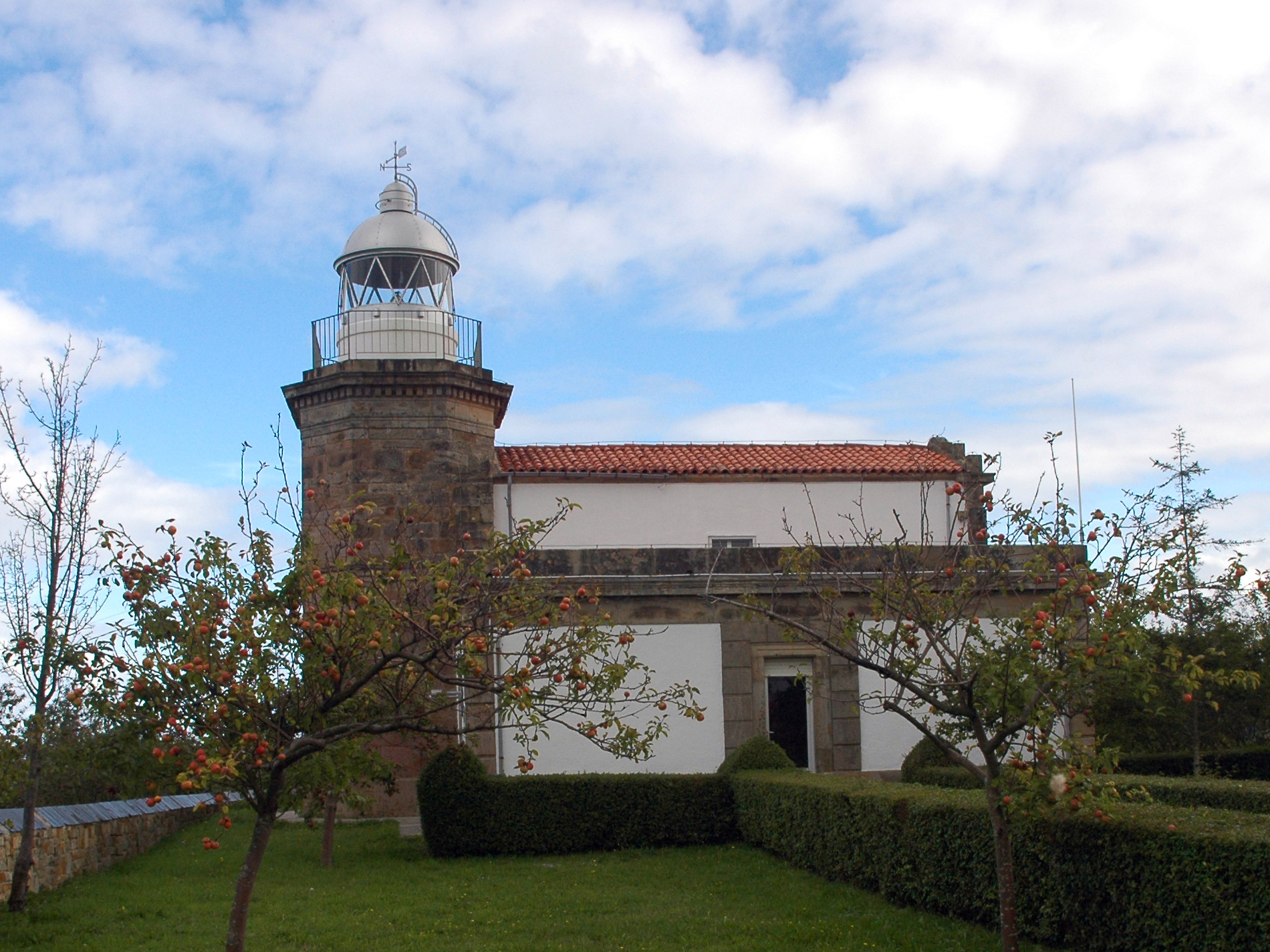
The tower has an octagonal shape and is built into the north face of the keeper's building. The structure itself rises 12 meters, but because it sits atop a tall cliff, its light shines from 82 meters above sea level — which explains the signal's long range.
The lighthouse sits within the Campa de Torres Archaeological Park, an area that combines maritime heritage with the remains of centuries-old settlement. Coastal paths wind along the cliffs nearby, offering views of ships heading into Gijón's port and of the coastline stretching toward Cabo San Lorenzo. It's a popular spot for a sunset walk, when the lighthouse beam starts cutting through the darkening sky.
The lighthouse has undergone restoration work in recent years, and a small archaeological library on site documents its history alongside that of other lighthouses along the Asturian coast.
How do you get to Faro de Torres?
Cabo Torres sits at the western edge of Gijón, within reasonable reach of the city center — many visitors walk or cycle there along the seafront promenade, continuing past Poniente beach. Driving is also an option, and parking is available near the archaeological park for those exploring on foot.
When should you visit?
The lighthouse and the surrounding park are open year-round, though Asturias's climate brings frequent rain and strong sea winds, so waterproof clothing is worth packing regardless of season. The best visibility and the most pleasant conditions for walking the cliffs come from late spring through early autumn, when days are longer and warmer.
Frequently Asked Questions
Can you go inside the lighthouse? The lighthouse is an active navigational aid operated by the Gijón Port Authority and is not open for visitors to climb the tower — you view it from outside as part of a walk through the archaeological park.
Is there an entrance fee? No. The area around Cabo Torres and the Campa de Torres Archaeological Park is open public space, free to visit.
Are there other attractions nearby? Yes. The site borders the remains of an ancient settlement within the archaeological park, and coastal paths continue toward Gijón's beaches and port.
How long does a visit take? Walking around the lighthouse and its viewpoints usually takes 30 to 60 minutes, longer if you extend the walk through the rest of the archaeological park.
Nearby places

Earn badges for the places you visit
Download NextOnTrip, discover new places and check off your trails.