About this place
Faro de Lastres stands on top of the Cabo de Lastres headland, right above the hamlet of Luces, in the municipality of Colunga on the Asturian coast. It's one of the youngest lighthouses in the region, yet also one of the most recognisable landmarks along this stretch of the Cantabrian Sea.
Where exactly is the lighthouse?
Faro de Lastres sits on the plateau of Cabo de Lastres, in the hamlet of Luces, which belongs administratively to the parish of Lastres in the municipality of Colunga. From here, the open waters of the Cantabrian Sea stretch out below, with the coastline running in both directions — toward the fishing village of Lastres and further east toward Ribadesella. The hill on which the lighthouse stands is known locally as Prau El Picu.
What does the lighthouse look like?
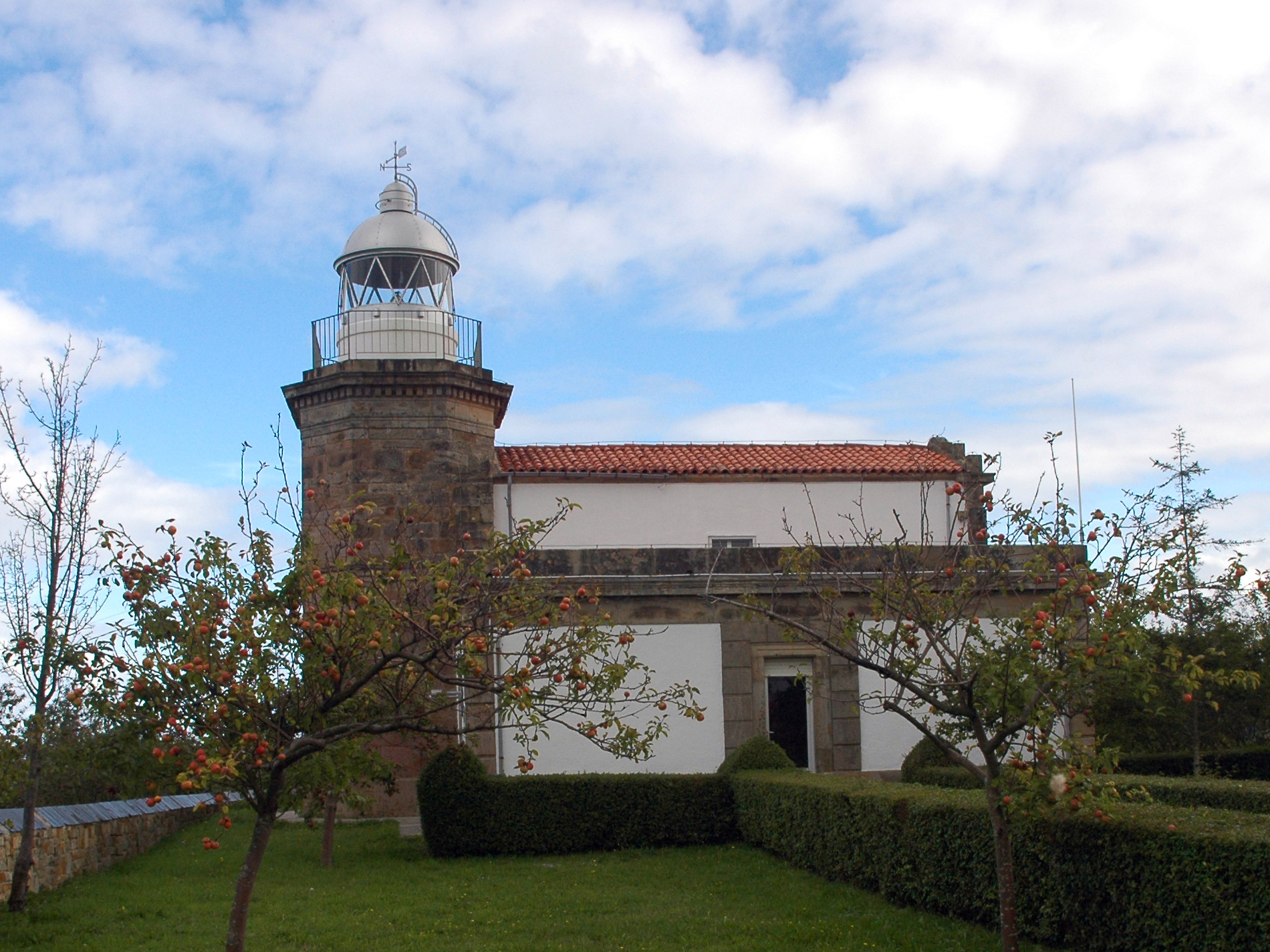
The lighthouse takes the form of a cylindrical concrete tower painted white, standing 18 metres tall. At the top, the lantern room is crowned with a green-painted dome and surrounded by a service balcony. The tower rises from the centre of a small, square-plan technical building constructed in traditional masonry. This layout — a slender tower emerging from a lower service building — is typical of lighthouses built in the second half of the 20th century, allowing easy access to all the technical equipment without needing to climb the tower itself.
What's the history behind this site?
Before a lighthouse stood here, sailors navigating this stretch of coast relied on guiding bonfires lit on top of Prau El Picu — a simple but effective signalling method used by local fishermen before the age of electric lights. Construction of the actual lighthouse got underway in the 20th century, and the structure entered a testing phase on 1 December 1993. Faro de Lastres came into full, permanent service on 1 July 1994. It's worth noting that this makes it the last lighthouse built in Asturias, and therefore the youngest link in the region's lighthouse network.
Has the light itself changed over time?
Yes. In September 2001, a new optical system was installed at Faro de Lastres, changing the characteristic of its light. Since then, the lighthouse emits a signal of five white flashes repeated every 25 seconds — this specific sequence is what allows sailors and ships to identify it among the other lights along the coast.
Why do visitors often recognise it?
Faro de Lastres has gained unusual popularity in recent years thanks to its frequent appearances in the Spanish television series "Doctor Mateo," set in a fictional town modelled on the picturesque area around Lastres. For many viewers, this lighthouse, framed against the cliffs and the sea, has become a visual symbol of the show's setting, which has further boosted interest among tourists visiting Asturias.
What else is worth seeing nearby?
Cabo de Lastres is an excellent vantage point over the whole coastline, and it's only a few minutes' drive from the village of Lastres itself — one of the most photogenic fishing villages in Asturias, with houses stepping down the hillside toward a small harbour. The area around the headland also forms part of the coastal walking paths that run along this stretch of shoreline, popular with visitors exploring the region outside the beach season.
Frequently asked questions
Can you climb the lighthouse? Faro de Lastres is an active, remotely operated navigational aid, so public access to the tower itself is not normally offered.
When did the lighthouse start operating? It began testing on 1 December 1993 and entered full, permanent service on 1 July 1994.
Is it the oldest lighthouse in Asturias? No — quite the opposite. It's the most recently built lighthouse in the entire Asturian region.
Why is it known from television? Because it appears frequently in scenes from the Spanish series "Doctor Mateo," whose story is set in a town resembling Lastres.
Nearby places

Earn badges for the places you visit
Download NextOnTrip, discover new places and check off your trails.