About this place
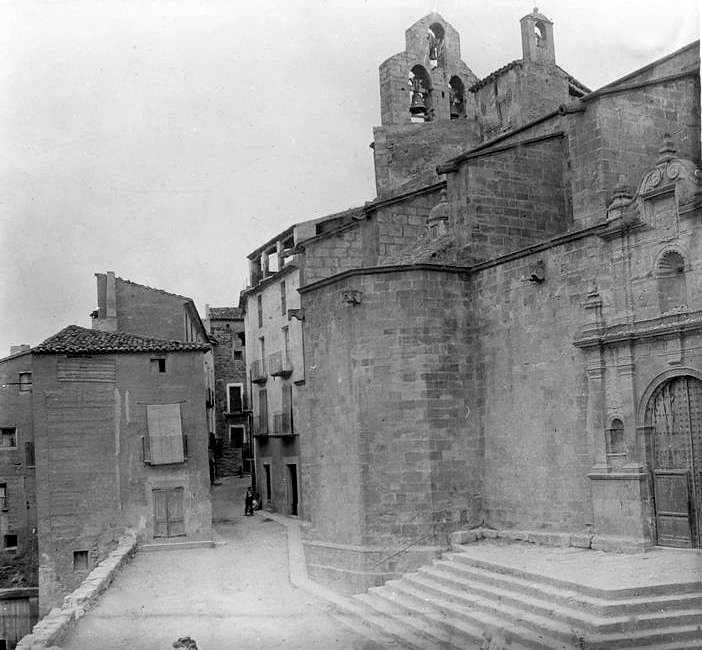
Església Vella de Sant Pere is the ruined parish church standing at the heart of the abandoned old village of Corbera d'Ebre, in the Terra Alta district of Catalonia, Spain. Its roofless walls and bell tower are the most recognizable landmark of the so-called Poble Vell, a site deliberately left in ruins as a testimony to one of the bloodiest battles of the Spanish Civil War.
Why was the old village of Corbera d'Ebre abandoned?
In the summer of 1938, the area around Corbera d'Ebre became one of the key battlegrounds of the Battle of the Ebro. From 25 July that year the village sat directly on the front line, and residents had to flee daily artillery bombardment and air raids carried out by Francoist forces. Fighting continued in the area until mid-November 1938, and by then the old town — including the Sant Pere church that once stood at its center — had been reduced to ruins.
What happened to the church after the war?
Once the fighting ended, a new village was built nearby rather than on top of the old one, and the ruins of Corbera were left standing rather than rebuilt. Despite the damage, the Sant Pere church survived as the site's main landmark — its walls and tower, though without a roof, still rise above the rest of the ruins today. In 1992 the Catalan government declared the remains of the old village a Cultural Asset of National Interest, recognizing the site as a place of memory and a monument to peace. The church is also listed in Catalonia's inventory of architectural heritage.
How is the church used today?
Since the mid-1990s, a local association dedicated to preserving the Poble Vell has worked to stabilize the ruins and gradually open them to visitors. Despite lacking a roof, the former church interior now functions as a cultural venue, hosting art exhibitions and concerts, with part of a permanent collection on display inside. Visitors can walk between the exposed walls of the nave and get a close look at the surviving tower, which gives a clear sense of the building's original layout.
What else is worth seeing nearby?
The Poble Vell is far more than just the church — it's an entire abandoned network of streets and house walls that visitors can explore on foot. Corbera d'Ebre also sits close to other sites connected to the Battle of the Ebro, including viewpoints and memorials dedicated to the units that fought here, among them the International Brigades. That makes the area an important stop for anyone interested in the history of the Spanish Civil War in Catalonia.
How do you get there, and when should you visit?
Corbera d'Ebre lies in the Terra Alta district, in southwestern Catalonia, close to the Ebro river valley. The easiest way to reach the village is by car, with local roads connecting it to the larger towns of the Tarragona region. Since the ruins have no roof, spring or autumn are the most comfortable times to visit thanks to milder temperatures, though the site can be seen year-round. Plan on at least an hour to walk through the Poble Vell so you can take in both the church and the rest of the ruins at a relaxed pace.
Frequently asked questions
Can you go inside the church? Yes, the interior of the former nave is open to visitors and now functions as an exhibition and concert space.
Why was the church never rebuilt? After the Battle of the Ebro, the new village was built on a different site, and the ruins of old Corbera — including the church — were deliberately left standing as a testimony to the war's destruction and as a place of memory.
What does the Poble Vell's Cultural Asset status mean? In 1992 the Catalan government declared the ruins of the old village a Cultural Asset of National Interest, confirming their historical value and protecting them from further deterioration.
Are there other Battle of the Ebro sites nearby? Yes, Corbera d'Ebre sits within a region dotted with memorials to the Battle of the Ebro, including positions and monuments dedicated to the soldiers who fought there, making it part of a wider historical route.
Nearby places

Earn badges for the places you visit
Download NextOnTrip, discover new places and check off your trails.