About this place
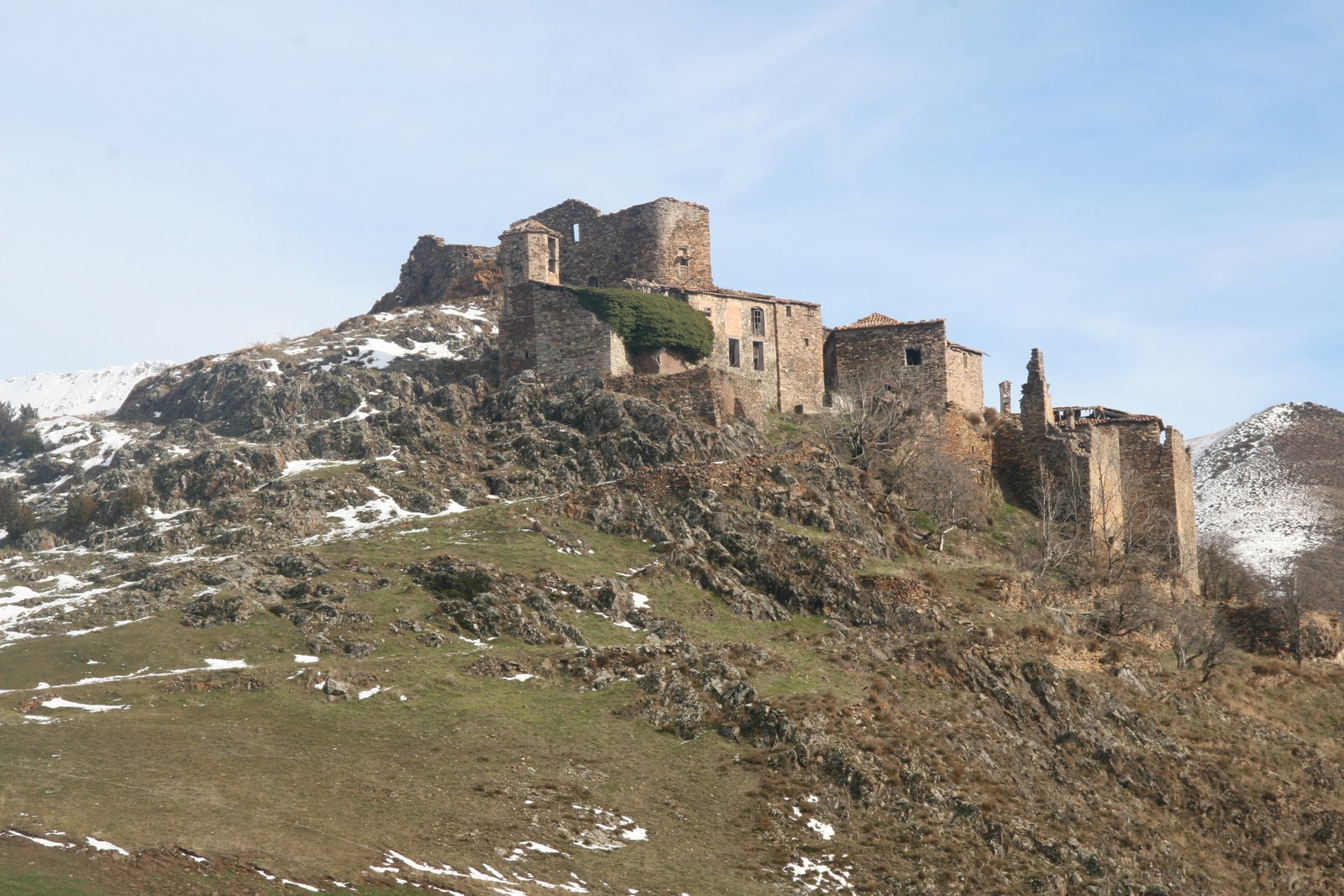
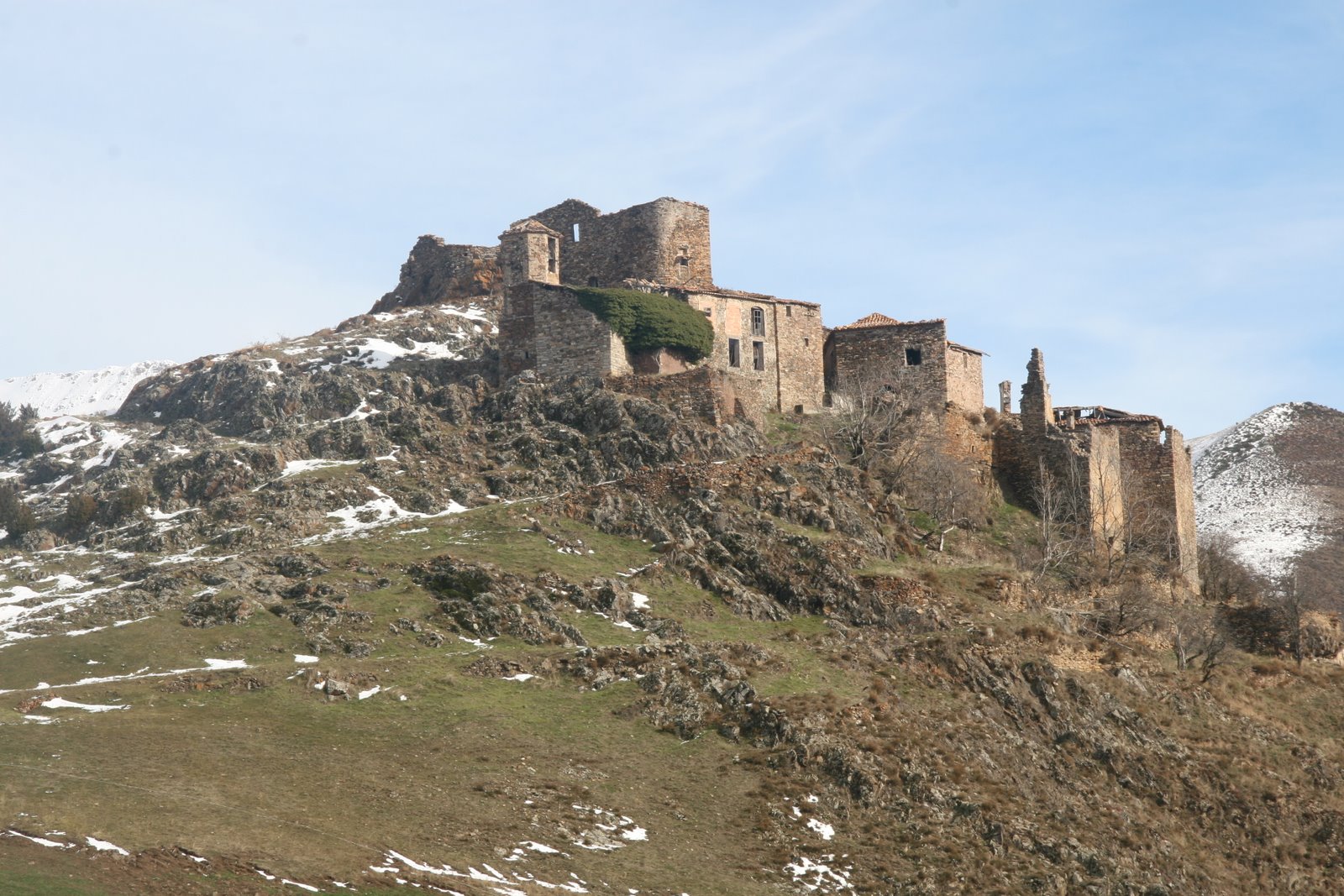
Erillcastell is an abandoned village and medieval castle ruin in the municipality of El Pont de Suert, in the Alta Ribagorça county, Lleida province, Catalonia. Perched at 1,441 metres above sea level near the Pic Redó summit, it has stood completely uninhabited for decades — one of the Pyrenees' many deserted mountain hamlets, visited today mainly for its history and its setting.
Why does Erillcastell matter historically?
Erillcastell was the original seat of the House of Erill, one of the leading noble lineages of medieval Ribagorça. The village first appears in written records in 1064, when Count Artal I of Pallars ceded it to his cousin Ramon IV. At its height, the barony of Erill — centred on the castle here — controlled a large stretch of the Pyrenees: the Vall de Boí, where the family sponsored construction of the Romanesque churches now inscribed on the UNESCO World Heritage list, along with the valleys of Viu, Manyanet and Vall Fosca, and the eastern bank of the Noguera Ribagorçana river between Pont de Suert and Espills.
How did the lordship and the castle evolve?
After a confiscation in 1506, the barony passed to Joan Ramon Folc de Cardona. The title was raised to a county (comtat d'Erill) in 1599, and in 1708 the pretender archduke to the Spanish crown attached the rank of Grandee of Spain to it. The castle itself gradually lost its defensive role: the original fortified structure was replaced by a more residential manor house built on the hilltop, while the church of Santa Maria d'Erillcastell was raised lower down the slope.
Why was the village abandoned?
For centuries Erillcastell lived off the farming and livestock economy typical of high Pyrenean villages, and for a time it also had a coal mine — likely tapping the same seam as the mines at nearby Malpàs — which kept some industrial activity going into the mid-20th century. Even so, the same rural depopulation that emptied much of the Pyrenees eventually caught up with it: a 1970 census counted just 9 remaining residents. Today no one lives here.
What is left to see on site?
Visitors find the ruins of the old settlement, remains of the former manor house of the Erill lineage, and the church of Santa Maria d'Erillcastell, whose fabric has visibly deteriorated — documented decline is evident between the 1960s and the 2010s. Some of the still partly roofed structures are now used by local farmers to shelter livestock. The castle-and-village site is listed as a Cultural Asset of National Interest (BCIN) on Catalonia's heritage register.
How do you get to Erillcastell?
Access is via a mountain track, and the final stretch requires a 4x4 vehicle. Exploring the ruins calls for caution: parts of the walls, particularly around the church, are at risk of falling stones, so it's worth keeping a safe distance from the most damaged sections. Erillcastell suits travellers interested in medieval Ribagorçan history and Pyrenean cultural landscape rather than visitors looking for a fully developed tourist site.
Frequently Asked Questions
Is Erillcastell still inhabited? No. The village has been completely deserted since the second half of the 20th century; a 1970 census recorded only 9 inhabitants.
Who were the lords of Erill? A medieval noble family whose original seat was the castle at Erillcastell. Their barony was later raised to a county and, at its peak, extended influence over the Vall de Boí and neighbouring Pyrenean valleys.
Can the ruins be visited safely? The site is accessible, but caution is required — the structures, especially the church of Santa Maria, are in poor condition, with a risk of falling stones.
How do you reach the site? Erillcastell lies within the municipality of El Pont de Suert; the last part of the approach follows a mountain track that requires a 4x4 vehicle.
Nearby places

Earn badges for the places you visit
Download NextOnTrip, discover new places and check off your trails.