About this place
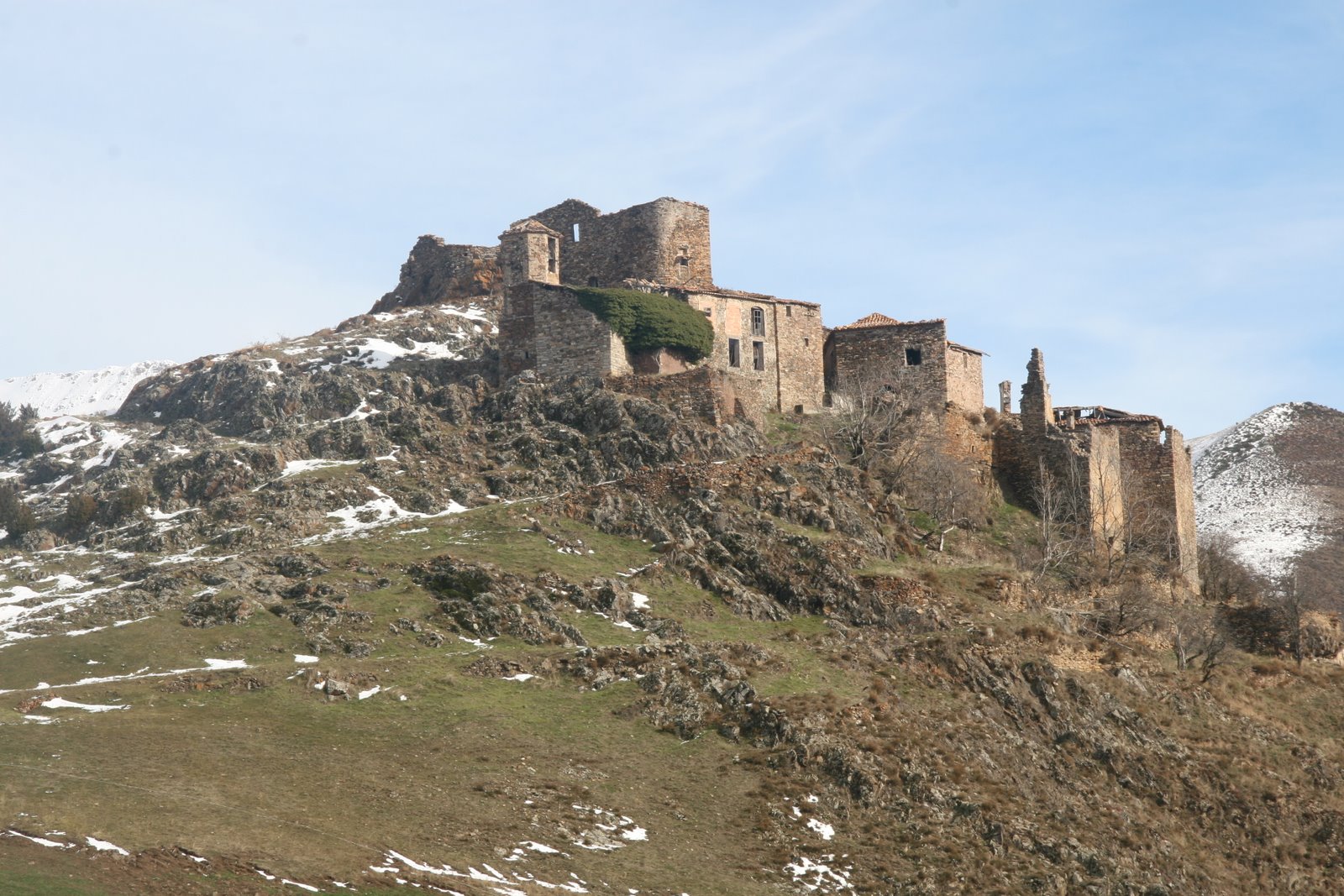
La Bastida de Bellera is an abandoned village in the municipality of Sarroca de Bellera, in the Pallars Jussà region, deep in the Catalan Pyrenees. Though no one has lived here permanently for decades, its stone houses and unusual layout still draw hikers and visitors interested in the region's deserted mountain settlements.
Where is La Bastida de Bellera located?
The village sits in the eastern part of the Sarroca de Bellera municipality, almost touching the enclave of Larén, which belongs administratively to the municipality of Senterada. This is rugged terrain within Pallars Jussà, part of the wider Alt Pirineu i Aran area in Lleida province — a landscape of narrow valleys, steep slopes, and small scattered hamlets, many of which shared La Bastida's eventual fate.
What is the history of the village?
The earliest records of La Bastida de Bellera date to 1381, when the settlement formed part of the barony of Bellera. Documents from the period list just 3 "fuegos" (hearths, or households), roughly 15 inhabitants — a small but stable farming and herding community typical of this stretch of the Pyrenees.
A significant change came in 1812, when, under the reforms introduced by the Cádiz Constitution, many Pallars villages, La Bastida among them, were granted their own municipal council. That administrative independence was short-lived: in February 1847 the village lost its status as a separate municipality because it failed to meet the minimum of 30 heads of household required under the 1845 municipal law. From that point on, La Bastida de Bellera was administered as part of the larger municipality of Sarroca de Bellera.
Why is the village uninhabited today?
La Bastida de Bellera was a traditional agricultural and livestock settlement that, at its peak, comprised 12 houses. Its fate mirrors that of many Pyrenean mountain villages — harsh living conditions, isolation, and the migration of residents toward larger towns led to its final depopulation in the mid-1960s.
What can visitors see on site?
The village's most distinctive feature is its layout: nearly all the houses faced a semicircular plaza, giving the whole settlement a bottle-shaped footprint when seen from above — narrow at the entrance and widening toward the interior. This kind of plan is unusual among villages in the region and is the main reason the site attracts people interested in rural architecture and the history of mountain settlement.
Nearby, it's worth looking for the medieval Romanesque bridge known as the Pont del Diable (Devil's Bridge), which once connected La Bastida with the monastery of Sant Genís de Bellera — another trace of the old network of paths and ties linking settlements within the barony of Bellera.
How should you plan a visit?
La Bastida de Bellera appeals to travelers looking for hiking routes off the well-trodden trails of Pallars Jussà. Given the mountainous terrain and the lack of on-site infrastructure, sturdy trekking shoes and a supply of water are essential, and spring or summer months offer the most stable Pyrenean weather for the walk. The wider Pallars Jussà area holds other abandoned villages and landmarks connected to the old barony of Bellera, making it easy to combine a visit into a longer half-day excursion.
Frequently Asked Questions
Is La Bastida de Bellera still inhabited? No — the village has been deserted since the mid-1960s and today holds the status of an abandoned settlement.
What makes the village's layout distinctive? The houses are arranged around a semicircular plaza in a way that gives the whole settlement a bottle-shaped footprint, narrow at the entrance and wider toward the back.
What nearby landmark is worth seeing? The medieval Pont del Diable bridge, which once linked La Bastida with the monastery of Sant Genís de Bellera.
Which administrative region does La Bastida de Bellera belong to? It lies within the municipality of Sarroca de Bellera, in the Pallars Jussà comarca, part of the Alt Pirineu i Aran region in Lleida province.
Nearby places

Earn badges for the places you visit
Download NextOnTrip, discover new places and check off your trails.