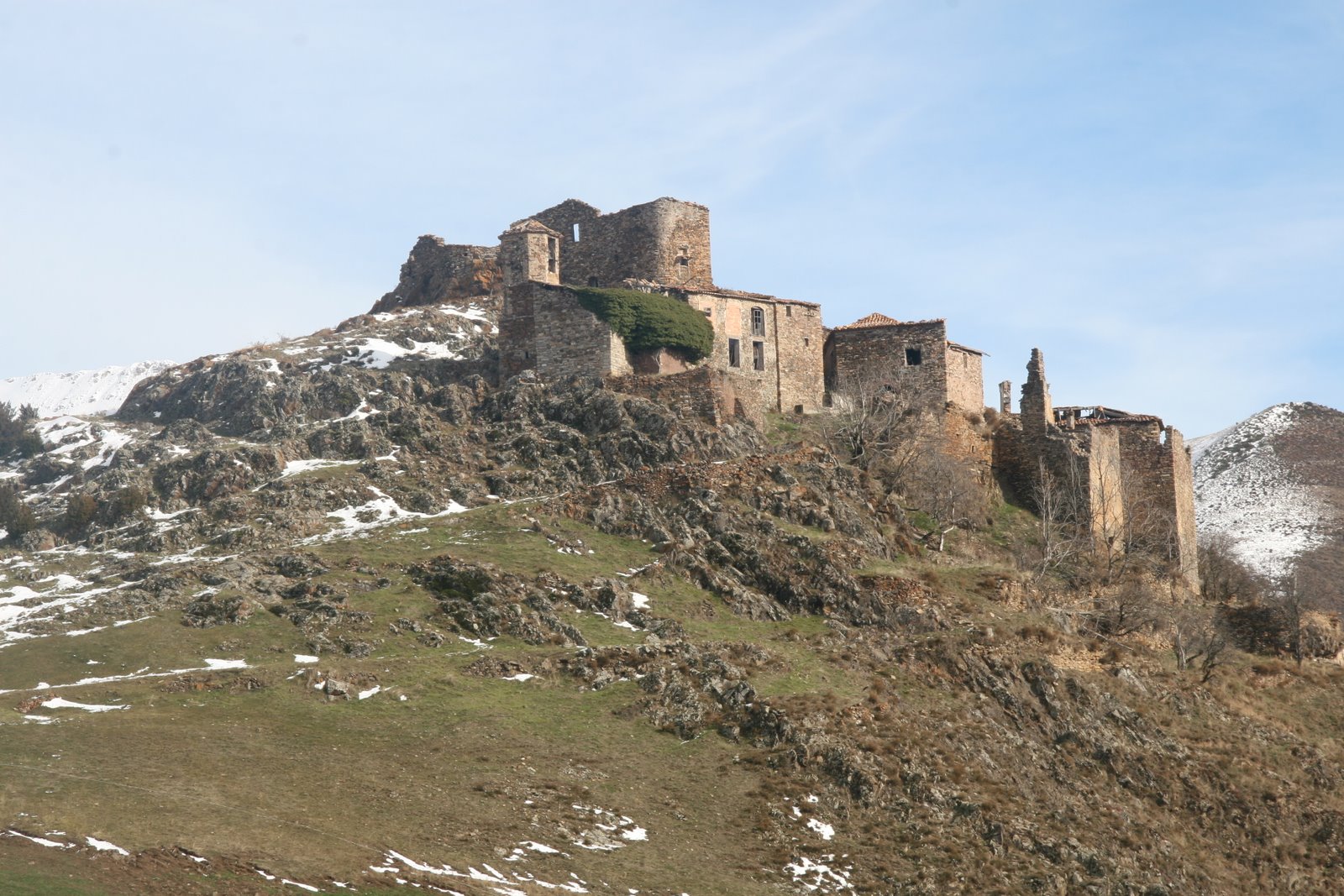
About this place
Castell d'Erillcastell is a medieval castle site in the municipality of el Pont de Suert, in the Alta Ribagorça region of the Spanish Pyrenees. It is listed as a Cultural Asset of National Interest, though only fragmentary traces of the original fortress survive today, absorbed into the fabric of an abandoned mountain village.
Where exactly is the castle located?
Erillcastell sits at roughly 1,441 metres above sea level, just south of the Pic Redó summit, overlooking the right bank of the Peranera stream. This remote, elevated position explains the defensive logic behind the original settlement: it commanded the approach to the valley and the surrounding routes, much like the other fortified sites scattered across Alta Ribagorça.
What is the history behind this site?
The name of both the village and the castle comes directly from the Erill family, one of the oldest and most influential noble houses in the region. One of the earliest known documentary references dates to 1022, in a deed recording a donation of land to the monastery of Santa Maria de Lavaix, where the place is described as "castro Erilli." Erillcastell was the original seat of the barons of Erill, later raised to the rank of counts — making this modest mountain site the historical seed of Alta Ribagorça as a territorial entity.
Over the centuries the family's importance grew well beyond this original stronghold, and the castle itself gradually shifted from a defensive role to that of a symbolic ancestral seat. In time, the remains of the fortification were absorbed into later construction — most notably Casa Montgai, a substantial manor house built at the highest point of the village, reusing the site and likely some of the material of the earlier defensive walls.
What can visitors actually see there today?
The village of Erillcastell itself is now completely uninhabited and abandoned, a typical case of a high-Pyrenean settlement emptied out as mountain populations declined through the 20th century. No standing towers or intact walls remain from the original fortress; what survives is visible mainly in the layout of the village and in the structure of Casa Montgai, which took over the location and much of the physical footprint of the old castle. Despite this modest state of preservation, the whole ensemble — village and castle remnants together — is protected as a Cultural Asset of National Interest, a status that reflects the site's historical weight rather than any dramatic ruins.
Who is this site suited for?
Erillcastell appeals to visitors interested in medieval history and Pyrenean noble lineages, as well as travelers who value quiet, half-forgotten mountain corners over polished monuments. Reaching the village means walking through classic Alta Ribagorça scenery — steep slopes, stone terraces, and views over the Peranera valley — making it a natural addition to a tour of the other fortified sites recorded around Pont de Suert.
Frequently asked questions
Does anyone still live in Erillcastell today? No. The village is entirely abandoned and uninhabited, like many other settlements in the higher reaches of Alta Ribagorça.
What actually remains of the castle? Only traces survive, absorbed into the village layout and into Casa Montgai, a manor house built on the site of the original fortress walls.
Where does the village's name come from? It comes from the Erill family, one of the region's oldest noble houses, whose original seat was this castle — hence the name Erillcastell.
How far back do historical records of the site go? One of the earliest documented references dates to 1022, recording a land donation to the monastery of Santa Maria de Lavaix.
Nearby places

Earn badges for the places you visit
Download NextOnTrip, discover new places and check off your trails.