About this place
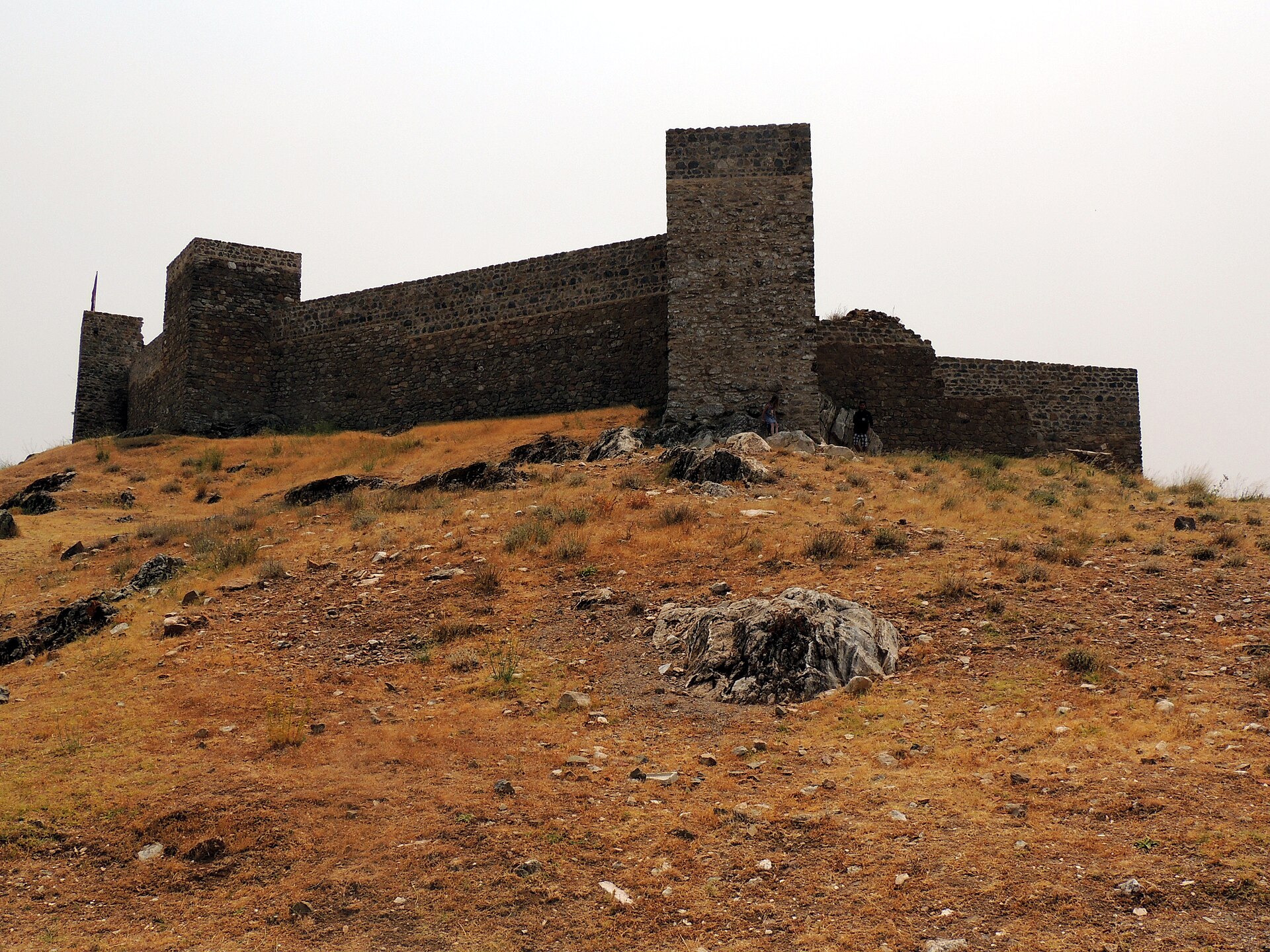
Castillo de El Real de la Jara is a medieval fortress perched above the town of El Real de la Jara, in the province of Seville, right on the border with Extremadura. The castle sits on a hilltop rising to 535 metres, from which it once oversaw traffic on the Vía de la Plata, one of the most important north-south routes across the Iberian Peninsula.
Why was this castle built?
The fortress was commissioned by the city council of Seville, which needed to secure its northern frontier against incursions from neighbouring Portugal and to keep military orders — the Templars and the Order of Santiago — from gaining a foothold in the region. In 1293, King Sancho IV granted authorization to build a chain of castles reinforcing the borders of Seville's territory, and Real de la Jara was one of them. The stronghold also served to protect local villagers from bandit groups roaming the area.
For more than a century the castle held real military weight. Its elevated position gave it a clear line of sight to nearby fortresses — Cala, Santa Olalla de Cala and Las Torres — making it part of a wider defensive network that controlled this borderland throughout the late Middle Ages.
What will you see on site?
The castle survives as a ruin, but the scale of the original structure is still striking. The perimeter includes eight towers, three of them semicircular, and two gates. The walls, an imposing 2.2 metres thick, were built from stone and rammed earth packed between masonry layers — a construction method typical of frontier fortifications from this period. Inside the walls lies a wide parade ground of nearly 2,000 square metres, a good indicator of how large a garrison the fortress could once house.
From the walls and the remaining tower, views stretch across the hills of the Sierra Norte de Sevilla and the valley once followed by the old Roman road.
How did the castle's fortunes change over time?
Once the border stabilised in the 16th century, the fortress lost its military purpose. With no upkeep from the Seville council, the building fell into gradual disrepair. In the mid-17th century the crown sold the castle into private hands, where it remained for generations. It wasn't until 1836 that the town hall of El Real de la Jara bought the property back, returning it to the local community. Today the ruins are listed as a Site of Cultural Interest (Bien de Interés Cultural).
How to get there?
El Real de la Jara lies in the northern part of Seville province, right at the meeting point of the borders with Extremadura and Huelva. The town is a stop on the Vía de la Plata pilgrim route, so the castle is regularly visited by walkers making their way toward Santiago de Compostela. Driving from Seville takes roughly an hour. Entry to the ruins is free and the site is accessible most of the year.
When should you visit?
Spring and autumn are the best seasons, since temperatures in this part of Andalusia are noticeably milder than in the height of summer. The hilltop offers little shade, so during summer months it's worth planning a visit for early morning or late afternoon.
Frequently asked questions
Is there an entry fee for the castle? No, the ruins are freely accessible and require no ticket.
How long does a visit take? Walking the ruins and defensive walls usually takes about 30 to 45 minutes.
Is the castle on the Vía de la Plata route? Yes, El Real de la Jara is one of the stages on this historic pilgrim route to Santiago de Compostela.
Can you climb the towers? The ruins are in varying states of preservation — some sections can be viewed up close, but access to the highest parts of the walls is sometimes restricted for safety reasons.
Nearby places

Earn badges for the places you visit
Download NextOnTrip, discover new places and check off your trails.