About this place
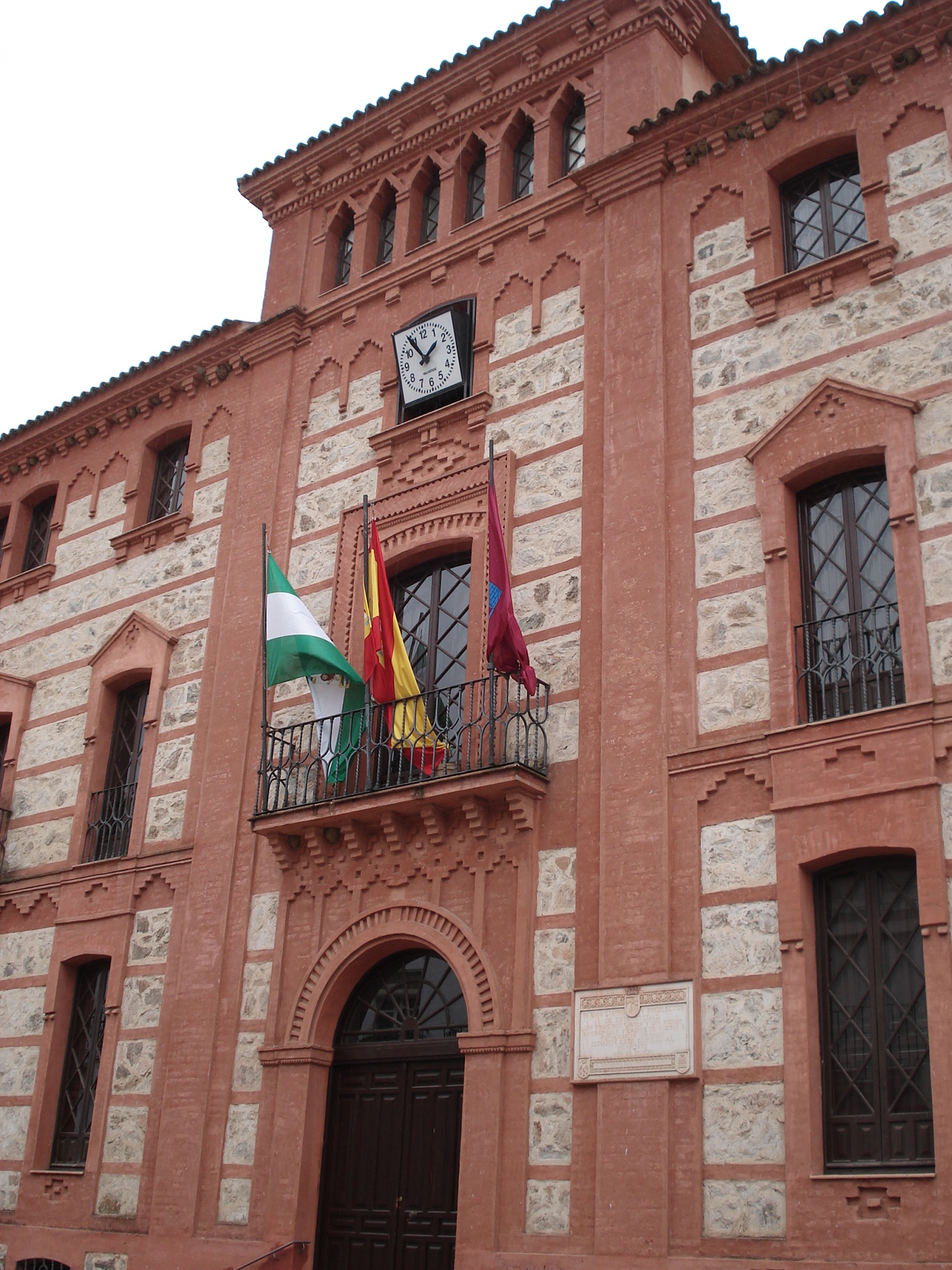
Fuenteheridos town hall sits at the administrative heart of Fuenteheridos, a small town in Huelva province, right inside the Sierra de Aracena y Picos de Aroche Natural Park. The building stands in the town's old quarter, which is protected in full as a Historic-Artistic Site (Conjunto Histórico-Artístico) for the architectural value of its streets and squares.
How do you get to the town hall?
Fuenteheridos lies along the road connecting Aracena and Zufre, deep in the hilly landscape of western Andalusia. A car is the most practical way in; Aracena, the region's main town, is only a short drive away and works well as a base for exploring the wider area. Once you're in Fuenteheridos itself, the town hall sits within the compact old town, so the last stretch is covered on foot, weaving through the narrow lanes typical of Sierra villages.
What else is worth seeing nearby?
Fuente de los Doce Caños
The town's best-known landmark is the Fuente de los Doce Caños, a twelve-spout fountain that collects groundwater flowing down from Puerto de los Ángeles and the Cerro de los Conejales hill. This is also where the Múrtigas stream is born, fed by more than two million litres of water surfacing here every day. The fountain sits right in the centre of town, only a short walk from the town hall.
Plaza del Coso
A few steps further on is Plaza del Coso, dominated by a marble cross carved in 1792 from stone quarried locally. It's one of the best spots to take in the character of the old town: low, whitewashed houses gathered around a central square.
Iglesia del Espíritu Santo
The town's main church, the neoclassical Iglesia del Espíritu Santo, was rebuilt after the damage caused by the 1755 Lisbon earthquake. Close by stands the Púlpito del Espíritu Santo, a stone pulpit that some historians link to an old Roman road running between Emerita Augusta (Mérida) and Itálica; in practice, it was used to hold Mass for worshippers who couldn't fit inside the church.
La Verónica
It's also worth stopping at La Verónica, one of the few surviving humilladeros in Andalusia — an 18th-century roadside shrine built for travellers to pause and pray.
When's the best time to visit?
Fuenteheridos keeps its own calendar of local celebrations. On 15 August, the Fiestas de la Virgen de la Fuente honour the town's patron saint over three or four days combining religious tradition with festive events. In November, the Feria de la Castaña turns the spotlight on chestnuts, a staple of this mountain region, with a food-focused local fair. Anyone planning a visit around the old town and its landmarks should expect the August festival to draw noticeably more visitors than an ordinary week.
Frequently asked questions
Can you visit inside the town hall? The building is an active administrative office, so public access is limited to opening hours and depends on the council's day-to-day schedule.
What's closest to the town hall? The historic centre is right on its doorstep, with the Fuente de los Doce Caños and Plaza del Coso both within a few minutes' walk — the whole old quarter can be covered on foot in well under an hour.
Is Fuenteheridos a good base for exploring the Sierra de Aracena? Yes. The town sits inside the natural park itself and is close to Aracena, making it a convenient stop for day trips through the surrounding hills and villages.
What natural attractions are nearby? The Sierra de Aracena y Picos de Aroche Natural Park has walking trails through chestnut and oak woodland, and Fuenteheridos's own springs, especially the Fuente de los Doce Caños, are one of the region's defining features.
Nearby places

Earn badges for the places you visit
Download NextOnTrip, discover new places and check off your trails.